bey

|
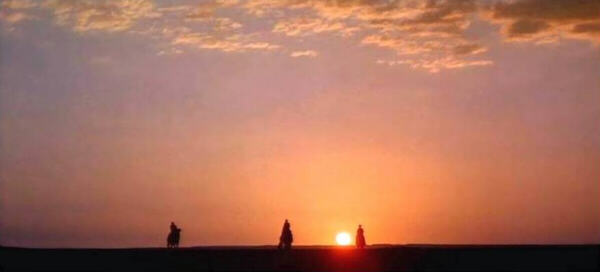
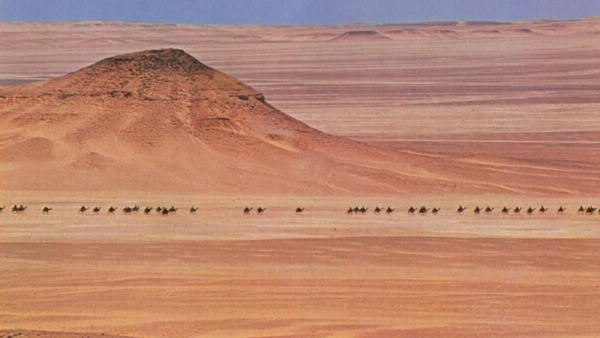
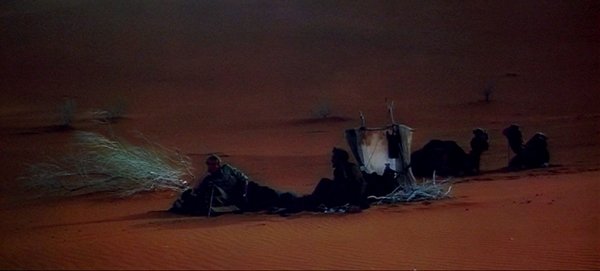
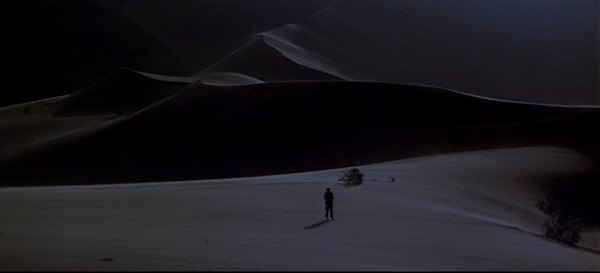
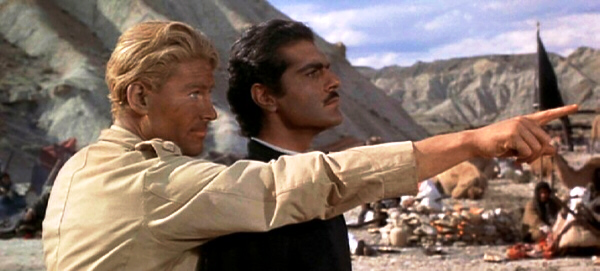
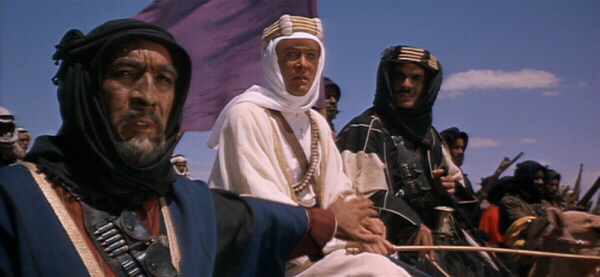
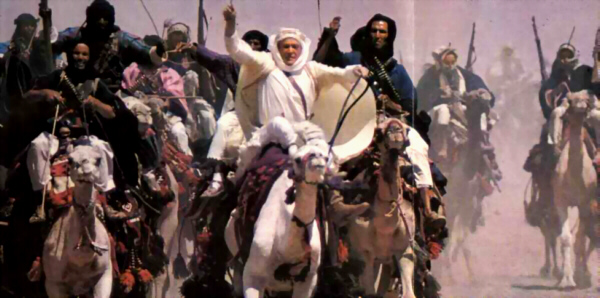
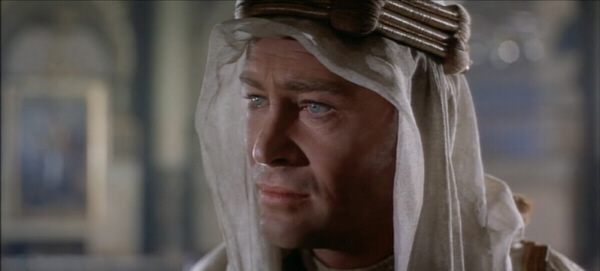
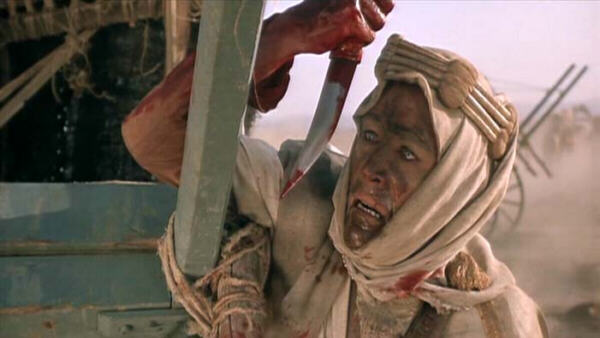
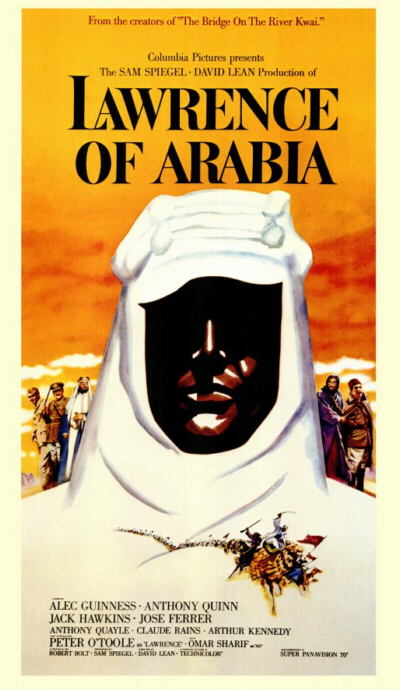
NOTES ON GETTING HOOKED ON MYTH • Lawrence of Arabia is all about amplifying myth. Director David Lean, with structural anchorage from first writer Michael Wilson and sadomasochistic cravings from replacement Robert Bolt, condenses the saga of T. E. Lawrence’s Seven Pillars of Wisdom into a quixotic romance of guerrilla exploits of an enigmatic, educated archeologist misfit whose private life remains one of history’s mysteries still shadowing a distinguished military career. Lawrence seemed to have willfully helped shape the quandary facing the fact-checkers and biographers trying to validate details in the book, to which George Bernard Shaw gave his imprimatur, by allowing speculation that the most famous incident he penned—the Turkish bey and his sadists’ sexual assault of him while a captive—might not have happened as described. A number of historians, psychologists and armchair skeptics believe Lawrence manufactured the violation as a fabrication of sexual fantasy or excuse for his alleged aberrant behavior—turning his asexuality or closeted sexuality or fear of sex into bloodthirst on the sands. Lawrence would later offer subsequent accounts substantially different from his original text, most damningly having allowed his captors to sodomize him. During his recall of the incident in Seven Pillars, a reader’s defense mechanism triggers caveat of masterly literary embellishment; if one hears a voice actor’s recording of what’s happening to him, it’s a riveting radio play supplying clocked-in horrors. (Elsewhere in the tome the brief anecdotes on intimacy among young tribesmen read as voyeurism and a tinge of blissful memories.) Turks, as well as Arabs, have always made handy perverts-villains and Lean, usually the prophylactic gentleman, incautiously if not slimily offered up the following connective to Jonathan Yardley for his Washington Post interview published in 1989: “I’ll never forget standing there in the desert once, with some of these tough Arab buggers, some of the toughest we had, and I suddenly thought, one of them is making eyes at me! And he was!” Hmm, and more hmm to follow in a bit. • In the first half of the epic, we’re reasonably sure Lawrence’s crusade, based on his considerable and acknowledged-by-others expertise on Arab cultural and political matters, is to aid in coalescing the divided Arab tribes into a united front against the Ottoman Empire during WWI. The second half moves into murky psychosexuality, into carnage and, at 3 hours and 5 minutes in, the very smug geopolitical games related to the secret 1916 Sykes-Picot-Sazonov Agreement plotting a defacto takeover of Arab territory. (Didn’t stay secret: after the Tsar was executed, the Bolsheviks published his government’s clandestine treaties, the “agreement” the prominent shocker embarrassing Britain and France but not stopping their schemes.) Though Lawrence was ceremonially pivotal to the Arabs appearing to be conquerors of Damascus, the chaos in liberating the city from the Turks and Germans, about which there are stacks of conflicting accounts, is generally viewed to have climaxed this way: Australian forces under the command of Major General William Hodgson were first to enter the city, and British forces of General Edmund Allenby moved in very shortly after. By military command protocols, Allenby, who personally arrived in the city a few days later, as did Prince Faisal, had the unenviable task to assuage Faisal and Lawrence as pictorial counterfeit victors to be heralded by the world press. Lawrence was bitterly disappointed in not being able to fulfill his promise of Arab independence at the Paris Peace Conference of 1919, one of history’s most consequential and ongoing débâcles, the subject of a decent thiry-years-later companion piece/followup to Lawrence of Arabia entitled A Dangerous Man: Lawrence After Arabia starring Ralph Fiennes, whose nuances, in tandem with Alexander Siddig’s as Faisal, present another load of innuendo. Two years apart in age, Faisal, ensconced by Britain as King of Iraq after being exiled from Syria by the French, would die from a heart attack while under medical care in Berne, Switzerland in 1933 and Lawrence succumbed after sustaining severe head injuries in the motorcycle accident in England in 1935, which, inevitably, spawned and still do conspiracy theories, the more recent gathered together in three manipulative Mark J.T. Griffin projects: the 2021 movie Lawrence: After Arabia and the book Who Killed Lawrence of Arabia? and in 2024 the Who Killed Lawrence of Arabia? documentary. • Lean’s sandcastle is likewise pictorially built on the shifts of political expediency and treacherous dignitaries using Lawrence’s dream of Arab self-destiny to do the dirty work while publicly denying any shared responsibility for the supposed wus-turned-legend rampaging against the Turks with slaughterhouse butchery. Lean sets up the desert early on as primal therapeutic purification: though the real T.E. in Seven Pillars wrote that the “abstraction of the desert landscape cleansed me,” Peter O’Toole’s Lawrence will perceive it in one word—“clean.” Visually arresting and elegant and the eloquence silently expressed, the sands grant his stretches of repose to take in the twilight, with the Super Panavision 70 camera virtually painting the grain orange and the brush silver; with Maurice Jarre’s score adding the touch of exotic, his boots sink into the dunes; with Anne Coates’s “match” cut and her selective heaps of breathtaking pannings by Freddie Young (with Ernest Day at the camera), Nicholas Roeg, Skeets Kelly and Peter Newbrook, he’s overtaken by the purity in the endless barrenness, soon supplying solace as cover for barbarous actions which, claim biographers, would become post-traumatic stress flashbacks when returning to England. Notwithstanding directorial designs to use forbidden appetites to eclipse disputed as well as confusing chronologies, this panoramic apotheosis, birthing at least fifty more biographies on T.E. and countless addendum, is a memory piece celebrating Lean’s childhood gift which would alter the course of his life—getting that first Brownie Box becoming alluring gateway to compositional imagery, making up for not being permitted to go to the movies because his parents regarded them as sinful. • In the Washington Post interview, Lean confirmed what he intended for O’Toole’s Lawrence and Omar Sharif’s Sherif Ali—that they be sexual intimates. Introduced on camel, riding toward a well while bulls-eyeing a shot to the head of a water thief, whose streaming blood steals around 60 seconds of celluloid, Ali quickly establishes antagonism and appeal, the beginning of a same-sex attraction cursorily based on Selim Ahmed who, guessing from few surviving pictures, was around 17 at some point in a three-year friendship with the 22 year-old Brit starting in 1911 and whose initials pronouncedly obvious in the dedication of Seven Pillars. (Never seeing one another again after being requested to gather Arabs to fight against the Turks in 1914, Lawrence was informed Ahmed died from typhus in 1918.) To interviewer Yardley, and bucking scarcity of proof other than hearsay and circumstantial deduction, Lean said emphatically, “Certainly Lawrence was very if not entirely homosexual. We thought we were being very daring at the time: Lawrence and Ali, Lawrence and the Arab boys.” Absent in Wilson’s script, but penciled in at the margins by Lean, the hook of vibes between two warriors is elusively Bolted and slyly accepted by O’Toole and Sharif, the latter calling it a “love story.” (An apropos example? Ali burning Lawrence’s British military clothes and assisting in dressing him in all white thawb, both practical and as if a spouse.) When Yardley asked whether he agreed with those who think the movie is “pervasively homoerotic,” Lean said, “Yes. Of course it is. Throughout.” Hmm II: With Brobdingnagian ears absorbing the sounds of desert beasts and fusing them to what he sees in their horny eyes would seem the long-existing acceptance for needed release, which in this scenario is passive submission by a Ma'bun to aggressors. Glimpsed is Lawrence’s haphephobia, typically a hindrance in sexual contact, employed to strike the bey, then channeled into vengeance and, later, according to friends in England, when his PTSD conjoined with his clean freak routines and guilt-ridden longings, turned into punishment by floggings. These are the opposite of mutual heat rising in homoeroticism, which is what he might have experienced—if his phobia had gone into remission—upon entering or being entered by a purportedly “beautifully built and handsome” Ahmed at the archeological site in Carchemish. Around 1912, T.E.’s close relationship with Ahmed was discreet rumor among members of the English archeology team encamped at Carchemish, noting the twosome’s uncommon closeness in living together and sharing clothes and to the laughter emerging from the tents but without confirmative telltale descriptions of muffled sounds of sex. When Richard Aldington’s controversial exposé Lawrence of Arabia: A Biographical Enquiry was published in 1955, the “discreet rumor” became plural with unverifiable salaciousness, safely resistant to lawsuits. • Naturally eccentric, sheathed as a sun-bleached blonde with fulgent blue eyes, O’Toole at 6' 2" is plentifully perplexing; with depiction of 5'5" Lawrence’s sexual practices assumed factually unknowable, the convulsion inside the actor is what’s afire and spreads to his character, able to glow through neuroses in ways so few actors achieve and probably this facet about him more than anything else permits savvy viewers to trek through the torment. What we’ve accepted since: O’Toole believed destiny played its part in getting the coveted and showy whackjobs—Henry II in Becket another example and The Stunt Man, too—telling TCM’s Robert Osborne the characters in effect “chose me.” Some of the thespians aren’t as lastingly impressive, edging close to fractured or stiffened caricature. The amusing Alec Guinness as lookalike Faisal (17 years older than the real king), the bizarrely-nosed Anthony Quinn (doing his own makeup based on the real Auda Abu Tayi), the hacking José Ferrer as the bey, the pompous Donald Wolfit equally embroider for effects; they’re Lean’s stereotypes to enhance his star’s complexity. Arthur Kennedy’s mundane Jackson Bentley subs for opportunist and aggrandiser Lowell Thomas whose world-wide syndicated photos of and articles and popular traveling stage presentations about Lawrence made both of them international public figures. (Reportedly Lawrence saw Thomas’s presentation several times and never fact-checked him.) Among his last roles in a long career, Claude Rains as natty-dressed Dryden is modulating a sardonic suavity as a composite of British politick to game Lawrence into protégé, using a cane as adjunct. • Jack Hawkins’s career was and continues to be studied as a years-long masterclass of military conventionality; his bearing and voice personify dignity, authority and steadfast strength, with an imposing no-nonsense aura to be left unchallenged. An argument can be made that we could do without his bearing in The Bridge on the River Kwai, but in L of A there’s a gleeful crack in the facade: he’s alternately flummoxed and intrigued and intriguing to the audience as General Allenby, angling every which way to avoid being played by a presumed keffiyeh-wearing weakling to whom he’s stern at first; then in shock & awe over the insubordinate defying orders to take it onto himself daring provocations against the Turks; then giving the upstart carte blanche to conduct his own war; surprised how bold and perceptive is this lone Brit among camel-riding buggers predicting an Allenby move into Jerusalem; being startled yet relieved by a confession about liking the act of killing people; making promises impossible to keep in order to retain a pain in the ass in the desert. Lawrence recounted in Seven Pillars: “Allenby could not make out how much was genuine performer and how much charlatan. The problem was working behind his eyes, and I left him unhelped to solve it.” • As usual with screenwriter Michael Wilson, there’s this preface used by him, against him and used by directors of his scripts to protect themselves: during the McCarthy era he became a blacklisted “commie” writer who wouldn’t recant or snitch on others. He was denied screen credit for 1956’s Friendly Persuasion helmed by William Wyler who, professing to be anti-HUAC, hit a moral low in robbing Wilson his due: pressured by draft dodger John Wayne and gossip queen Hedda Hopper and their ilk, he fabricated that his own brother Robert Wyler wrote some of the script. (Usually listed as an associate producer, Robert was married to actress Cathy O’Donnell, alumna of Oscar-winning Wyler films The Best Years of Our Lives and Ben-Hur.) Wilson was refused credit nor permitted to receive the Academy Award for adapting Pierre Boullé’s Bridge on River Kwai for Lean and producer Sam Spiegel. Regardless of any personal animosity between Lean and Spiegel, caused by the latter stripping the director of a co-producer credit and additional monies, the success of River Kwai meant a reteaming of the three for a new blockbuster. Getting together to discuss the feasibility of coalescing a thoughtful study on Gandhi—his expansive, twisty history, what to include and, more troubling, exclude—the moviemakers felt a mounting preclusion and agreed to seek another subject. Lean mentioned T.E Lawrence, as he was a boyhood hero. Spiegel concurred, soon off to get the rights of every book he could, including Lawrence’s truncated version of Seven Pillars entitled Revolt in the Desert and Lowell Thomas’s With Lawrence in Arabia, which Spiegel wanted Wilson to use as major source material. • At about the same time, Spiegel wanted to lock Wilson into a new deal. Agreeing to pay $100,000 for the script plus 2.5% of net profits, Spiegel tried to get him to sign a contract specifying he’d get screen credit in the Eastern hemisphere but would only get the credit for Western audiences if—tho not clearly delineated in print—he’d recant his politics. Spiegel wanted to move beyond the tiresome “commie” issue; Wilson declined. (Voluntarily departing later, he forfeited the % but received the full $100.000.) Being diligent in research and talented in creating outline and treatment, Wilson spared Spiegel from the embarrassment of Thomas’s promotional pitches by uncovering numerous errors of fact and detail. He then asked Columbia for a legal opinion on the limits of copyright infringement regarding Lawrence’s complete Seven Pillars, its movie rights not yet available. As gamble, Wilson offered up a treatment not quite camouflaging his stealing from the preferred source and, ever the fox, Spiegel used it to convince T.E.’s brother A.W. Lawrence to sell him the exclusive rights. Fearing the subterfuge could be “actionable,” Spiegel and Wilson were buoyed and genuinely surprised by A.W.’s positive reactions, with Wilson happily sending the collected materials to Lean who, scouting locations on the Arabian sandscape, at first praised the fait accompli. By the time the three got together to work on drafts, Lean’s stance switched from favorable to fault-finding. Finishing the third draft, Wilson knew Lean would never be satisfied. Three problems: the explicit one over Lean’s insistence on developing T.E.’s supposed psychosexual wreckage, and the implicit ones—never dealt with—being Lean’s simmering embitterment in losing the lucrative co-producer credit and feeling cut out of his collaborative relationship with Wilson, which had been successful with River Kwai. As for T.E.’s “wreckage,” Lean had already known about and attended Terence Rattigan’s play Ross, with good friend Alec Guiness as T.E., opening in May, 1960, and wanted something at least as baiting, about which Wilson, counter-wanting both evidence and relevancy about the alleged sexual assault, objected. What he seemed not to have addressed publicly yet doubtless knew was Lean and second writer Robert Bolt, whose A Man for All Seasons opened in the West End in early July, 1960, were also well aware of Aldington’s Lawrence of Arabia: A Biographical Enquiry sparking loud verbal fisticuffs for unsparingly denting Britain’s favorite WWI hero as pervert and pathological liar. The book—which T.E. loyalists failed to stop from being published due to Aldington’s otherwise honorable literary résumé—all but cemented the director and Bolt’s near-certainty of their subject’s poofdom. • Bolt’s major script contribution, other than including the gang rape, is condensing Wilson’s over-informing chat to craftily high-handed dialogue packed with ephemeral wit, back-end peek-a-boo and escape clauses. His and Lean’s worries about getting too entangled in the various aberrances lest they cause censorship and political fulminations came to fruition: London’s entrenched editorial prigs and politicians roared disapproval over the lavish “adventure,” cavalier interpretations of events, blatant inaccuracies, insulting insinuations. Until winning those Oscars, conservative American cities were reluctant to book; Turkey banned the film outright; Jordan, after granting Lean access to its desert and the use of Jordanian military to be extras, banned any showings to keep peace between neighboring countries, later lifted; with Omar Sharif as envoy sent to charm Gamal Abdel Nasser, Egyptian audiences were allowed to view the film, though the Turkish bey sequence was further abridged. Resolutions unknown, Columbia faced legal complaints and lawsuits from the families of General Allenby and Auda Abu Tayi over their concerns of slanted if unfactual impressions. In adding his own complaints in not recognizing his older sibling in the screen portrayal, primarily because he had read Wilson’s material absent the sexual overtones, which explains why he exercised his contract right to withdrew use of Seven Pillars of Wisdom as title (tho already quietly changed to L of A as Spiegel, Lean and Bolt anticipated a likely flare-up of correctitude), A.E. was succinct with the following blurb: “A psychological recipe. Take an ounce of narcissism, a pound of exhibitionism, a pint of sadism, a gallon of blood-lust and a sprinkle of other aberrations and stir well.” • When notified he wouldn’t get credit for any contribution he made to L of A, Wilson’s internal rebel mode fired off a strong missive to Spiegel, citing extensive examples of the shooting script containing lifts from his script(s), challenging a “mere coincidence” defense. Following studio and lawyer advice, Lean and Bolt uniformly denied they ever “used” any of Wilson’s material, in other instances Bolt claimed never to have read any of Wilson’s scripts. After filing the grievance to the British Screen Writers Guild with supporting documentation, especially his structure, political machinations and writer inventions overtly remaining in the shooting script, the Guild determined in December, 1963 that Wilson was entitled to a screenplay co-credit, promptly issuing an identical Guild award for best British dramatic screenplay Bolt received as sole writer. (He wasn’t pleased.) The decision, paving the way for the years-long battle to convince the American Writers Guild to follow suit, politely inferred that Lean and Bolt, heralded as honorable craftsmen, well-nigh lied to cover up their avoidance of Wilson’s contributions, having stayed inordinately haughty and evasive, creating the myth Wilson simply didn’t matter. Given Wilson’s death in 1978, and Bolt’s heart attack and stroke in 1979, the Guild postponed its verdict. On the eve of the 1988 national release of an expensively restored L of A, the Guild remained mute. This greenlighted Columbia to issue prints maintaining the single Bolt designation, making every effort to avoid upsetting Lean on a promo tour, as he remained adamant against Wilson’s entreaty. The American Film Institute announcement of Lean as the 1990 recipient of its prestigious Lifetime achievement honor, and the impending start of his ambitious Nostromo based on Joseph Conrad’s novel, would further withhold a Guild decision. In April, 1991, just weeks before filming was said to commence, Lean died and so did the fervor for Wilson’s legacy. But the issue didn’t die: in 1994, Cinéaste published Joel Hodson’s muckraker exposing the deliberate Lean/Bolt coverup, reviving the call for Wilson’s reinstatement. (See left column.) With Bolt’s passing in February, 1995 providing a respectful pause, the Guild would convene and restore Wilson’s co-credit the following September. Columbia forthwith restored Wilson to the movie’s roster in subsequent showings and new releases. The Guild had already reinstated his nomination and win for River Kwai in 1986 and would reinstate his credit and award as best written American drama for 1956’s Friendly Persuasion in 1996. The Academy of Motion Picture Arts & Sciences also restored his nominations and provided his family an Oscar statue for his co-writing win for River Kwai. Winning BAFTA honors as best British film, best film from any source, best actor (O’Toole) but conspicuously no nominations for Lean as director and Freddie Young for cinematography, there isn’t any public record of BAFTA reinstating Wilson as co-writer and co-winner of best dramatic screenplay for L of A. • The most respected and respectful of the biographical studies of Lawrence would be the psychological plumbing in 1976’s A Prince of Our Disorder: The Life of T.E. Lawrence by Harvard’s Dr. John Mack, winning the Pulitzer the following year. He brings a “compassionate” perspective to the stickiest issue: perhaps asexual or homosexual but as compromise “homosocial,” T.E. preferred the company of men without sexual entanglement, its proscription deeply grounded in Victorian morality. Other burdens: the equally deep rootage of social displacement when discovering he and his four brothers were born out of wedlock; his profound dislike for his mother whose indomitable will tried to unceasingly dominate him. Also acceded to by Mack: T.E.’s manifestation of masochism, as he periodically hired a scourger to allay his irreversible guilt in not achieving his dream of Arab independence and for allegedly recurrent fantasizing over, in his own self-damning words, the “delicious warmth” he felt when claiming rape by the bey and his thugs. Absorbing its painstaking research, A Prince of Our Disorder readies the reader to acknowledge the painful scarcity of certainties: the likelihood of never knowing the sexual history intwining his legacy; that his idiosyncratic tendencies tilt more toward a theatrical lack of trustworthiness in bibliography than historic verity, not unlike the Britisher he was inspired by—General Charles “Chinese” Gordon, about whom Mack avoids, as another militarist dedicating himself to abstention in order to “subdue the flesh,” having used commitment to killing in lieu of cuming. Self-directed accomplishers, they shared as authors a penchant to create guessing games about themselves with writerly flourishes leaving open the prohibited in their own myth-making. Receiving condemnation from critics who deemed him aberrant, T.E.’s real sins weren’t so much presumed hard-ons for men—as persistent in British military as the mutinies against Captains Bligh on the high seas—but the absence of juicy details to thwart reprisals. The high jubilation of his “famous” insurgencies in the desert, made hyperbolic in Lowell’s accounts, didn’t remediate a swelling anxiousness within the British elite who, desperately seeking a “hero” after the catastrophic waste and duplicitous backstabbing ramifications of WWI, were infuriated in having been robbed of one when the London press ran headlines of T.E.’s commingled sufferances. (With Alan Turing, the prodigious mathematician, logician and cryptologist central to breaking the German Enigma code during WWII, as additional supplement in Britain’s long history of excessive hypocrisy, the messiness of hero worship earns its mocking due expressed in this title periodically sprawled across a West End marquee—No Sex Please, We’re British.) Yet, similar to the success of L of A as genuine coruscation of the desert’s affectives, the esteemed mental vivisectionist Mack manages to revivify Lawrence as Anglo champion, going from intellectual loner to mythical effigy, from nerdy (some associates would term “feminine”) archeologist to military mapmaker to tactician, from self-ashamed rape victim to avenging angel, from Britain’s “go to” placator of Arabs to his “it-was-written” end on a Brough Superior SS100. Mack venerates him as a 20th Century Percival, a not-yet-coined gay incel in quest for masculinity. A Prince of Our Disorder also carries a connective as ironic addendum—the delayed timeline to misfortune, as Mack was killed in 2004 by a drunk driver while in London to lecture at a T.E. Lawrence Society conference. • For all the difficulties in scripting, long-suffering hardships throughout a year and a half of filming, the post-production rush demanded by Columbia Pictures to get the spectacle out as holiday attraction and for Oscar competition, Sam Spiegel then insisted on cutting twenty minutes from the original London version before its premiere in New York. Ostensibly to grant exhibitor wish to have 3 showings per day but more likely over fears of length and public reaction to the subject matter, though it just so happened the infamous N.Y. newspaper strike was already in progress, going on from December 8, 1962 to March 31, 1963, which cancelled the publishing of reviews, articles and the awarding of the N.Y. Film Critics Circle prizes. Conflicting stories have Lean agreeing to assist in last minute edits, since he was always overseeing editor, or not agreeing to any cuts, invoking his hatred for producers. His diligence as director and editor convinces us he couldn’t bear any one other than himself to do the selective slicing. Coates, who assisted on the edits, said another fifteen minutes were cut for the first TV showing. Fully restored at 227 minutes, and separating the warped prevarications against Wilson that deserve castigation, Lawrence of Arabia endures as the stellar accomplishment in the career of a roadshow movie maker. It’s also a testament to the bonded Brownie Boxer and Freddie Young, a symbiotic kinship of widescreen translators. Extracting the sensuous essence from Lawrence’s wanderlust as a bonkers word wizard entrancing readers by a stratagem so controlling they become hooked on the potency of geographic mysticism, Lean and Young amass the power derived from immersive Super Panavision 70 to unleash and embrace a fabulist’s arousals. (Opening 1/16/1963 at the Cinestage, running 36 weeks.) Oscars for best picture, director, musical score, film editing, sound, color cinematography and art direction/set decoration. Nominated for best actor (O’Toole), best supporting actor (Sharif). ROLL OVER IMAGES AND POSTERS TO ENLARGE
Text COPYRIGHT © 2000 RALPH BENNER (Revised 6/2026) All Rights Reserved. |