
Man in Gray Flannel Suit
The Man Without a Face
McCabe & Mrs. Miller
Mickey One
Mrs. Soffel
Monster-in-Law
Mosquito Coast
New York, New York
Noises Off
No Way to Treat a Lady
Places in the Heart
Playing for Time
Play It As It Lays
Please Don’t Eat the Daisies
Plenty
Portrait in Black
Pretty Poison
Pride and Passion
Queen Bee
Queen Margot
A Rage to Live
Ran
The Rat Race
The Remains of the Day
The Right Stuff
Seven Thieves
Shirley Valentine
South Pacific
Splendor in the Grass
The Sundowners
Sweet Smell of Success
Thunderbolt & Lightfoot
To Kill a Mockingbird
Torn Curtain
Under Milk Wood
Up in the Air
Up the Down Staircase
Vertigo
Vicky Cristina Barcelona
Wagner
Where Eagles Dare
Wild River
WUSA
Young Victoria

 The BBC series Absolutely Fabulous, when aired on Comedy Central in the 90s,
hit so responsive a cord in America entertainment writers had to expend volumes of energy to figure out why. Maybe something to do with our desires to let it all hang out, to play at brinkmanship. Londoners Jennifer Saunders’s Eddy and Joanna Lumley’s Patsy live out our boozed, drugged sexcapades and related memories. They are, just as many of us were, the updated malcontent La Dolce Vita seekers still stoned on the 60s counter-culture. Unrepentant bitches supreme, Lacroixed fatass Eddy
and skinny Ivana-haired Patsy, whose legs go from here to eternity, moved beyond dwelling in valleys of dolls to be ensconced in the valleys of fevered sins. Mocksters breaking rules of etiquette and behavior with enviable insolence, they brayed universal contempt—pushing the limits, giving the finger to sanctimony. For those of us fairly free from our addictions now, there’s a nostalgic voyeurism at work: we continue to get a buzz from their antics in reruns. They remind us we’re all messes, made paramount
in the finale to series # 3 entitled Ab Fab: The Last Shout. Ending on the absolutely, fabulously right note, the sane Saffy is saved from a bad marriage by Mommie Eddy, who plots with Patsy to use the honeymoon trip Saffy won’t get to take. After all, Eddy and Patsy are the perfect couple. The most fitting of Adios to the wild skanks, no? Alas, there’d be a few more intermittent series renewals, and a Christmas special, all tired rehash; Saunders the writer, hearing how hungry some kinds of
fans
were to get more, started believing the formula really was too cleverly brazen to become an eventual affront to the show’s audience. By her logic, there had to be a movie version. Moaned a little when I heard about its coming; we’re not the people we were in the 90s, not the memory-laden suckers for a revival of outrageous sex, drugs, bad music and crummy fashion. But I had some down time and checked on movies available “On Demand” and there’s Absolutely Fabulous: The
Movie. Didn’t say “Why not?” because the news on the reviews was pretty dismal. Still, with the viewing opportunity, there’s a need to find out just how awful. Ten minutes in and it’s bad, but could it get badder? Similar to the movie Sex and the City II, yes, a lot. An incomprehensible crime is Saunders writes this level of tripe and collects money for it. Eddy and Patsy were once enthusiastically cheered as the lovable emblems of dishevelment deluding
themselves as hot stuff; now they’ve dethroned themselves as fag hags poisonously unfunny. No one bothered to test the well for the toxic sludge of Saunders’s “blah, blah, blah.”
The BBC series Absolutely Fabulous, when aired on Comedy Central in the 90s,
hit so responsive a cord in America entertainment writers had to expend volumes of energy to figure out why. Maybe something to do with our desires to let it all hang out, to play at brinkmanship. Londoners Jennifer Saunders’s Eddy and Joanna Lumley’s Patsy live out our boozed, drugged sexcapades and related memories. They are, just as many of us were, the updated malcontent La Dolce Vita seekers still stoned on the 60s counter-culture. Unrepentant bitches supreme, Lacroixed fatass Eddy
and skinny Ivana-haired Patsy, whose legs go from here to eternity, moved beyond dwelling in valleys of dolls to be ensconced in the valleys of fevered sins. Mocksters breaking rules of etiquette and behavior with enviable insolence, they brayed universal contempt—pushing the limits, giving the finger to sanctimony. For those of us fairly free from our addictions now, there’s a nostalgic voyeurism at work: we continue to get a buzz from their antics in reruns. They remind us we’re all messes, made paramount
in the finale to series # 3 entitled Ab Fab: The Last Shout. Ending on the absolutely, fabulously right note, the sane Saffy is saved from a bad marriage by Mommie Eddy, who plots with Patsy to use the honeymoon trip Saffy won’t get to take. After all, Eddy and Patsy are the perfect couple. The most fitting of Adios to the wild skanks, no? Alas, there’d be a few more intermittent series renewals, and a Christmas special, all tired rehash; Saunders the writer, hearing how hungry some kinds of
fans
were to get more, started believing the formula really was too cleverly brazen to become an eventual affront to the show’s audience. By her logic, there had to be a movie version. Moaned a little when I heard about its coming; we’re not the people we were in the 90s, not the memory-laden suckers for a revival of outrageous sex, drugs, bad music and crummy fashion. But I had some down time and checked on movies available “On Demand” and there’s Absolutely Fabulous: The
Movie. Didn’t say “Why not?” because the news on the reviews was pretty dismal. Still, with the viewing opportunity, there’s a need to find out just how awful. Ten minutes in and it’s bad, but could it get badder? Similar to the movie Sex and the City II, yes, a lot. An incomprehensible crime is Saunders writes this level of tripe and collects money for it. Eddy and Patsy were once enthusiastically cheered as the lovable emblems of dishevelment deluding
themselves as hot stuff; now they’ve dethroned themselves as fag hags poisonously unfunny. No one bothered to test the well for the toxic sludge of Saunders’s “blah, blah, blah.”
 First a New Yorker article and then an expanded nonfiction book, Susan Orlean’s The Orchid Thief is an
unexpectedly captivating
biographic sketch of John Laroche,
who was arrested for stealing orchids from Florida preserves (as a means
to bring
attention to endangered species), turning into a chronicle of the power of the flower. It’s also the type of story screen adapters distress over because they can’t lick its inherent informational structure. So screenwriter Charles Kaufman, already the critics’ darling for Being John Malkovich and Eternal Sunshine of the Spotless Mind, earns praise and honors for doing what countless numbers of authors have deplored—flipping an original work into a tall tale of sex, drugs and
violence. In this case, into a less amusing Romancing the Stone not very cleverly entitled Adaptation. (Orlean had misgivings about the script until she found out who would play her.) Once we wave the flag in defeat trying to get past the two roadblocks—the first is Nicholas Cage, always a severe handicap for viewers, and the second is Nicholas Cage—we’re left fiddling our thumbs wanting for
something deserving to happen when Meryl Streep and Chris Cooper keep wading through the swamps.
First a New Yorker article and then an expanded nonfiction book, Susan Orlean’s The Orchid Thief is an
unexpectedly captivating
biographic sketch of John Laroche,
who was arrested for stealing orchids from Florida preserves (as a means
to bring
attention to endangered species), turning into a chronicle of the power of the flower. It’s also the type of story screen adapters distress over because they can’t lick its inherent informational structure. So screenwriter Charles Kaufman, already the critics’ darling for Being John Malkovich and Eternal Sunshine of the Spotless Mind, earns praise and honors for doing what countless numbers of authors have deplored—flipping an original work into a tall tale of sex, drugs and
violence. In this case, into a less amusing Romancing the Stone not very cleverly entitled Adaptation. (Orlean had misgivings about the script until she found out who would play her.) Once we wave the flag in defeat trying to get past the two roadblocks—the first is Nicholas Cage, always a severe handicap for viewers, and the second is Nicholas Cage—we’re left fiddling our thumbs wanting for
something deserving to happen when Meryl Streep and Chris Cooper keep wading through the swamps.
 Against All Odds is a total bullshit remake of the classic Out of the Past. It is, though, compulsively watchable. Neither thin nor gaunt this time out, Rachel Ward is packing a menacing rich tan sexiness as a bewitchment masochistic
and a little
androgynous. With fit bronzy flesh, closely-cropped beard, sun-bleached hair and blue eyes standing out more than usual, Jeff Bridges has never been this photogenic and it’s impossible to gauge how much he helps us to get through the mess. These two aren’t acting as much as going through a meltdown of common sense; since noir usually doesn’t make for much anyway, they’re excused. A ton of ludicrous moments and the most hilarious isn’t the banging at the bogus Chichén Itzá ruins but the finger motion at
Ward’s
Cozumel hideaway. Propped against Bridges’ chest, Ward flicks her thumb near and over one of his erogenous zones and instead of being aroused, he lays on some pro-football gibberish. (Unless he just shot a load, in which case he’d be in refractory mode and he’d likely move her hand away.) Some okay touristy shots of Cozumel, Chichén Itzá, and a spectacular one or two of Tulum, hopefully still a breathtaking spot on the Yucatan peninsula. Phil Collins’ “Take A Look At Me Now” is one psychoneurotic blowout;
the high
point of Michel Colombier’s portion of the score comes during the Cozumel sequences. Another slimy James Woods turn; Swoozie Kurtz is an all too brief comic respite. Directed by Taylor Hackford.
Against All Odds is a total bullshit remake of the classic Out of the Past. It is, though, compulsively watchable. Neither thin nor gaunt this time out, Rachel Ward is packing a menacing rich tan sexiness as a bewitchment masochistic
and a little
androgynous. With fit bronzy flesh, closely-cropped beard, sun-bleached hair and blue eyes standing out more than usual, Jeff Bridges has never been this photogenic and it’s impossible to gauge how much he helps us to get through the mess. These two aren’t acting as much as going through a meltdown of common sense; since noir usually doesn’t make for much anyway, they’re excused. A ton of ludicrous moments and the most hilarious isn’t the banging at the bogus Chichén Itzá ruins but the finger motion at
Ward’s
Cozumel hideaway. Propped against Bridges’ chest, Ward flicks her thumb near and over one of his erogenous zones and instead of being aroused, he lays on some pro-football gibberish. (Unless he just shot a load, in which case he’d be in refractory mode and he’d likely move her hand away.) Some okay touristy shots of Cozumel, Chichén Itzá, and a spectacular one or two of Tulum, hopefully still a breathtaking spot on the Yucatan peninsula. Phil Collins’ “Take A Look At Me Now” is one psychoneurotic blowout;
the high
point of Michel Colombier’s portion of the score comes during the Cozumel sequences. Another slimy James Woods turn; Swoozie Kurtz is an all too brief comic respite. Directed by Taylor Hackford.
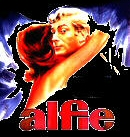 LUSTBOXING: After bagging
a married “bird” in a parked vehicle, Michael Caine’s
Alfie says directly to us, “They never make these cars
big enough, do they?” The 60s mod “dirty beast,” charming
in his Cockney and blond hair, Alfie takes us on a London tour of his sexcapdes
and for a while it works—caddish drollery without the effrontery. He’s
the bon vivant as sexual therapist dispensing remedies to a dry cleaning
clerk, to the Monday-Wednesday Dora, to Gilda the mother of his out-of-wedlock
son, to the good nurse Shirley Anne Field who asks “Would you like me
to give you something to sleep?” already knowing the answer. And there’s
“How do you want me?” Shelley Winters, about whom Alfie assures
us is in “lovely condition” as he amorously rubs her fat. (With
mirrors on the ceilings, she’s the “lustbox” disdainful of romance;
when she’s ready for action she snaps her fingers and commands,
“Bedroom!”) Then the preggers dramatics: seems Alfie’s too potent
in the baby-making department and one of his birds—drab Vivien Merchant
giving the movie’s single poignant performance—faces the awful illegal
decision. As viewers we’re taken by surprise—this may be a more powerful sequence
than director Lewis Gilbert and screenwriter Bill Naughton had originally
intended. (Though Terence Stamp, Laurence Harvey and Anthony Newley turned
the role down because of it.) Obvious are the consequences of
irresponsibility—Alfie admits his understanding of women goes only
so far as the pleasure (he does ask his birds when their “little
friend” is due)—yet what we’re watching becomes harrowing. It’s
rather a slap of unreality the moviemakers aren’t interested in even
slightly redeeming their loverly bloke: Alfie never considers the benefits
of Trojans. If sometimes over-chatty, Caine engenders a rascal rapport still emblematic; this is a performance speaking to men’s sexual fantasies. As a NHS
doctor, in thick-lensed, black-framed glasses, Eleanor Bron is incessant
with questions but this may have been the last time she looked this pretty.
Sonny Rollins does the jazzy score, and Cher sings the title song (for the
American release). Gilbert would years later have another go at the
“talking to the audience” format with Shirley
Valentine. (Don’t get me started on what Jude Law and his fellow idiots did to their version of Alfie.)
LUSTBOXING: After bagging
a married “bird” in a parked vehicle, Michael Caine’s
Alfie says directly to us, “They never make these cars
big enough, do they?” The 60s mod “dirty beast,” charming
in his Cockney and blond hair, Alfie takes us on a London tour of his sexcapdes
and for a while it works—caddish drollery without the effrontery. He’s
the bon vivant as sexual therapist dispensing remedies to a dry cleaning
clerk, to the Monday-Wednesday Dora, to Gilda the mother of his out-of-wedlock
son, to the good nurse Shirley Anne Field who asks “Would you like me
to give you something to sleep?” already knowing the answer. And there’s
“How do you want me?” Shelley Winters, about whom Alfie assures
us is in “lovely condition” as he amorously rubs her fat. (With
mirrors on the ceilings, she’s the “lustbox” disdainful of romance;
when she’s ready for action she snaps her fingers and commands,
“Bedroom!”) Then the preggers dramatics: seems Alfie’s too potent
in the baby-making department and one of his birds—drab Vivien Merchant
giving the movie’s single poignant performance—faces the awful illegal
decision. As viewers we’re taken by surprise—this may be a more powerful sequence
than director Lewis Gilbert and screenwriter Bill Naughton had originally
intended. (Though Terence Stamp, Laurence Harvey and Anthony Newley turned
the role down because of it.) Obvious are the consequences of
irresponsibility—Alfie admits his understanding of women goes only
so far as the pleasure (he does ask his birds when their “little
friend” is due)—yet what we’re watching becomes harrowing. It’s
rather a slap of unreality the moviemakers aren’t interested in even
slightly redeeming their loverly bloke: Alfie never considers the benefits
of Trojans. If sometimes over-chatty, Caine engenders a rascal rapport still emblematic; this is a performance speaking to men’s sexual fantasies. As a NHS
doctor, in thick-lensed, black-framed glasses, Eleanor Bron is incessant
with questions but this may have been the last time she looked this pretty.
Sonny Rollins does the jazzy score, and Cher sings the title song (for the
American release). Gilbert would years later have another go at the
“talking to the audience” format with Shirley
Valentine. (Don’t get me started on what Jude Law and his fellow idiots did to their version of Alfie.)
 The cinemati instruct that before Lewis Milestone’s 1930 All Quiet on the Western Front, Alexander Dovzhenko made Arsenal, regarded as one of the great experimental war films. It didn’t get a worldwide
audience, however, nor
could it speak to the masses because technique triumphed over content. Also coming before All Quiet were Valentino’s Four Horsemen of the Apocalypse, Walsh’s What Price Glory? and Wellman’s Wings. Out the same year as Milestone’s “Ph.D. Thesis” (what Sergei Eisenstein labeled it) was Howard Hughes’ Hell’s Angels. But All Quiet was the right movie at the right time with the right pacifist message so patently earnest and clear it transcended language, just as Erich Maria Remarque’s novel did. Likely impacting the millions of viewers then and what impacts us today are the suicidal battles—the mindless ant farm warfare. The movie underscores the irrational—how obedient disposables marched into wars throughout the ages to commit virtual felo-de-se for the 1% royalty and ruling classes. (After seeing
this picture, your heart of darkness knows why Hitler, mustard-gassed and temporarily blinded during WWI, used Franco to perfect war methods attempting to reduce WWII German casualties.) Thus, All Quiet becomes a dual directive: the insanity of slaughter, the inefficiency of war combat—indisputably why the movie was banned in countries wherein the winds of war blew. (And later Kubrick’s Paths of Glory suffered
similar
bans.) Some nitpicking: Milestone uses as his acting center the milksop Lew Ayres, who looks like John Wayne’s pipsqueak brother (especially in beret), like Mel Gibson when making a return visit to his old school, like Jack Lemmon when wearing a German helmet. If this epic isn’t about acting, the sincerity of its “acting” is inescapable—there’s too much of it. In his collection On Movies, critic Dwight Macdonald bitched: “Too many dugout scenes, and too full of confusion and squalor.”
Did anyone ever point out to Dwight—and the champagne-guzzling gentry—war is confusing and filled with misery?
The cinemati instruct that before Lewis Milestone’s 1930 All Quiet on the Western Front, Alexander Dovzhenko made Arsenal, regarded as one of the great experimental war films. It didn’t get a worldwide
audience, however, nor
could it speak to the masses because technique triumphed over content. Also coming before All Quiet were Valentino’s Four Horsemen of the Apocalypse, Walsh’s What Price Glory? and Wellman’s Wings. Out the same year as Milestone’s “Ph.D. Thesis” (what Sergei Eisenstein labeled it) was Howard Hughes’ Hell’s Angels. But All Quiet was the right movie at the right time with the right pacifist message so patently earnest and clear it transcended language, just as Erich Maria Remarque’s novel did. Likely impacting the millions of viewers then and what impacts us today are the suicidal battles—the mindless ant farm warfare. The movie underscores the irrational—how obedient disposables marched into wars throughout the ages to commit virtual felo-de-se for the 1% royalty and ruling classes. (After seeing
this picture, your heart of darkness knows why Hitler, mustard-gassed and temporarily blinded during WWI, used Franco to perfect war methods attempting to reduce WWII German casualties.) Thus, All Quiet becomes a dual directive: the insanity of slaughter, the inefficiency of war combat—indisputably why the movie was banned in countries wherein the winds of war blew. (And later Kubrick’s Paths of Glory suffered
similar
bans.) Some nitpicking: Milestone uses as his acting center the milksop Lew Ayres, who looks like John Wayne’s pipsqueak brother (especially in beret), like Mel Gibson when making a return visit to his old school, like Jack Lemmon when wearing a German helmet. If this epic isn’t about acting, the sincerity of its “acting” is inescapable—there’s too much of it. In his collection On Movies, critic Dwight Macdonald bitched: “Too many dugout scenes, and too full of confusion and squalor.”
Did anyone ever point out to Dwight—and the champagne-guzzling gentry—war is confusing and filled with misery?
 THE UNREAL THING: Decades after NBC news anchor Jessica Savitch’s death in a freak accident, those caught up in the frenzied business of news still wonder just what it was she had making her so appealing. Probably her greater assets were the laser-beam eyes, when not clouded by drugs, and a tongue-in-cheek
delivery as news reader.
She’d stare into the camera and make us believe she was speaking to us personally; regardless of hair, make-up, dress and the box’s long distance, the eyes became so compelling we surrendered. It wasn’t, of course, just the eyes, or manufactured blond prettiness leveling viewers, it was also the voice. Slightly deepened to deliver a slickstress’s semi-seriousness, it didn’t sound like the normal news reader drone, even though she tried exceedingly hard to be “news serious.” The voice had such an
unusually pleasant, witty resonance, a sardonic tickle, in most of her broadcasts (those I saw, including on Today) it overtook whatever news she introduced. Her “package” brought the pomposity and irritating brevity of TV news down by giving great delectation, by emitting a totally counterfeit comfort zone. Her interviews were often seductions. And why she could be named the fourth most trusted news anchor in the nation—she “seduced” her way to the top. This tells us much more about ourselves
and our willingness
to accept who we don’t really know much about. Used by ratings-hunters as archetypal blond bimbo—the kind “men could cream in their pants over”—Savitch was the dummy delineated in the books about her, yet her determination, the good-looking style and a cadre of behind-the-scenes support systems were the camouflage we chose not to see through. In spite of the self-doubts which would lead to drugs reinforcing her demons, most of them possibly stemming from the premature death of her beloved father
and
bummer relationships with suitors, including a long term Liz & Dick relationship with substance abuser Ron Kershaw, her success was, as Tom Brokaw suggested, rather Faustian; she seemed to have made a pact with an inner devil to make herself a network star by the age of 30. She got what she wanted, and once achieved, her smoke & mirrors technique began to defog and then crack. According to Lifetime’s movie Almost Golden,
based on the biographical half of Gwenda Blair’s exposé on the game of selling news personalities, Savitch was a miserable failure reporting on Congress. (For instance, she hadn’t any idea what Stuart Symington, a four term Senator and twice a contender for the Democratic nomination for president, looked like.) Though Andrea Mitchell was there to help, she probably dismissed her own nescience; regardless of mounting management and co-worker dissent, she set her sights on being among the first women news anchors
for a major network, having already accomplished it on local circuits. No one will know Savitch’s fate had NBC brass, who knew she was on the brink, demanded she seek help. Sign of the times, no executive wanted to publicly admit the Peacock’s most golden was drug-addicted and an emotional mess. Her unraveling became public display on the night of October 3, 1983, when she flubbed a 43 second news brief. Unmindful Betty Ford paved the way, helping Savitch could be private, but Reuven Frank argued, “Lower
down, people have counseling, but not a person on her level. She was too high up. There was no available institutional response.” Some insiders knew better: NBC ex-boozers Linda Ellerbee and John Hart planned but never executed an intervention, interrupted when Savitch, a friend and her dog Chewy drowned when the car they were in fell into one of Philadelphia’s canals, the tragedy precipitated by rain and fog. We don’t have to guess what might have happened after a rehabilitation: She would become even more popular,
perhaps the equal to the esteem Hollywood’s queen received after her first Betty Ford rehab. But the media are without much compassion; in seeking to divulge what’s supposedly “newsworthy,” they trash what is or those who are and frequently cannibalize their own. Almost Golden as nonfiction book and adequate movie—with Sela Ward fearlessly trying to tap into Savitch’s self-destructiveness—is an on-going caveat
to never put trust into image makers from the box.
THE UNREAL THING: Decades after NBC news anchor Jessica Savitch’s death in a freak accident, those caught up in the frenzied business of news still wonder just what it was she had making her so appealing. Probably her greater assets were the laser-beam eyes, when not clouded by drugs, and a tongue-in-cheek
delivery as news reader.
She’d stare into the camera and make us believe she was speaking to us personally; regardless of hair, make-up, dress and the box’s long distance, the eyes became so compelling we surrendered. It wasn’t, of course, just the eyes, or manufactured blond prettiness leveling viewers, it was also the voice. Slightly deepened to deliver a slickstress’s semi-seriousness, it didn’t sound like the normal news reader drone, even though she tried exceedingly hard to be “news serious.” The voice had such an
unusually pleasant, witty resonance, a sardonic tickle, in most of her broadcasts (those I saw, including on Today) it overtook whatever news she introduced. Her “package” brought the pomposity and irritating brevity of TV news down by giving great delectation, by emitting a totally counterfeit comfort zone. Her interviews were often seductions. And why she could be named the fourth most trusted news anchor in the nation—she “seduced” her way to the top. This tells us much more about ourselves
and our willingness
to accept who we don’t really know much about. Used by ratings-hunters as archetypal blond bimbo—the kind “men could cream in their pants over”—Savitch was the dummy delineated in the books about her, yet her determination, the good-looking style and a cadre of behind-the-scenes support systems were the camouflage we chose not to see through. In spite of the self-doubts which would lead to drugs reinforcing her demons, most of them possibly stemming from the premature death of her beloved father
and
bummer relationships with suitors, including a long term Liz & Dick relationship with substance abuser Ron Kershaw, her success was, as Tom Brokaw suggested, rather Faustian; she seemed to have made a pact with an inner devil to make herself a network star by the age of 30. She got what she wanted, and once achieved, her smoke & mirrors technique began to defog and then crack. According to Lifetime’s movie Almost Golden,
based on the biographical half of Gwenda Blair’s exposé on the game of selling news personalities, Savitch was a miserable failure reporting on Congress. (For instance, she hadn’t any idea what Stuart Symington, a four term Senator and twice a contender for the Democratic nomination for president, looked like.) Though Andrea Mitchell was there to help, she probably dismissed her own nescience; regardless of mounting management and co-worker dissent, she set her sights on being among the first women news anchors
for a major network, having already accomplished it on local circuits. No one will know Savitch’s fate had NBC brass, who knew she was on the brink, demanded she seek help. Sign of the times, no executive wanted to publicly admit the Peacock’s most golden was drug-addicted and an emotional mess. Her unraveling became public display on the night of October 3, 1983, when she flubbed a 43 second news brief. Unmindful Betty Ford paved the way, helping Savitch could be private, but Reuven Frank argued, “Lower
down, people have counseling, but not a person on her level. She was too high up. There was no available institutional response.” Some insiders knew better: NBC ex-boozers Linda Ellerbee and John Hart planned but never executed an intervention, interrupted when Savitch, a friend and her dog Chewy drowned when the car they were in fell into one of Philadelphia’s canals, the tragedy precipitated by rain and fog. We don’t have to guess what might have happened after a rehabilitation: She would become even more popular,
perhaps the equal to the esteem Hollywood’s queen received after her first Betty Ford rehab. But the media are without much compassion; in seeking to divulge what’s supposedly “newsworthy,” they trash what is or those who are and frequently cannibalize their own. Almost Golden as nonfiction book and adequate movie—with Sela Ward fearlessly trying to tap into Savitch’s self-destructiveness—is an on-going caveat
to never put trust into image makers from the box.
 America, America never received much of an audience back in 1963 because director Elia Kazan didn’t seek one; he kept his vision of his uncle’s immigrant journey to this country very close to himself and in using Stathis Giallelis as his lead the introversion multiplied. Kazan found him sweeping floors
in a fellow film director’s
office and liked him immediately. He didn’t speak much English but he was, Kazan wrote, “devoted, honest and loyal...all you had to do was look at him and you believed the story; he was too amateurish to contrive.” Pretty much explains the performance. And helps explain Haskell Wexler holding the camera on him as a smoldering blank, like a young thick black-haired Dirk Bogarde or Omar Sharif. (He might have been a decent choice for Yuri.) The movie isn’t bad, it just isn’t all that good: as a cornucopia
of scenes stuffed with “atmospheric realism” by Gene Callahan’s Oscar-winning art direction & set decoration and given a b & w vividness by Wexler, we’re carrying quite the load but we’re not sure why. For all of Kazan’s biographic pride, he doesn’t allow us to feel anything for his characters; he’s created an epic without a pulsing heart. There is, however, a very reserved moment when Stathis kisses the hand of matron Katharine Balfour and she responds by having something close to an orgasm—while her
husband’s napping right next to her. Knowing the origins of the rush come via an earlier scene, we’re still startled by the calibrated boldness. (If we want to see her later act of remuneration as a one-on-one, we accept why it’s verboten.) Balfour isn’t handicapped by the hint of Ruth Warrick and she wears Anna Hill Johnstone’s costumes in a manner quite befitting. In later years Kazan repeated ad nauseam America, America was his favorite movie. As evidenced in Elia A Life, with its revisionist emotions and betrayals to those who weren’t around to counter the abjections, the choice is more genealogical plume than an artist’s honest reassessment of his work.
America, America never received much of an audience back in 1963 because director Elia Kazan didn’t seek one; he kept his vision of his uncle’s immigrant journey to this country very close to himself and in using Stathis Giallelis as his lead the introversion multiplied. Kazan found him sweeping floors
in a fellow film director’s
office and liked him immediately. He didn’t speak much English but he was, Kazan wrote, “devoted, honest and loyal...all you had to do was look at him and you believed the story; he was too amateurish to contrive.” Pretty much explains the performance. And helps explain Haskell Wexler holding the camera on him as a smoldering blank, like a young thick black-haired Dirk Bogarde or Omar Sharif. (He might have been a decent choice for Yuri.) The movie isn’t bad, it just isn’t all that good: as a cornucopia
of scenes stuffed with “atmospheric realism” by Gene Callahan’s Oscar-winning art direction & set decoration and given a b & w vividness by Wexler, we’re carrying quite the load but we’re not sure why. For all of Kazan’s biographic pride, he doesn’t allow us to feel anything for his characters; he’s created an epic without a pulsing heart. There is, however, a very reserved moment when Stathis kisses the hand of matron Katharine Balfour and she responds by having something close to an orgasm—while her
husband’s napping right next to her. Knowing the origins of the rush come via an earlier scene, we’re still startled by the calibrated boldness. (If we want to see her later act of remuneration as a one-on-one, we accept why it’s verboten.) Balfour isn’t handicapped by the hint of Ruth Warrick and she wears Anna Hill Johnstone’s costumes in a manner quite befitting. In later years Kazan repeated ad nauseam America, America was his favorite movie. As evidenced in Elia A Life, with its revisionist emotions and betrayals to those who weren’t around to counter the abjections, the choice is more genealogical plume than an artist’s honest reassessment of his work.
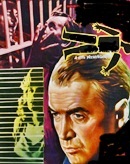 Only in delusive puritan America would James Stewart’s best movie (as well as his best performance) in the 50s be the target of wrath from his own father, who tried to stop Anatomy of a Murder from being played in his
home town. Even took out an ad condemning it. In Chicago, the first Mayor Richard Daley demanded the local censor board ban the movie over its alleged verbal obscenities—“bitch,” “contraceptive,” “intercourse,” “panties,” “penetration,” “rape,” “sexual climax,” “sperm,” “slut”—and it did with a lot of hypocritical hoopla from the now-defunct Chicago American newspaper until a federal court very quickly overruled the nonsense. (Those living in
Chicago
weren’t surprised when some years later Daley’s Catholic fascist tactics were employed against demonstrators
at
the Democratic National Convention, marking the beginning of the end of his rule and the start of Nixon’s presidency.) Of course, all the “dirty” word hysteria boosted the box office, which was a good thing—Anatomy was/still is Otto’s most satisfying movie. The based-on-fact subject (was hothead Ben Gazzara’s murder of an alleged rapist of slutty Lee Remick exonerative?), the “trash talk,” the actors’ characterizations,
the music
and photography make for a more realistic “snapshot” of who we were than, say, Peyton Place with all of its moral infractions melodramatically played out in bucolic settings. Otto’s Hitlarian style may have been employed but not felt. Maybe it would have if Lana Turner played the Remick part. She ditched the project in a huff over a lack of glam costumes, similar to the stunt Crawford pulled regarding
From
Here to Eternity. Even today it’s unimaginable Otto would have tolerated Lana, who’s guilty no matter any degree of innocence, whereas fresh flesh Remick is close to a perfect example of bait; her inscrutability is teasing as well as unsettling. Doubt, however, Otto would get away with goose stepping over a cast filled with so many seasoned pros. No way would Stewart or Eve Arden take any of his crap, or twin hotheads Gazzara and George C. Scott. Then again, perhaps the threat
of Adolf rising infused Stewart because he’s in splendid form in what is, unfortunately, his last adult role. Anatomy of a Murder gets better with each viewing.
Only in delusive puritan America would James Stewart’s best movie (as well as his best performance) in the 50s be the target of wrath from his own father, who tried to stop Anatomy of a Murder from being played in his
home town. Even took out an ad condemning it. In Chicago, the first Mayor Richard Daley demanded the local censor board ban the movie over its alleged verbal obscenities—“bitch,” “contraceptive,” “intercourse,” “panties,” “penetration,” “rape,” “sexual climax,” “sperm,” “slut”—and it did with a lot of hypocritical hoopla from the now-defunct Chicago American newspaper until a federal court very quickly overruled the nonsense. (Those living in
Chicago
weren’t surprised when some years later Daley’s Catholic fascist tactics were employed against demonstrators
at
the Democratic National Convention, marking the beginning of the end of his rule and the start of Nixon’s presidency.) Of course, all the “dirty” word hysteria boosted the box office, which was a good thing—Anatomy was/still is Otto’s most satisfying movie. The based-on-fact subject (was hothead Ben Gazzara’s murder of an alleged rapist of slutty Lee Remick exonerative?), the “trash talk,” the actors’ characterizations,
the music
and photography make for a more realistic “snapshot” of who we were than, say, Peyton Place with all of its moral infractions melodramatically played out in bucolic settings. Otto’s Hitlarian style may have been employed but not felt. Maybe it would have if Lana Turner played the Remick part. She ditched the project in a huff over a lack of glam costumes, similar to the stunt Crawford pulled regarding
From
Here to Eternity. Even today it’s unimaginable Otto would have tolerated Lana, who’s guilty no matter any degree of innocence, whereas fresh flesh Remick is close to a perfect example of bait; her inscrutability is teasing as well as unsettling. Doubt, however, Otto would get away with goose stepping over a cast filled with so many seasoned pros. No way would Stewart or Eve Arden take any of his crap, or twin hotheads Gazzara and George C. Scott. Then again, perhaps the threat
of Adolf rising infused Stewart because he’s in splendid form in what is, unfortunately, his last adult role. Anatomy of a Murder gets better with each viewing.
 Roland Emmerich reportedly spent $30 million of his own money to make Anonymous, a ludicrous tale about someone else having written the works of Shakespeare. So far, the world-wide gross has recouped slightly more than half
of the investment—mostly
from Germany where the movie was filmed—and there’s minimal chance it will break even anytime soon, and the likelihood of profit is zilch. Unfair to hold box office results against a sincere movie maker because no matter the circumstances it’s a very dicey game to determine what non-commercial audiences will fall for. But Emmerich is only mini-earnest as director; as the epitome of commerciality he takes deliciously hysterical subject matter—The
Patriot, Independence
Day, The
Day After Tomorrow, 2012 and White House Down and blows his wad in spectacularly juvenile fashion. Enjoying these movies viscerally—and I do—requires a condom to cover the brain. Anonymous is a different case. Reviving a favorite centuries-long suspicion Will really didn’t write
his plays, Emmerich holds to his
penchant for preposterous enlargement by putting Elizabeth R at the center
of concoction. Offensive as
it is, the more loathsome aspect is creaming all over himself filming gross stupidity. From start to finish, every downward step gets more insulting to reasonable audiences who wouldn’t mind a parlor game ala Amadeus, or at the least a re-construction of the writing process Shakespeare or his ghost practiced. (The award-winning production design by Sebastian T. Krawinkel and art direction supervised by Stephan O. Gessler certainly look ready to accommodate those angles.)
One of the less-praised attributes of Shakespeare in Love is the glimpse of Joseph Fiennes’ Will at work—the ink-strained fingers and cuticles, the creative commotion in producing a play, the thrill of enthrallment theatre provides. With Anonymous, it’s deceit out of Cate Blanchett’s Elizabeth without the hook of Fiennes. And the wedgie creeping up our asses is the embarrassment
of Vanessa Redgrave being suckered.
Roland Emmerich reportedly spent $30 million of his own money to make Anonymous, a ludicrous tale about someone else having written the works of Shakespeare. So far, the world-wide gross has recouped slightly more than half
of the investment—mostly
from Germany where the movie was filmed—and there’s minimal chance it will break even anytime soon, and the likelihood of profit is zilch. Unfair to hold box office results against a sincere movie maker because no matter the circumstances it’s a very dicey game to determine what non-commercial audiences will fall for. But Emmerich is only mini-earnest as director; as the epitome of commerciality he takes deliciously hysterical subject matter—The
Patriot, Independence
Day, The
Day After Tomorrow, 2012 and White House Down and blows his wad in spectacularly juvenile fashion. Enjoying these movies viscerally—and I do—requires a condom to cover the brain. Anonymous is a different case. Reviving a favorite centuries-long suspicion Will really didn’t write
his plays, Emmerich holds to his
penchant for preposterous enlargement by putting Elizabeth R at the center
of concoction. Offensive as
it is, the more loathsome aspect is creaming all over himself filming gross stupidity. From start to finish, every downward step gets more insulting to reasonable audiences who wouldn’t mind a parlor game ala Amadeus, or at the least a re-construction of the writing process Shakespeare or his ghost practiced. (The award-winning production design by Sebastian T. Krawinkel and art direction supervised by Stephan O. Gessler certainly look ready to accommodate those angles.)
One of the less-praised attributes of Shakespeare in Love is the glimpse of Joseph Fiennes’ Will at work—the ink-strained fingers and cuticles, the creative commotion in producing a play, the thrill of enthrallment theatre provides. With Anonymous, it’s deceit out of Cate Blanchett’s Elizabeth without the hook of Fiennes. And the wedgie creeping up our asses is the embarrassment
of Vanessa Redgrave being suckered.
 Though we’re never in doubt as to outcome, Apollo 13 is absorbing from the start and only gets more so as we watch the mission became NASA’s finest hour. We shake along with Tom Hanks, Bill Paxton and Kevin
Bacon when the oxygen tanks burst and freeze with them as the temperatures dangerously drop to mind and body numbing levels. We find ourselves quietly cheering the engineers’ makeshift method of filtering the capsule’s air supply, and we’re reassured by Gary Sinise’s determination to find ways to save power. Improvisation becomes technology’s savior. Tom’s got the greatest of gifts—super amicability; Paxton could gain from some vocal variety (he sounds here like his crybaby in Aliens); Bacon appears
to have zilch user friendliness. While Kathleen Quinlan looks great in her 60s cut and outfits, we wish she had been given some acting to do and a bit more “with it”: commiserating with her daughter over the breakup of the Beatles would have been appreciated. (In its own way, the split was just as traumatic as the catastrophe in space.) Conscientious with facts—something Philip Kaufman mocked in The Right Stuff, and fully blown in John Sturges’ comatose Marooned—director Ron Howard
is mindful audiences don’t need heroism to be defined by ticker tape success. Turns out Apollo
13 is Opie’s lucky number.
Though we’re never in doubt as to outcome, Apollo 13 is absorbing from the start and only gets more so as we watch the mission became NASA’s finest hour. We shake along with Tom Hanks, Bill Paxton and Kevin
Bacon when the oxygen tanks burst and freeze with them as the temperatures dangerously drop to mind and body numbing levels. We find ourselves quietly cheering the engineers’ makeshift method of filtering the capsule’s air supply, and we’re reassured by Gary Sinise’s determination to find ways to save power. Improvisation becomes technology’s savior. Tom’s got the greatest of gifts—super amicability; Paxton could gain from some vocal variety (he sounds here like his crybaby in Aliens); Bacon appears
to have zilch user friendliness. While Kathleen Quinlan looks great in her 60s cut and outfits, we wish she had been given some acting to do and a bit more “with it”: commiserating with her daughter over the breakup of the Beatles would have been appreciated. (In its own way, the split was just as traumatic as the catastrophe in space.) Conscientious with facts—something Philip Kaufman mocked in The Right Stuff, and fully blown in John Sturges’ comatose Marooned—director Ron Howard
is mindful audiences don’t need heroism to be defined by ticker tape success. Turns out Apollo
13 is Opie’s lucky number.
 The
Appointment
has to be a prime contender
as Sidney Lumet’s worst picture. Not even a guilty pleasure, you watch
transfixed by the appallingness of the whole thing, on every level. The first
sight of Omar Sharif in Hitlerish John Waters mustache is more than
enough to frighten the horses. The watery eyes and bad hair style (suggesting
a toupee) further creep us out. When Anookie Aimée arrives, walking
down a street filled with swanky shops, she retains the chic Un Homme
et une femme somnambulism and in no time she pretends to be an even
more vacuous puzzle. With Capucine’s thinness and wearing
her hair up in an Irina Demick number, she’s nothing if not a nincompoopish
nympho. Her English has improved, though it’s not nearly as appealing
as in her previous bummer Model Shop. Poor Fausto Tozzi: ever
since playing Dolfus in El Cid, he’s never sounded like
a human being; his voice, thought to be but apparently never dubbed, sounds
as if it is—mechanized, hollow, without integrity. He has
a handsomeness here, especially when he’s wearing a fedora, and you
end up wishing he had kept it on in all his scenes. Lotte Lenya is back selling
flesh again, absent the contempt she sneered in 1961’s Roman
Spring of Mrs. Stone. It’s a safe guess
The
Appointment is a multi-purpose
homage to Antonioni, Resnais and Fellini. They were masters at leisurely
constipated Eurotrash; Lumet here is a maestro of farty
fumblings.
The
Appointment
has to be a prime contender
as Sidney Lumet’s worst picture. Not even a guilty pleasure, you watch
transfixed by the appallingness of the whole thing, on every level. The first
sight of Omar Sharif in Hitlerish John Waters mustache is more than
enough to frighten the horses. The watery eyes and bad hair style (suggesting
a toupee) further creep us out. When Anookie Aimée arrives, walking
down a street filled with swanky shops, she retains the chic Un Homme
et une femme somnambulism and in no time she pretends to be an even
more vacuous puzzle. With Capucine’s thinness and wearing
her hair up in an Irina Demick number, she’s nothing if not a nincompoopish
nympho. Her English has improved, though it’s not nearly as appealing
as in her previous bummer Model Shop. Poor Fausto Tozzi: ever
since playing Dolfus in El Cid, he’s never sounded like
a human being; his voice, thought to be but apparently never dubbed, sounds
as if it is—mechanized, hollow, without integrity. He has
a handsomeness here, especially when he’s wearing a fedora, and you
end up wishing he had kept it on in all his scenes. Lotte Lenya is back selling
flesh again, absent the contempt she sneered in 1961’s Roman
Spring of Mrs. Stone. It’s a safe guess
The
Appointment is a multi-purpose
homage to Antonioni, Resnais and Fellini. They were masters at leisurely
constipated Eurotrash; Lumet here is a maestro of farty
fumblings.
 Adapted from the widely heralded but unread Peter Matthiessen novel, Héctor Babenco’s 1991 At Play in the Fields of the Lord has the feel of a Joseph Conrad-inspired genealogical expedition escorted by James A. Michener. He already published something close—Hawaii. The 1966 movie of it comes to mind as At Play proceeds to lay its episodic groundwork in Brazil’s Amazon River basin: Tom Berenger as a Rafer Hoxworth with an ethnic consciousness; John Lithgow as the black and Aidan Quinn as the white version of zealot Abner Hale; and Kathy Bates as the fattened-up ancestor of Abner and his wife Jerusha. While nothing about the perils of White God Redemption is new—still the same old White Man rape of unGodly cultures for religious power and financial gain—there’s a twist helping
to keep
you interested: an American Indian (Berenger) literally drops down from the skies to become the Amazon Indians’ Kisu Mu—the Thunder Spirit. Preventing the movie from becoming better is its obviousness: just about everything, from corrupt police to machetes as bribes, from bells subtly tolling in the background to epidemics, is ham-radioed in before the principals turn theirs on. As reported by media, the heat, insects and various illnesses hampered production, some of the actors yield to the
climate as cause for sluggishness & dehydration in their characters’ vital beats. Babenco may have been hindered by a lack of scoop about Bates and Lithgow—during this stage of their careers, they needed directors to stay on top of them, keeping them from going flaccid and reciting their lines on a par with sloppily written e-mail: one of several indictments is handed down when Lithgow reads from a letter. A converter for the Lord, Quinn is miscast—wife Bates labels him
“a
regular little four-eyed Jesus”—and he doesn’t have anything resembling a believable married relationship with her; you wonder what could be the matter with him for having got stuck with her. Come climax, he’s the turmoil of religious confusion, the bearer of delayed honor. It’s Berenger who the movie has to rest on, if you accept the convenience after descending into the Amazon he finds in his need to re-establish native roots a sudden empowerment to save “his people” from white man’s exploitation.
(If not convinced, you’ll find yourself hoping Bates does more of her “going bananas” numbers and you won’t be too disappointed.) In makeup and hair design by Jaque Monteiro, Berenger becomes so assimilated into the tribe he’s like camouflage in the jungle, and the near au naturel look provides the one hopefully intentional comic bit while he’s peeking at a nude Daryl Hannah. Babenco’s direction of the Indians is a wonder as it is rare to have extras in group sequences avoid the camera with this much
diligence;
they have a no-nonsense approach to duties—when the flu strikes they achieve so sufficient a reality you have to remind yourself the coughing and rubbing away of chills are coming from amateurs. Photographed by Lauro Escorel, who also did Babenco’s Ironweed, this Amazon is habitably safer than what we’ve seen in other movies: no snakes (except a dead one), no infestations of ants or other creepy crawlers. But concentrated doses of the jungle’s beauty blunt our senses. Relief arrives in aerial shots
by Stan McClain showcasing the region and the best come when Berenger flies toward a waterfall; the lulling mist from the falls has a panoramic delicacy, enhanced by an almost classical interlude from Zbigniew Preisner. Wishing for a stronger narrative drive and speedier action—if you get through the first half hour, you might be able to sustain the full 189 minutes—At Play is another periodic good-for-you refresher about charlatans passing themselves off as God’s chosen ones.
Adapted from the widely heralded but unread Peter Matthiessen novel, Héctor Babenco’s 1991 At Play in the Fields of the Lord has the feel of a Joseph Conrad-inspired genealogical expedition escorted by James A. Michener. He already published something close—Hawaii. The 1966 movie of it comes to mind as At Play proceeds to lay its episodic groundwork in Brazil’s Amazon River basin: Tom Berenger as a Rafer Hoxworth with an ethnic consciousness; John Lithgow as the black and Aidan Quinn as the white version of zealot Abner Hale; and Kathy Bates as the fattened-up ancestor of Abner and his wife Jerusha. While nothing about the perils of White God Redemption is new—still the same old White Man rape of unGodly cultures for religious power and financial gain—there’s a twist helping
to keep
you interested: an American Indian (Berenger) literally drops down from the skies to become the Amazon Indians’ Kisu Mu—the Thunder Spirit. Preventing the movie from becoming better is its obviousness: just about everything, from corrupt police to machetes as bribes, from bells subtly tolling in the background to epidemics, is ham-radioed in before the principals turn theirs on. As reported by media, the heat, insects and various illnesses hampered production, some of the actors yield to the
climate as cause for sluggishness & dehydration in their characters’ vital beats. Babenco may have been hindered by a lack of scoop about Bates and Lithgow—during this stage of their careers, they needed directors to stay on top of them, keeping them from going flaccid and reciting their lines on a par with sloppily written e-mail: one of several indictments is handed down when Lithgow reads from a letter. A converter for the Lord, Quinn is miscast—wife Bates labels him
“a
regular little four-eyed Jesus”—and he doesn’t have anything resembling a believable married relationship with her; you wonder what could be the matter with him for having got stuck with her. Come climax, he’s the turmoil of religious confusion, the bearer of delayed honor. It’s Berenger who the movie has to rest on, if you accept the convenience after descending into the Amazon he finds in his need to re-establish native roots a sudden empowerment to save “his people” from white man’s exploitation.
(If not convinced, you’ll find yourself hoping Bates does more of her “going bananas” numbers and you won’t be too disappointed.) In makeup and hair design by Jaque Monteiro, Berenger becomes so assimilated into the tribe he’s like camouflage in the jungle, and the near au naturel look provides the one hopefully intentional comic bit while he’s peeking at a nude Daryl Hannah. Babenco’s direction of the Indians is a wonder as it is rare to have extras in group sequences avoid the camera with this much
diligence;
they have a no-nonsense approach to duties—when the flu strikes they achieve so sufficient a reality you have to remind yourself the coughing and rubbing away of chills are coming from amateurs. Photographed by Lauro Escorel, who also did Babenco’s Ironweed, this Amazon is habitably safer than what we’ve seen in other movies: no snakes (except a dead one), no infestations of ants or other creepy crawlers. But concentrated doses of the jungle’s beauty blunt our senses. Relief arrives in aerial shots
by Stan McClain showcasing the region and the best come when Berenger flies toward a waterfall; the lulling mist from the falls has a panoramic delicacy, enhanced by an almost classical interlude from Zbigniew Preisner. Wishing for a stronger narrative drive and speedier action—if you get through the first half hour, you might be able to sustain the full 189 minutes—At Play is another periodic good-for-you refresher about charlatans passing themselves off as God’s chosen ones.
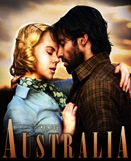 redbox
SPECIAL: If you rent Australia early enough the first day, you’ll have the time to replay it for your friends so all of you can howl, “WTF is Baz Luhrmann thinking?!” This is an idiot CGI merge of George Steven’s 1956 Giant, Fred Zinnemann’s 1960 The Sundowners and Dusan Makavejev’s 1985 The Coca-Cola Kid, with Nicole Kidman turning into a Grace Kelly as Deborah Kerr and additionally burdened by bitsy steals
from Scarlett O’Hara. With Hugh Jackman equally trapped in a Rhett as Indiana Jones, there’s this question: How can it be Baz spent $130,000,000 making this shit and not give viewers more of Jackman, to give viewers what they want—some heat in the inguinal regions? Easy to conclude Baz fooled himself into believing Kidman’s blanched physicality and (early on) overacting would serve as compensating
factors—he deems her a timeless Chanel #5 princess ever since their success together with the kewpie doll glam of Moulin Rouge. Lots of mystic aborigine deserts, plains, rocky terrain and a pretty decent stampede near a dangerous cliff. But they beg another question: Who in Hell would want to live anywhere near those places? Maybe those who haven’t yet had it with the unnecessary reprises of
“Over the Rainbow.” Apparently Baz didn’t know or care how frequently the tiresome anthem has been used in recent years, nor appear to know Kidman already sang the lyrics “somewhere over the rainbow” in My Life. The truth may be he couldn’t resist making sure even the aborigines get Garlanded to death.
redbox
SPECIAL: If you rent Australia early enough the first day, you’ll have the time to replay it for your friends so all of you can howl, “WTF is Baz Luhrmann thinking?!” This is an idiot CGI merge of George Steven’s 1956 Giant, Fred Zinnemann’s 1960 The Sundowners and Dusan Makavejev’s 1985 The Coca-Cola Kid, with Nicole Kidman turning into a Grace Kelly as Deborah Kerr and additionally burdened by bitsy steals
from Scarlett O’Hara. With Hugh Jackman equally trapped in a Rhett as Indiana Jones, there’s this question: How can it be Baz spent $130,000,000 making this shit and not give viewers more of Jackman, to give viewers what they want—some heat in the inguinal regions? Easy to conclude Baz fooled himself into believing Kidman’s blanched physicality and (early on) overacting would serve as compensating
factors—he deems her a timeless Chanel #5 princess ever since their success together with the kewpie doll glam of Moulin Rouge. Lots of mystic aborigine deserts, plains, rocky terrain and a pretty decent stampede near a dangerous cliff. But they beg another question: Who in Hell would want to live anywhere near those places? Maybe those who haven’t yet had it with the unnecessary reprises of
“Over the Rainbow.” Apparently Baz didn’t know or care how frequently the tiresome anthem has been used in recent years, nor appear to know Kidman already sang the lyrics “somewhere over the rainbow” in My Life. The truth may be he couldn’t resist making sure even the aborigines get Garlanded to death.
 James Cameron’s Avatar is a gorgeous respite for the eyes—IMAX drenched in Visine. We’re held by the phantasmagoric vision, the sets and the use of technologies. About the extent of its worthiness. A
conglom of Cameron’s Aliens,
The Terminator and the romantic nonsense of Titanic, Avatar bogs down from too many borrowings, too many cardboard characters, nearly total predictability about everything about to happen, including the skyscraper size tree plunging down in a not-so-dissimilar way Cameron’s special effects
wizards slammed the unsinkable. Avatar wants to overwhelm too but there’s less immersion, we’re overly aware of the flimsy device changing humans into the Na’vi creatures of Pandora. It’s a Kirk “Beam me down, Scotty” redux via an updated
iron lung. And Stephen Lang’s Colonel is the equivalent of yelling “Fire!” in a theatre. My doctor has warned there’s no way I’d make it through Avatar II if Sigourney Weaver gets the Spock resurrection treatment.
James Cameron’s Avatar is a gorgeous respite for the eyes—IMAX drenched in Visine. We’re held by the phantasmagoric vision, the sets and the use of technologies. About the extent of its worthiness. A
conglom of Cameron’s Aliens,
The Terminator and the romantic nonsense of Titanic, Avatar bogs down from too many borrowings, too many cardboard characters, nearly total predictability about everything about to happen, including the skyscraper size tree plunging down in a not-so-dissimilar way Cameron’s special effects
wizards slammed the unsinkable. Avatar wants to overwhelm too but there’s less immersion, we’re overly aware of the flimsy device changing humans into the Na’vi creatures of Pandora. It’s a Kirk “Beam me down, Scotty” redux via an updated
iron lung. And Stephen Lang’s Colonel is the equivalent of yelling “Fire!” in a theatre. My doctor has warned there’s no way I’d make it through Avatar II if Sigourney Weaver gets the Spock resurrection treatment.
 SMOOTHED
OVER: Inarguably Julie
Christie gives a good—okay, very good—performance
in Sarah Polley’s Away From
Her.
Every step she takes toward Alzheimer’s seems like another
vote for the Academy Award, just as her display of measured nuances in the
appalling Afterglow was. Maybe what held me
back: I could virtually see her and the director(s) at the controls, modulating
performance to guarantee the rougher edges of the disease(s) are smoothed
over so as not to frighten us too much. (In Afterglow she seems
to be suffering from an overdose of esoterica.) The fear is valid: the baby
boom generation will soon produce the largest segment of victims, an ironic
belated thank you for being the caretakers of the next largest group—their
parents. Without meaning to,
Away From
Her suggests it won’t be
quite as bad as we might believe it to be, if you’re lucky enough
to live in Canada and find the kind of facility Julie enters. (Having recently
visited depressing facilities for both long and short term rehab in Houston,
I’m even less optimistic about conditions for Americans with Alzheimer’s.)
The movie’s other discomfort: not one of the majors—Christie
and her husband Gordon Pinsent, Olympia Dukakis and her hubby Michael
Murphy—ever has an outburst reflecting the disheartenment of their
situations. Sure, Dukakis is a bit prickly, and Murphy has a crybaby moment
but the level of suppressed emotions is too managed to relate
to real experience. The most unbelievable of all is Pinsent, one of Canada’s
premier talents. Educated, a playwright as well as novelist—his most
famous work The Rowdy Man, made into both a movie and a
musical—Pinsent with well-groomed beard and Body by Pantene hair is
2007’s most patient and tolerate adulterer spouse, albeit a fat-gutted one.
Cost to make: $750,000.
SMOOTHED
OVER: Inarguably Julie
Christie gives a good—okay, very good—performance
in Sarah Polley’s Away From
Her.
Every step she takes toward Alzheimer’s seems like another
vote for the Academy Award, just as her display of measured nuances in the
appalling Afterglow was. Maybe what held me
back: I could virtually see her and the director(s) at the controls, modulating
performance to guarantee the rougher edges of the disease(s) are smoothed
over so as not to frighten us too much. (In Afterglow she seems
to be suffering from an overdose of esoterica.) The fear is valid: the baby
boom generation will soon produce the largest segment of victims, an ironic
belated thank you for being the caretakers of the next largest group—their
parents. Without meaning to,
Away From
Her suggests it won’t be
quite as bad as we might believe it to be, if you’re lucky enough
to live in Canada and find the kind of facility Julie enters. (Having recently
visited depressing facilities for both long and short term rehab in Houston,
I’m even less optimistic about conditions for Americans with Alzheimer’s.)
The movie’s other discomfort: not one of the majors—Christie
and her husband Gordon Pinsent, Olympia Dukakis and her hubby Michael
Murphy—ever has an outburst reflecting the disheartenment of their
situations. Sure, Dukakis is a bit prickly, and Murphy has a crybaby moment
but the level of suppressed emotions is too managed to relate
to real experience. The most unbelievable of all is Pinsent, one of Canada’s
premier talents. Educated, a playwright as well as novelist—his most
famous work The Rowdy Man, made into both a movie and a
musical—Pinsent with well-groomed beard and Body by Pantene hair is
2007’s most patient and tolerate adulterer spouse, albeit a fat-gutted one.
Cost to make: $750,000.
 Baby Doll, written expressly for director Elia Kazan by Tennessee Williams, is highly touted for its sun-drenched rural naturalism; photographed by Boris Kaufman and with a production design by Richard Sylbert (both would also do Sidney Lumet’s The Fugitive Kind), its decrepitness doubtlessly different from any other Williams play-into-movie. While mostly a real Mississippi setting,
it stays profusely theatrical as Williams’ “wanton hilarity” is choreographed subversiveness, with the principal actors hardly staying still yet miraculously uninjured while performing dances of seduction and evasion in or around that deteriorating house. Coming out of the setting is the astonishing Carroll Baker. Back in 1956 the huge Time Square billboard—which had her couched in a crib sucking her thumb and would rile up the robed moralists who initially never saw the movie—exemplified a stag sleaziness, and
though audiences understood it was intended as adult comedy, they were hoodwinked into believing the “shot” would be “dirty.” Oh how disappointed they must have been if they didn’t accept what they got instead: as the camera closes in on Baker’s face while sitting with Eli Wallach on a swing in dangerous disrepair, she reaches almost breathtaking nuances of quick thinking, perhaps in the midst of the fear of possible panty wetting generated by Wallach’s greasy wop hand in what may be the tingliest neck petting
ever on the American screen. Nearing seventy years since the movie opened, she remains a wonder of cunning maneuvers.
Baby Doll, written expressly for director Elia Kazan by Tennessee Williams, is highly touted for its sun-drenched rural naturalism; photographed by Boris Kaufman and with a production design by Richard Sylbert (both would also do Sidney Lumet’s The Fugitive Kind), its decrepitness doubtlessly different from any other Williams play-into-movie. While mostly a real Mississippi setting,
it stays profusely theatrical as Williams’ “wanton hilarity” is choreographed subversiveness, with the principal actors hardly staying still yet miraculously uninjured while performing dances of seduction and evasion in or around that deteriorating house. Coming out of the setting is the astonishing Carroll Baker. Back in 1956 the huge Time Square billboard—which had her couched in a crib sucking her thumb and would rile up the robed moralists who initially never saw the movie—exemplified a stag sleaziness, and
though audiences understood it was intended as adult comedy, they were hoodwinked into believing the “shot” would be “dirty.” Oh how disappointed they must have been if they didn’t accept what they got instead: as the camera closes in on Baker’s face while sitting with Eli Wallach on a swing in dangerous disrepair, she reaches almost breathtaking nuances of quick thinking, perhaps in the midst of the fear of possible panty wetting generated by Wallach’s greasy wop hand in what may be the tingliest neck petting
ever on the American screen. Nearing seventy years since the movie opened, she remains a wonder of cunning maneuvers.
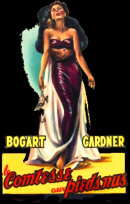 NOVOCAINED:
Only Joseph Mankiewicz would
dare pull this kind of rubbish on us: Ava Gardner as
The Barefoot
Contessa not
insisting on a hot fuck from Rosanno Brazzi prior to their nuptials.
Mankie has her getting the really bummer news on her wedding night. Then he has her planning to inform her
count, some three months later, about a big surprise for him, one restoring him to the
public as face-savingly potent. Since this is 1950s stuff, Brazzi’s
“climax” is the necessary perverse morality to make amends for
Ava’s needs and deeds. Smart audiences concede early on there’s no believing
what they hear and see in Mankie’s pictures, except the applaudable
determination of his actors giving the nonsense all they’ve got, like Bette
Davis in All About Eve, Ann Sothern and Paul Douglas in A
Letter to Three Wives, Katie and Liz in Suddenly, Last
Summer, or Olivier and Caine in Sleuth. In
The Barefoot
Contessa, with no earnable
applause for its acting, the disbelief factor is so off the scale we
watch out of compulsion. Because Mankie’s characters chatter on
neurotically they seem not to be of this world or from any other world
any one’s ever heard about. (Much of the movie was filmed in Italy but it
often looks like a garish mausoleum junkyard.) When Warren Stevens as
a movie producer is at a cocktail
party and he starts his Karl Rove
routine against a supercilious Italian director, an act otherwise
the latest dish reported by ragsters Hedda and Louella, who can figure
out why he’s this worked up? Mankie is shameless with
verbalized diarrhea making him the original semi-literate
John Waters of retard quip; he’s Hollywood’s ultimate conjurer of pre-feminist
fantasies of sexual horrors. (You can envision the deeply missed
Divine sending up Ava’s itching-to-be-unleashed Maria Vargas.) Humphrey Bogart
does what he can with endless lines he was reportedly embarrassed by; Edmund
O’Brien sweats; Stevens sickens; Brazzi slaps the right pain in the ass.
There’s one good moment from Ava: standing before oglers on
a yacht, she throws down her sun jacket as if it’s a gauntlet and at the
same time gives the classic black bathing
suit its greatest plug. Providing
excuse for Ava’s indifference throughout, O’Brien says she’s
“loaded
with
Novocain.” The audience feels equally numbed.
NOVOCAINED:
Only Joseph Mankiewicz would
dare pull this kind of rubbish on us: Ava Gardner as
The Barefoot
Contessa not
insisting on a hot fuck from Rosanno Brazzi prior to their nuptials.
Mankie has her getting the really bummer news on her wedding night. Then he has her planning to inform her
count, some three months later, about a big surprise for him, one restoring him to the
public as face-savingly potent. Since this is 1950s stuff, Brazzi’s
“climax” is the necessary perverse morality to make amends for
Ava’s needs and deeds. Smart audiences concede early on there’s no believing
what they hear and see in Mankie’s pictures, except the applaudable
determination of his actors giving the nonsense all they’ve got, like Bette
Davis in All About Eve, Ann Sothern and Paul Douglas in A
Letter to Three Wives, Katie and Liz in Suddenly, Last
Summer, or Olivier and Caine in Sleuth. In
The Barefoot
Contessa, with no earnable
applause for its acting, the disbelief factor is so off the scale we
watch out of compulsion. Because Mankie’s characters chatter on
neurotically they seem not to be of this world or from any other world
any one’s ever heard about. (Much of the movie was filmed in Italy but it
often looks like a garish mausoleum junkyard.) When Warren Stevens as
a movie producer is at a cocktail
party and he starts his Karl Rove
routine against a supercilious Italian director, an act otherwise
the latest dish reported by ragsters Hedda and Louella, who can figure
out why he’s this worked up? Mankie is shameless with
verbalized diarrhea making him the original semi-literate
John Waters of retard quip; he’s Hollywood’s ultimate conjurer of pre-feminist
fantasies of sexual horrors. (You can envision the deeply missed
Divine sending up Ava’s itching-to-be-unleashed Maria Vargas.) Humphrey Bogart
does what he can with endless lines he was reportedly embarrassed by; Edmund
O’Brien sweats; Stevens sickens; Brazzi slaps the right pain in the ass.
There’s one good moment from Ava: standing before oglers on
a yacht, she throws down her sun jacket as if it’s a gauntlet and at the
same time gives the classic black bathing
suit its greatest plug. Providing
excuse for Ava’s indifference throughout, O’Brien says she’s
“loaded
with
Novocain.” The audience feels equally numbed.
 Those who knew F. Scott Fitzgerald and gossip columnist Sheilah Graham have used the word “torrid” to describe their three and a half year love affair during the late 1930s and into 1940 in Hollywood. Somewhat incomplete: their relationship was hot all right, when Fitzgerald could
get it up, but it was also frequently made hotter from his boozed temperament, the heavy burden of paying for looney wife Zelda’s hospitalization, and from his tortured self-recognition he couldn’t produce anything anyone wanted to make into a movie. Despite the generosity of being paid well for his screenplays, including versions of Marie Antoinette, The Women and Madame Currie never used, his uncredited contributions for the versions eventually filmed
remain
his creative highpoint at the studios. The humiliation, coupled with his bad health, further crippled his ability to finish the novel The Last Tycoon about MGM golden boy Irving Thalberg. Allegedly helping to keep the cauldron boiling was Graham’s own growing anxiety about the press finding out she phonied up her early beginnings in the slums of London, about which the more accurate assumption would be she wasn’t ashamed as much as concerned it might damage her rising newsprint career.
(Never materialized; her Hollywood column was syndicated in at least 160 newspapers and she authored fourteen books.) Watching
the 1959 movie version of Graham’s memory piece Beloved Infidel, with Deborah Kerr as failed actress-turned-celebrity disher Sheilah and Gregory Peck as Scott in his last years, viewers aren’t able to recognize the ironies in the twosome’s fears. (Her son Robert Westbrook did and wrote about them in Intimate Lies: F. Scott Fitzgerald
and Sheilah Graham.) Deeming the movie a defrosted turkey on last day sale, economized with moldly costumes, sets and backgrounds looking like flats, with a lousy Franz Waxman score and under-utilized CinemaScope photography by Leon Shamroy, wouldn’t be unfair. But there’s more to its misfortunes: On the q.t. Deborah requested from director Henry King and producer Jerry Wald the production be accelerated so as to attend the growing personal problems regarding her husband’s intense jealousy of her
fame and her open secret affair with writer Peter Viertel. (She’d marry him a month after getting a divorce; still together, she’d die first, he 15 days later in 2007.) The favor was granted on the reasonable belief Deborah could deliver the emotional goods without multiple takes. This would be in direct conflict with Greg’s desire to give his portrait of Scott all he had, which meant he was willing to do as many takes as necessary to get whatever he was determined to achieve. The outcome is
they’re both terrible. Many awful moments, there’s one absolute wipeout—Deborah breaking down on the beach to confess the bogus image; she’s shrill, unconvincingly distressed, speeding to trash herself. Exacerbating Greg’s dilemma as another one of America’s literary giants is he’s 6’3 and Scott only 5’8. (He stands just slightly higher for 6’1 Hemingway in 1952’s The Snows of Kilimanjaro, another Henry King mess, yet much
has
been compensated for as he, not any more persuasive as Papa, looks to have had a much more agreeable time with Ava Gardner.) Greg objected to Sy Bartlett’s script having concentrated on the victim angst of Graham, and he’s right; in real life she came out of the Scott mire as the unmarried widow with close to thirty more years as a niche writer. He’d also send page after page of suggestions to King and Wald, all at odds with the hurry-up filming. Wald’s productions are often very entertaining high gloss
soap—An
Affair to Remember, Peyton Place, The Long, Hot Summer, The Best of Everything—but Beloved Infidel is washed in Brand X suds dissolving into a wad of ass wipes. Sheilah and Scott deserve better than to be remembered as shit stains.
Those who knew F. Scott Fitzgerald and gossip columnist Sheilah Graham have used the word “torrid” to describe their three and a half year love affair during the late 1930s and into 1940 in Hollywood. Somewhat incomplete: their relationship was hot all right, when Fitzgerald could
get it up, but it was also frequently made hotter from his boozed temperament, the heavy burden of paying for looney wife Zelda’s hospitalization, and from his tortured self-recognition he couldn’t produce anything anyone wanted to make into a movie. Despite the generosity of being paid well for his screenplays, including versions of Marie Antoinette, The Women and Madame Currie never used, his uncredited contributions for the versions eventually filmed
remain
his creative highpoint at the studios. The humiliation, coupled with his bad health, further crippled his ability to finish the novel The Last Tycoon about MGM golden boy Irving Thalberg. Allegedly helping to keep the cauldron boiling was Graham’s own growing anxiety about the press finding out she phonied up her early beginnings in the slums of London, about which the more accurate assumption would be she wasn’t ashamed as much as concerned it might damage her rising newsprint career.
(Never materialized; her Hollywood column was syndicated in at least 160 newspapers and she authored fourteen books.) Watching
the 1959 movie version of Graham’s memory piece Beloved Infidel, with Deborah Kerr as failed actress-turned-celebrity disher Sheilah and Gregory Peck as Scott in his last years, viewers aren’t able to recognize the ironies in the twosome’s fears. (Her son Robert Westbrook did and wrote about them in Intimate Lies: F. Scott Fitzgerald
and Sheilah Graham.) Deeming the movie a defrosted turkey on last day sale, economized with moldly costumes, sets and backgrounds looking like flats, with a lousy Franz Waxman score and under-utilized CinemaScope photography by Leon Shamroy, wouldn’t be unfair. But there’s more to its misfortunes: On the q.t. Deborah requested from director Henry King and producer Jerry Wald the production be accelerated so as to attend the growing personal problems regarding her husband’s intense jealousy of her
fame and her open secret affair with writer Peter Viertel. (She’d marry him a month after getting a divorce; still together, she’d die first, he 15 days later in 2007.) The favor was granted on the reasonable belief Deborah could deliver the emotional goods without multiple takes. This would be in direct conflict with Greg’s desire to give his portrait of Scott all he had, which meant he was willing to do as many takes as necessary to get whatever he was determined to achieve. The outcome is
they’re both terrible. Many awful moments, there’s one absolute wipeout—Deborah breaking down on the beach to confess the bogus image; she’s shrill, unconvincingly distressed, speeding to trash herself. Exacerbating Greg’s dilemma as another one of America’s literary giants is he’s 6’3 and Scott only 5’8. (He stands just slightly higher for 6’1 Hemingway in 1952’s The Snows of Kilimanjaro, another Henry King mess, yet much
has
been compensated for as he, not any more persuasive as Papa, looks to have had a much more agreeable time with Ava Gardner.) Greg objected to Sy Bartlett’s script having concentrated on the victim angst of Graham, and he’s right; in real life she came out of the Scott mire as the unmarried widow with close to thirty more years as a niche writer. He’d also send page after page of suggestions to King and Wald, all at odds with the hurry-up filming. Wald’s productions are often very entertaining high gloss
soap—An
Affair to Remember, Peyton Place, The Long, Hot Summer, The Best of Everything—but Beloved Infidel is washed in Brand X suds dissolving into a wad of ass wipes. Sheilah and Scott deserve better than to be remembered as shit stains.
 At 82, Glenda Jackson has returned to Broadway after a thirty year absence, winning awards and becoming SRO for playing Edward Albee’s mother in his Pulitzer prize-winning Three Tall Women. (In no small way the lamentable unknown will be his reaction
to watching his thorniest theatre nemesis as the very woman he never wanted anyone to like.) In interviews I watched over at youtube, she seems humble in saying she doesn’t quite get the standing ovations and the waves of affection received from American audiences. Before supreme biographist Streep, and Close, Mirren, Kidman, Blanchett and Judith Light, Glenda imperially dominated in range and focus. In and around the time of the breakthrough Elizabeth
R, she’d do Sunday Bloody Sunday, The Boy Friend and Mary Queen of Scots. Also Howards End as a BBC Play of the month and, though she’d accept our readiness to forgive & forget, Ken Russell’s The Music Lovers. Big “art house” success with Women in Love and commercially with A Touch of Class and House Calls, and critical appreciation for Hedda, Nasty Habits, Stevie, The Patricia Neal Story, Sakharow
and The Return of the Soldier before taking an unexpected turn for public service to challenge Thatcherism. After serving 23 years as a member of Britain’s parliament, she returned to the Old Vic in 2016 to do King Lear, a triumph she will bring to Broadway in the spring of 2019. While perusing the youtube clips, I happily spotted one of her movies not seen: 1973’s Bequest to the Nation,
aka The Nelson Affair in America. Based on fact, she plays boozed up Emma Hamilton, a theatrical Isadora Duncan-like courtesan, to Peter Finch’s married Lord Admiral Nelson. No coincidence they were cast by producer Hal Wallis; after seeing SBS, in which they only have a brief scene together as love rivals, he, as well as the rest of us, wondered how they’d interact as a couple on screen. Wallis’s luck with Burton and O’Toole in Becket, Burton and Bujold in Anne
of the 1000 Days, and Glenda and Redgrave in Mary Queen of Scots, it would be something of historical import. Don’t remember why I missed it back in the 70s but just a few minutes in, I can guess: it’s not really a movie, it’s more like British telly and not even good telly. More like Terance Rattigan Theatre for boobtubers: stilted, confining, repetitious. Finch has nothing to do but calm Glenda’s agitation during her frequent slurps on the sauce. She brays and sways, she overscales, she
needs retakes. I began to feel sorry for Margaret Leighton, as the long-suffering wife of Nelson, when she arrives at Glenda’s to find her soaked in brandy. Some over-enunciating and edgy actors can’t do sloshed as they’re too resolutely in command of their faculties to let loose, so they often incorrigibly mimic; Glenda isn’t even funny. As she does in the television version of O’Neill’s excessive Strange Interlude, she makes herself unacceptable as character and in performance. She’d
argue the lousy Bequest to the Nation script: Rattigan is dismal and skimpy, not a moment matters, not one convincing scene by two very fine actors reflecting what Emma and Nelson saw in each other. Forty five years after this travesty, Glenda’s rediscovering the virtues in viewer longanimity.
At 82, Glenda Jackson has returned to Broadway after a thirty year absence, winning awards and becoming SRO for playing Edward Albee’s mother in his Pulitzer prize-winning Three Tall Women. (In no small way the lamentable unknown will be his reaction
to watching his thorniest theatre nemesis as the very woman he never wanted anyone to like.) In interviews I watched over at youtube, she seems humble in saying she doesn’t quite get the standing ovations and the waves of affection received from American audiences. Before supreme biographist Streep, and Close, Mirren, Kidman, Blanchett and Judith Light, Glenda imperially dominated in range and focus. In and around the time of the breakthrough Elizabeth
R, she’d do Sunday Bloody Sunday, The Boy Friend and Mary Queen of Scots. Also Howards End as a BBC Play of the month and, though she’d accept our readiness to forgive & forget, Ken Russell’s The Music Lovers. Big “art house” success with Women in Love and commercially with A Touch of Class and House Calls, and critical appreciation for Hedda, Nasty Habits, Stevie, The Patricia Neal Story, Sakharow
and The Return of the Soldier before taking an unexpected turn for public service to challenge Thatcherism. After serving 23 years as a member of Britain’s parliament, she returned to the Old Vic in 2016 to do King Lear, a triumph she will bring to Broadway in the spring of 2019. While perusing the youtube clips, I happily spotted one of her movies not seen: 1973’s Bequest to the Nation,
aka The Nelson Affair in America. Based on fact, she plays boozed up Emma Hamilton, a theatrical Isadora Duncan-like courtesan, to Peter Finch’s married Lord Admiral Nelson. No coincidence they were cast by producer Hal Wallis; after seeing SBS, in which they only have a brief scene together as love rivals, he, as well as the rest of us, wondered how they’d interact as a couple on screen. Wallis’s luck with Burton and O’Toole in Becket, Burton and Bujold in Anne
of the 1000 Days, and Glenda and Redgrave in Mary Queen of Scots, it would be something of historical import. Don’t remember why I missed it back in the 70s but just a few minutes in, I can guess: it’s not really a movie, it’s more like British telly and not even good telly. More like Terance Rattigan Theatre for boobtubers: stilted, confining, repetitious. Finch has nothing to do but calm Glenda’s agitation during her frequent slurps on the sauce. She brays and sways, she overscales, she
needs retakes. I began to feel sorry for Margaret Leighton, as the long-suffering wife of Nelson, when she arrives at Glenda’s to find her soaked in brandy. Some over-enunciating and edgy actors can’t do sloshed as they’re too resolutely in command of their faculties to let loose, so they often incorrigibly mimic; Glenda isn’t even funny. As she does in the television version of O’Neill’s excessive Strange Interlude, she makes herself unacceptable as character and in performance. She’d
argue the lousy Bequest to the Nation script: Rattigan is dismal and skimpy, not a moment matters, not one convincing scene by two very fine actors reflecting what Emma and Nelson saw in each other. Forty five years after this travesty, Glenda’s rediscovering the virtues in viewer longanimity.
 Bobby Darin was 37 when he died. Kevin Spacey was 44 when he made Beyond the Sea. Already a handicap, and at some points in the movie he’s supposed to look like
Darin in his early twenties. He doesn’t quite get there, which shouldn’t be much of a surprise for those who’ve noticed he never looked to be in his twenties even when he was in his twenties. Not helping is the Darin toupe as it’s in pre-mature recession. (He catches up a bit when Darin tosses the topper during his socially conscious period.) A valid argument against Kevin is requring a strong director to rein in the ego and curb his proclivity toward antagonism. These dangers are present in the movie, maybe
more out of expectation, but as director he keeps the hostile demeanor at minimum, and there’ll be no question, because Darin was an egotist, he’ll be played as one. Would have eschewed the sticky pastiche (just as I would have in De-Lovely) but he gives Darin his due. (Kevin Kline gave Cole his too, unlike the sanitized joke of Cary Grant in Night and Day.) Those who don’t get a fair shake are the mothers of Darin and Sandra Dee. Greta Scacchi does the latter
as a Susan Sarandon channeling Shirley MacLaine, far removed from Mary Douvan’s actual height and age. (Common for Hollywood and fans to comment on how they looked less like mother and daughter and more like sisters.) Caroline Aaron’s “I’m-your-sister-but-guess-what-I’m-really-your-mother” is a soaked dishrag of Lainie Kazan trying to be Judith Light. Singing “The Curtain Falls,” Kevin’s connecting to Darin and the meaning of the lyrics without the insertions of the nightclub pop-jazz energy; it’s an emotional
fusing
of Darin the dying singer and Kevin’s deep synchronicity and not an ounce of swellhead in the voice or delivery.
Bobby Darin was 37 when he died. Kevin Spacey was 44 when he made Beyond the Sea. Already a handicap, and at some points in the movie he’s supposed to look like
Darin in his early twenties. He doesn’t quite get there, which shouldn’t be much of a surprise for those who’ve noticed he never looked to be in his twenties even when he was in his twenties. Not helping is the Darin toupe as it’s in pre-mature recession. (He catches up a bit when Darin tosses the topper during his socially conscious period.) A valid argument against Kevin is requring a strong director to rein in the ego and curb his proclivity toward antagonism. These dangers are present in the movie, maybe
more out of expectation, but as director he keeps the hostile demeanor at minimum, and there’ll be no question, because Darin was an egotist, he’ll be played as one. Would have eschewed the sticky pastiche (just as I would have in De-Lovely) but he gives Darin his due. (Kevin Kline gave Cole his too, unlike the sanitized joke of Cary Grant in Night and Day.) Those who don’t get a fair shake are the mothers of Darin and Sandra Dee. Greta Scacchi does the latter
as a Susan Sarandon channeling Shirley MacLaine, far removed from Mary Douvan’s actual height and age. (Common for Hollywood and fans to comment on how they looked less like mother and daughter and more like sisters.) Caroline Aaron’s “I’m-your-sister-but-guess-what-I’m-really-your-mother” is a soaked dishrag of Lainie Kazan trying to be Judith Light. Singing “The Curtain Falls,” Kevin’s connecting to Darin and the meaning of the lyrics without the insertions of the nightclub pop-jazz energy; it’s an emotional
fusing
of Darin the dying singer and Kevin’s deep synchronicity and not an ounce of swellhead in the voice or delivery.
 Black
Orpheus isn’t for everyone.
If you’re able to accept its terms, which more than anything else is a demand
of tolerance for dirt dancing amateurism, there’s a good chance you’ll find
Marcel Camus’s 1959 updating of the Orpheus and Eurydice legend watchable.
If not, if you just can’t take the bad looping and often cheesy performing
and the extras staring into the camera, if you find the myth too
antiquated and transparent, if undulating Carioca “ballet” al fresco
isn’t your bag, you’re going to have a very hard time of it. I’m divided.
The hyper-shrillness of the females gets to me—I laugh only
partly because it’s intended, mostly because it’s out of control; the character
Mita (Lourdes de Oliveira), for instance, is one of John Waters’ teen
dreams of a thin Divine. And the leads—Breno Mello and Marpessa
Dawn (born in Pittsburgh, went to England as a teen, became a dancer/nightclub
singer in France)—border on the clumsy. Yet who among us
can resist Rio, during
Carnival, as apropos as any place to refresh
the legend. There is a fatalism in this most spectacular Atlantic coast metropolis built on mountains, jutting hills and slopes—a living, throbbing juxtaposition which explodes
into a mêlée of emotions once a year. (And during the rest of the year into
mini-eruptions on those famed beaches.) As with other world citizens, the
poorer the poor are, the more acquiescent to doomy scenarios. Only here the
pulsing, vibrating, ass-shaking music is one half of the antidote, providing
a fast recovery. No visitor doubts the power, nor doubts the other half
of the remedy—the overwhelming pulchritude of Rio. Camus
is essaying about tragedy inherent in the poverty of Rio, where
death can sweep in as fast as torrential rains come down, where death squads
move in as menacingly as a raging flood, but the sun never
fails to rise over the paradisiacal setting, the sensual music never ceases
its medicinal dispensing, the samba transporting the survivors forever onward.
I’m making the movie sound more pleasurable, lofty and less fraudulent than
its critics will argue; for sure Camus pulls a few too many doomed bits on
us, especially after Eurydice’s demise and before Orpheus meets his. (There
are oppressive echoes of South American fascism in the high-rise paper-filled floors.) It’s also been reported many initial Brazilian moviegoers seeing Black
Orpheus were insulted the world would get the impression the only thing Rio dwellers do is shake their booties. And the acclaim for
Antonio Carlos Jobim and Luis Bonfa’s score not quite so internationally sweeping at first; it took TV’s Kraft Suspense Theater,
in an episode filmed in Rio starring John Forsythe and Diana Hyland, to bring
Jobim’s “The Girl From Ipanema”—from the groundbreaking
Getz/Gilberto album—to reach the much wider
audience. What’s not in dispute: considering the competition,
Black
Orpheus was easily the Oscar
winner for best foreign picture. But here are the movies it wasn’t up against:
Truffaut’s The 400 Blows, Satyajit Ray’s
Aparajito, Bergman’s Wild Strawberries.
Blu-ray restoration now available.
Black
Orpheus isn’t for everyone.
If you’re able to accept its terms, which more than anything else is a demand
of tolerance for dirt dancing amateurism, there’s a good chance you’ll find
Marcel Camus’s 1959 updating of the Orpheus and Eurydice legend watchable.
If not, if you just can’t take the bad looping and often cheesy performing
and the extras staring into the camera, if you find the myth too
antiquated and transparent, if undulating Carioca “ballet” al fresco
isn’t your bag, you’re going to have a very hard time of it. I’m divided.
The hyper-shrillness of the females gets to me—I laugh only
partly because it’s intended, mostly because it’s out of control; the character
Mita (Lourdes de Oliveira), for instance, is one of John Waters’ teen
dreams of a thin Divine. And the leads—Breno Mello and Marpessa
Dawn (born in Pittsburgh, went to England as a teen, became a dancer/nightclub
singer in France)—border on the clumsy. Yet who among us
can resist Rio, during
Carnival, as apropos as any place to refresh
the legend. There is a fatalism in this most spectacular Atlantic coast metropolis built on mountains, jutting hills and slopes—a living, throbbing juxtaposition which explodes
into a mêlée of emotions once a year. (And during the rest of the year into
mini-eruptions on those famed beaches.) As with other world citizens, the
poorer the poor are, the more acquiescent to doomy scenarios. Only here the
pulsing, vibrating, ass-shaking music is one half of the antidote, providing
a fast recovery. No visitor doubts the power, nor doubts the other half
of the remedy—the overwhelming pulchritude of Rio. Camus
is essaying about tragedy inherent in the poverty of Rio, where
death can sweep in as fast as torrential rains come down, where death squads
move in as menacingly as a raging flood, but the sun never
fails to rise over the paradisiacal setting, the sensual music never ceases
its medicinal dispensing, the samba transporting the survivors forever onward.
I’m making the movie sound more pleasurable, lofty and less fraudulent than
its critics will argue; for sure Camus pulls a few too many doomed bits on
us, especially after Eurydice’s demise and before Orpheus meets his. (There
are oppressive echoes of South American fascism in the high-rise paper-filled floors.) It’s also been reported many initial Brazilian moviegoers seeing Black
Orpheus were insulted the world would get the impression the only thing Rio dwellers do is shake their booties. And the acclaim for
Antonio Carlos Jobim and Luis Bonfa’s score not quite so internationally sweeping at first; it took TV’s Kraft Suspense Theater,
in an episode filmed in Rio starring John Forsythe and Diana Hyland, to bring
Jobim’s “The Girl From Ipanema”—from the groundbreaking
Getz/Gilberto album—to reach the much wider
audience. What’s not in dispute: considering the competition,
Black
Orpheus was easily the Oscar
winner for best foreign picture. But here are the movies it wasn’t up against:
Truffaut’s The 400 Blows, Satyajit Ray’s
Aparajito, Bergman’s Wild Strawberries.
Blu-ray restoration now available.
 The racially divisive Trayvon Martin case is similar enough to take another look at Brian De Palma’s version of Tom Wolfe’s The
Bonfire of the Vanities. As clear when released years ago as it is now, the author’s ritzy, white-suited “statusphere”—a Wall Streeter tries to protect his mistress after she hit & runs a black youth—is temperamentally out of the director’s range. But the movie’s not nearly as bad as originally bitched over: much to the carpers’ chagrin, it boomerangs back at all of us with a prescience about the current fear among white wus politicians and the energy
of mob indignation. In both the movie and the media frenzy revolving around the Trayvon shooting by George Zimmerman, “witnesses” and “tapes” spill forth, but in the latter incident not necessarily helping resolve anything. Voice and video enhancement experts worked full time to give their “no doubt about it” assessments on 911 phone calls and camera surveillance but we’re still not sure what transpired. From the fountain of the idiocy of Floridian vanities, out of nowhere comes Zimmerman’s brother
appearing on Piers Morgan spouting
claims of George’s near-death trauma, only to have one of George’s lawyers claim the brothers haven’t spoken in years, only to then hear the Zimmerman family denying what the lawyer said and when he’s interviewed later by Piers, he’s employing charged-up legalspeak. Not unexpected: George’s two lawyers vacate their defense of him and a new lawyer, with media savvy and manipulation skills, consigned just in time for the hoopla of George’s arraignment. In the turmoil of the noisy rants, slams, contradictions
and stupidities, few whites grant Trayvon’s right to “stand his ground”; the eventual trial becomes primarily about George’s. Back when Bonfire was released, much of what was condemned had to do with its troubled making, and often movies go haywire because there’s no control over the production—as reported about De Palma—and sometimes movies go kapooie
because the driving force of the source material is too infectiously jumbled. With its overdose of exclamation points, mock of everyone and disdain for everything 80s Big Apple, the novel is, like the Trayvon case, a drawn-out Punch and Judy. If lawyers, prosecutors, juries and the press can muck up the basics of justice, why should we think a highly proficient movie maker could tidy up Wolfe’s chaotic racial maelstrom? Keeping De Palma from sinking into the author’s dung heap of
hipness is Tom Hanks, whose youthfulness belies the image of a financier yet he’s such an entertaining misfit it’s impossibe not to relish some of his moments, like when he’s shooting up his posh high rise apartment. (He’s just as inconceivable as a symbologist in The Da Vinci Code but a hell of a lot more tolerable in these two than, say, The Terminal.) Incredulous in furs and expensive cars, Melanie Griffith appears to be doing a swanky trial run for the kind of Judy Holliday she’d
try
later in her remake of Born Yesterday. Bruce Willis as a gonzo journalist prompts “You’ve got to be kidding?” but when watching the gross incompetence of journalism today, and not only in the search for facts about Trayvon and George but in the more dangerous ineptness of political coverage, Bruce looks like he’d fit right in.
The racially divisive Trayvon Martin case is similar enough to take another look at Brian De Palma’s version of Tom Wolfe’s The
Bonfire of the Vanities. As clear when released years ago as it is now, the author’s ritzy, white-suited “statusphere”—a Wall Streeter tries to protect his mistress after she hit & runs a black youth—is temperamentally out of the director’s range. But the movie’s not nearly as bad as originally bitched over: much to the carpers’ chagrin, it boomerangs back at all of us with a prescience about the current fear among white wus politicians and the energy
of mob indignation. In both the movie and the media frenzy revolving around the Trayvon shooting by George Zimmerman, “witnesses” and “tapes” spill forth, but in the latter incident not necessarily helping resolve anything. Voice and video enhancement experts worked full time to give their “no doubt about it” assessments on 911 phone calls and camera surveillance but we’re still not sure what transpired. From the fountain of the idiocy of Floridian vanities, out of nowhere comes Zimmerman’s brother
appearing on Piers Morgan spouting
claims of George’s near-death trauma, only to have one of George’s lawyers claim the brothers haven’t spoken in years, only to then hear the Zimmerman family denying what the lawyer said and when he’s interviewed later by Piers, he’s employing charged-up legalspeak. Not unexpected: George’s two lawyers vacate their defense of him and a new lawyer, with media savvy and manipulation skills, consigned just in time for the hoopla of George’s arraignment. In the turmoil of the noisy rants, slams, contradictions
and stupidities, few whites grant Trayvon’s right to “stand his ground”; the eventual trial becomes primarily about George’s. Back when Bonfire was released, much of what was condemned had to do with its troubled making, and often movies go haywire because there’s no control over the production—as reported about De Palma—and sometimes movies go kapooie
because the driving force of the source material is too infectiously jumbled. With its overdose of exclamation points, mock of everyone and disdain for everything 80s Big Apple, the novel is, like the Trayvon case, a drawn-out Punch and Judy. If lawyers, prosecutors, juries and the press can muck up the basics of justice, why should we think a highly proficient movie maker could tidy up Wolfe’s chaotic racial maelstrom? Keeping De Palma from sinking into the author’s dung heap of
hipness is Tom Hanks, whose youthfulness belies the image of a financier yet he’s such an entertaining misfit it’s impossibe not to relish some of his moments, like when he’s shooting up his posh high rise apartment. (He’s just as inconceivable as a symbologist in The Da Vinci Code but a hell of a lot more tolerable in these two than, say, The Terminal.) Incredulous in furs and expensive cars, Melanie Griffith appears to be doing a swanky trial run for the kind of Judy Holliday she’d
try
later in her remake of Born Yesterday. Bruce Willis as a gonzo journalist prompts “You’ve got to be kidding?” but when watching the gross incompetence of journalism today, and not only in the search for facts about Trayvon and George but in the more dangerous ineptness of political coverage, Bruce looks like he’d fit right in.
 The temptation would be to accept the nearly universally good reviews for Bugsy but how can something so uninvolving be called “the most exciting American movie of (its) year”? Unless “exciting” is subbing for nervous
and there’s no debate Warren Beatty’s Bugsy is on the extreme end of the jitters. Over at The New Yorker, critic Terrence Rafferty might be right to excuse James Toback’s half-baked script when he writes, “The screenplay portrays Bugsy as a charming, mercurial psychopath with a rather touching taste for glamour...(it) doesn’t really try to do anything more than reflect his contradictory personality as accurately as possible...(it doesn’t) waste time chasing after the meaning of Bugsy’s life...the
film makers seem to realize that they can’t take their eyes off Bugsy for a second—that if they didn’t concentrate hard on the everyday details, if they stopped following all the little hairpin turns of his erratic behavior, they’d lose him. They can’t afford to pull back and look at the big picture. Besides, they don’t need to. Bugsy Siegel is a fascinating monster; we don’t want to take our eyes off him, either.” Most of us can’t take our eyes off of Bugsy because we’re afraid we will lose him.
The moviemakers’ assumption is their audience knows more about Siegel than it probably does and therefore they sneak by without clarifying at least some of his prerogatives, like the catered meal served from warmers on china and tablecloth in jail. He has so many “hairpin” rushes we can’t keep track; we’re caught in the maelstrom of compulsion precluding his often wickedly successful takeovers and swindles and steals from L.A. stars. Deemed prestigious because it’s an audacious star vehicle,
Bugsy is supposed to be Beatty as we’ve never seen him before and that’s right in the wrong way: he’s never been more daringly vacant of innards. We eventually realize the sole purpose Ben Kingsley’s Meyer Lansky serves—to try to fill gaps. We definitely want to see Beatty go the distance, and we can feel him want to—this Bugsy is intended fearlessness and “the Oscar goes to” programmed in. (During
his one very scary
violent storm at the Flamingo, Beatty is telepathing to voters, “This is what will win me best actor.”) Yet glitches spring up regularly: Beatty’s biggest moments, his rages, are all shriek peaks. He doesn’t recover from his hysteria, or much else, and neither do we; we’re too exhausted to want to reconnect. Annette Bening wowed the critics too: a 90s kewpie doll who doesn’t look at all bad in lamé, she puts extra bitch zing into Toback’s “jerk yourself a soda” dialogue. She’s enough of the snippy, conniving
and jealous Virginia Hill to get by with her own shrill moments—Bugsy is, finally, the Battle of the Shrill Kills—but she’s not even remotely romantic to get away with using Ingrid Bergman to Beatty’s Bogart for their Casablanca kiss-off. Notwithstanding the restricted appeal of subject matter, the lack of dividend in Bugsy
is also due to Barry Levinson, who is about as synthetic as a director can get; so as not to forget, he manufactured new lows of sterile manipulation in the The Natural and Rain Man. Here he has Tinseltown blood coursing through his gangsters’ tantrums, far removed from the closing-in-on-you horror of the beatings and murders and the fears of what’s coming next; he seems afraid to get close to the bloody pulp of the victims, including Bugsy. Levinson and photographer
Allen
Daviau allow reproductions of the period to look like second-rate forgeries; holding to its original design, the Flamingo casino has the incipient Vegas ambiance of the artificial—its incongruity in the barren surroundings—yet, curiously, they don’t build sufficient ominousness in the expensive detailing Bugsy demanded, which would be one of the reasons for the then-exorbitant $6 million dollar cost endangering his life. (What we see on screen, no matter the budget, looks cheap.) Levinson and company
spray millions of dollars worth of shitty shitty bang bang without inferring the dapper psycho’s infamy helped put Vegas on the map, failing to connect his deeper legacy to the ersatz, tangentially inspiring the Venetian canals and the Eiffel Tower and a glossy pyramid, still controls the landscape.
The temptation would be to accept the nearly universally good reviews for Bugsy but how can something so uninvolving be called “the most exciting American movie of (its) year”? Unless “exciting” is subbing for nervous
and there’s no debate Warren Beatty’s Bugsy is on the extreme end of the jitters. Over at The New Yorker, critic Terrence Rafferty might be right to excuse James Toback’s half-baked script when he writes, “The screenplay portrays Bugsy as a charming, mercurial psychopath with a rather touching taste for glamour...(it) doesn’t really try to do anything more than reflect his contradictory personality as accurately as possible...(it doesn’t) waste time chasing after the meaning of Bugsy’s life...the
film makers seem to realize that they can’t take their eyes off Bugsy for a second—that if they didn’t concentrate hard on the everyday details, if they stopped following all the little hairpin turns of his erratic behavior, they’d lose him. They can’t afford to pull back and look at the big picture. Besides, they don’t need to. Bugsy Siegel is a fascinating monster; we don’t want to take our eyes off him, either.” Most of us can’t take our eyes off of Bugsy because we’re afraid we will lose him.
The moviemakers’ assumption is their audience knows more about Siegel than it probably does and therefore they sneak by without clarifying at least some of his prerogatives, like the catered meal served from warmers on china and tablecloth in jail. He has so many “hairpin” rushes we can’t keep track; we’re caught in the maelstrom of compulsion precluding his often wickedly successful takeovers and swindles and steals from L.A. stars. Deemed prestigious because it’s an audacious star vehicle,
Bugsy is supposed to be Beatty as we’ve never seen him before and that’s right in the wrong way: he’s never been more daringly vacant of innards. We eventually realize the sole purpose Ben Kingsley’s Meyer Lansky serves—to try to fill gaps. We definitely want to see Beatty go the distance, and we can feel him want to—this Bugsy is intended fearlessness and “the Oscar goes to” programmed in. (During
his one very scary
violent storm at the Flamingo, Beatty is telepathing to voters, “This is what will win me best actor.”) Yet glitches spring up regularly: Beatty’s biggest moments, his rages, are all shriek peaks. He doesn’t recover from his hysteria, or much else, and neither do we; we’re too exhausted to want to reconnect. Annette Bening wowed the critics too: a 90s kewpie doll who doesn’t look at all bad in lamé, she puts extra bitch zing into Toback’s “jerk yourself a soda” dialogue. She’s enough of the snippy, conniving
and jealous Virginia Hill to get by with her own shrill moments—Bugsy is, finally, the Battle of the Shrill Kills—but she’s not even remotely romantic to get away with using Ingrid Bergman to Beatty’s Bogart for their Casablanca kiss-off. Notwithstanding the restricted appeal of subject matter, the lack of dividend in Bugsy
is also due to Barry Levinson, who is about as synthetic as a director can get; so as not to forget, he manufactured new lows of sterile manipulation in the The Natural and Rain Man. Here he has Tinseltown blood coursing through his gangsters’ tantrums, far removed from the closing-in-on-you horror of the beatings and murders and the fears of what’s coming next; he seems afraid to get close to the bloody pulp of the victims, including Bugsy. Levinson and photographer
Allen
Daviau allow reproductions of the period to look like second-rate forgeries; holding to its original design, the Flamingo casino has the incipient Vegas ambiance of the artificial—its incongruity in the barren surroundings—yet, curiously, they don’t build sufficient ominousness in the expensive detailing Bugsy demanded, which would be one of the reasons for the then-exorbitant $6 million dollar cost endangering his life. (What we see on screen, no matter the budget, looks cheap.) Levinson and company
spray millions of dollars worth of shitty shitty bang bang without inferring the dapper psycho’s infamy helped put Vegas on the map, failing to connect his deeper legacy to the ersatz, tangentially inspiring the Venetian canals and the Eiffel Tower and a glossy pyramid, still controls the landscape.
 Everyone has those baptismal moments when the power of indelible imagery from the screen takes over, when it may even change lives. And likely accidental: too cold on a Sunday in March to play sports outside, one of the guys on the block suggested going to the movies. The double feature: BUtterfield 8 and Ava in The Angel Wore Red. As an impressionable Catholic teenager in early
1961, I could feel something happening to me during the beginning twelve minutes of BU 8. The curtain opens, Bronislau Kaper’s score is working up a mild frenzy throughout the credits, and there in bed, naked under the covers, hung over but startlingly beautiful, is the verboten Scarlet I would at weekly confession avoid admitting having seen in a Legion of Decency “B.” Watching her get up after a lustful night, put a sheet around her bountiful boobs, light a cigarillo, wiggle into
a super-tight
Helen Rose slip (literally sown on her), slink around Laurence Harvey’s apartment in Frederick’s of New York pumps, brush her teeth with booze, then whip out her lipstick to write “No Sale” on a mirror after she finds a wad of cash to make up for the dress Harvey ripped off her, my nocturnal emissions had their origins. What penitential prayers or factory-working butch mother could overcome any of that? Of course it’s true Liz got the Oscar because she nearly died from pneumonia while filming
Cleopatra in London. But it’s not a mere guess, after this crotch-expanding sequence and because MGM forced her to do the part personifying the prevailing view of her—she’s even pushed to confess, “Mama, face it, I was the slut of all time!”—many Oscar ballots were being mentally checked.
Everyone has those baptismal moments when the power of indelible imagery from the screen takes over, when it may even change lives. And likely accidental: too cold on a Sunday in March to play sports outside, one of the guys on the block suggested going to the movies. The double feature: BUtterfield 8 and Ava in The Angel Wore Red. As an impressionable Catholic teenager in early
1961, I could feel something happening to me during the beginning twelve minutes of BU 8. The curtain opens, Bronislau Kaper’s score is working up a mild frenzy throughout the credits, and there in bed, naked under the covers, hung over but startlingly beautiful, is the verboten Scarlet I would at weekly confession avoid admitting having seen in a Legion of Decency “B.” Watching her get up after a lustful night, put a sheet around her bountiful boobs, light a cigarillo, wiggle into
a super-tight
Helen Rose slip (literally sown on her), slink around Laurence Harvey’s apartment in Frederick’s of New York pumps, brush her teeth with booze, then whip out her lipstick to write “No Sale” on a mirror after she finds a wad of cash to make up for the dress Harvey ripped off her, my nocturnal emissions had their origins. What penitential prayers or factory-working butch mother could overcome any of that? Of course it’s true Liz got the Oscar because she nearly died from pneumonia while filming
Cleopatra in London. But it’s not a mere guess, after this crotch-expanding sequence and because MGM forced her to do the part personifying the prevailing view of her—she’s even pushed to confess, “Mama, face it, I was the slut of all time!”—many Oscar ballots were being mentally checked.
 Malcolm McDowell’s Caligula prances around decadent Roma digs wearing tunics as mini skirts off the racks of Frederick’s of Hollywood. He’s Victor Spinetti without Richard
Lester’s guiding flare. Dipping into one low after another without ever getting plowed in the ass or eating some Italian sausage, he’s impossible to perceive as the icon of imperial psycho debauchery. Reportedly Malcolm refused to simulate anal rape of a male victim—only consenting to smooch his aide who looks like Jason Miller. Considering the wide array of activities engaged throughout, the conspicuous absence of the emperor’s queer proclivities make gloomier the sick joke the movie becomes. Reading
accounts
of its making, everyone blamed everyone else for the debacle and the most blame is rightly heaped upon Penthouse publisher Bob Guiccione for turning it into a fixation on cunnilingus and dicks spurting cum. The original script was by Gore Vidal who wanted to push the envelope but there’s only limited opportunities for good taste in uninhibited sexual politics. Given what the movie ended up as, Peter O’Toole, John Gielgud, and Helen Mirren are acquitted for their reluctance to want to expose
themselves in flaming flagrante delicto with no cover of artistry except for some of Danilo Donati’s blackened sets and Roman attire (possibly serving as inspirations for Gladiator) and the romantic doom of Aram Khachaturyan.
Malcolm McDowell’s Caligula prances around decadent Roma digs wearing tunics as mini skirts off the racks of Frederick’s of Hollywood. He’s Victor Spinetti without Richard
Lester’s guiding flare. Dipping into one low after another without ever getting plowed in the ass or eating some Italian sausage, he’s impossible to perceive as the icon of imperial psycho debauchery. Reportedly Malcolm refused to simulate anal rape of a male victim—only consenting to smooch his aide who looks like Jason Miller. Considering the wide array of activities engaged throughout, the conspicuous absence of the emperor’s queer proclivities make gloomier the sick joke the movie becomes. Reading
accounts
of its making, everyone blamed everyone else for the debacle and the most blame is rightly heaped upon Penthouse publisher Bob Guiccione for turning it into a fixation on cunnilingus and dicks spurting cum. The original script was by Gore Vidal who wanted to push the envelope but there’s only limited opportunities for good taste in uninhibited sexual politics. Given what the movie ended up as, Peter O’Toole, John Gielgud, and Helen Mirren are acquitted for their reluctance to want to expose
themselves in flaming flagrante delicto with no cover of artistry except for some of Danilo Donati’s blackened sets and Roman attire (possibly serving as inspirations for Gladiator) and the romantic doom of Aram Khachaturyan.
 Mike Nichols’ Carnal Knowledge seems to want to be about the depersonalization of sex sparked by the sexual revolution, but Jules Feiffer’s script more or less ties the characters played by Jack Nicholson and Art Garfunkel
to their formative 1940s
college years and keeps them bound to as well as conflicted by the old guard’s traditional values and expectations. They’re not quite participants in the newer NSA sexual freedom as they are generational adherents of the purportedly responsible Playboy philosophy, with Jack a Hugh Hefner wannabe rewarded with Ann-Margret as nightmare version of a Vargas cartoon. Perpetual satyr is typecasting for Jack, though this time it works against his dirty smiles because his character, an explosive clean-freak,
is probably
a misogynist: Ann-Margret’s slobbiness not only trumps her boob job but increases his disdain while decreasing his ardor (“I almost came that time”). Later, in the sterility of his spotlessly white-walled and white-draped Playboy pad, he uses a projector to show his successes and failures of conquest as he rattles off mostly negatives and expletives. His halfwit buddy Art is there listening and it’s not accidental he matches his latest mate—the frizzy Carole Kane—as frizzy twin. Jack’s disillusionment
with relationships
has left him looking and paying for affirmation in moist mouths. We could easily surmise he’d eventually become a frequenter of sex shops, finding a glory hole to achieve intense release via addictive anonymity. Jack, Feiffer and Nichols don’t have the cojones to enter the adult book store scene so they use a tired-looking Rita Moreno who dispenses ego-massaging gibberish as she’s about to go down on him. Ann-Margret apparently gained confidence after enlarging her boobs, which are showcased here as
both benefit and warning;
the truth may be her luck in having Nichols as director, since he guided a naturally stacked yet limited histrion to an Oscar five years before. (This isn’t to say she hasn’t gotten better: she’s become a mesmerizing and potent trashiesta.) Candice Bergen’s laugh is infectious, if a bit maddening. Except for insistent provincialism, the obscenity charges against the movie never made sense; it was then and still is too clinically sexless to be a
verboten turn on.
Mike Nichols’ Carnal Knowledge seems to want to be about the depersonalization of sex sparked by the sexual revolution, but Jules Feiffer’s script more or less ties the characters played by Jack Nicholson and Art Garfunkel
to their formative 1940s
college years and keeps them bound to as well as conflicted by the old guard’s traditional values and expectations. They’re not quite participants in the newer NSA sexual freedom as they are generational adherents of the purportedly responsible Playboy philosophy, with Jack a Hugh Hefner wannabe rewarded with Ann-Margret as nightmare version of a Vargas cartoon. Perpetual satyr is typecasting for Jack, though this time it works against his dirty smiles because his character, an explosive clean-freak,
is probably
a misogynist: Ann-Margret’s slobbiness not only trumps her boob job but increases his disdain while decreasing his ardor (“I almost came that time”). Later, in the sterility of his spotlessly white-walled and white-draped Playboy pad, he uses a projector to show his successes and failures of conquest as he rattles off mostly negatives and expletives. His halfwit buddy Art is there listening and it’s not accidental he matches his latest mate—the frizzy Carole Kane—as frizzy twin. Jack’s disillusionment
with relationships
has left him looking and paying for affirmation in moist mouths. We could easily surmise he’d eventually become a frequenter of sex shops, finding a glory hole to achieve intense release via addictive anonymity. Jack, Feiffer and Nichols don’t have the cojones to enter the adult book store scene so they use a tired-looking Rita Moreno who dispenses ego-massaging gibberish as she’s about to go down on him. Ann-Margret apparently gained confidence after enlarging her boobs, which are showcased here as
both benefit and warning;
the truth may be her luck in having Nichols as director, since he guided a naturally stacked yet limited histrion to an Oscar five years before. (This isn’t to say she hasn’t gotten better: she’s become a mesmerizing and potent trashiesta.) Candice Bergen’s laugh is infectious, if a bit maddening. Except for insistent provincialism, the obscenity charges against the movie never made sense; it was then and still is too clinically sexless to be a
verboten turn on.
 Based on Harold Robbins’ roman à clef about Howard Hughes, the 1964 movie of The Carpetbaggers is much more enjoyably cheesy, with pigster George Peppard as Jonas-Hughes and Carroll Baker whooping it up as Marlow-Harlow, whose bod “speaks several languages fluently.” Trying to seduce her stepson George by slinking around in Edith Head carbons of Frederick’s of Hollywood lingerie, Carroll asks, “How do you like my widow’s weeds?” No doubt a line lifted from the mob screaming at Liz’s during Mike Todd’s funeral, but if you’re screen adapter John Michael Hayes you don’t mind the heisting. Like
much of the runny dung as dialogue elsewhere, it’s second-rate asswipe but given the speed with which Edward Dymtryk directs and Frank Bracht edits, there’s no time to log a complaint or compliment. Elmer Bernstein pushes the schlock score at furious levels as well, and so do movie’s decors as big city department store windows courtesy Chicago’s Goldblatts. (Producer Joseph E. Levine would top the tacky a few years later with the screamer The Oscar.) We’re thankful for all of it, and the supporting
cast, too. Bob Cummings more repulsive than usual, making some of us wonder even now if Tom Courtenay used him as model for The Dresser; Martha Hyer once again confirming the harder she tries, the more apt the tagline of sexless blond bombshell; Lew Ayres and Martin Balsam dependable; boxer Archie Moore the obligatory nod to equal opportunity shame. Alan Ladd becomes a ghoulish curiosity as Nevada Smith, his last role completed a few months before he died. Similar to Clark Gable’s demise after
The Misfits, it was widely-spread rumor Ladd over-exerted on set, especially during a fight scene (a double was used), leading to a heart attack; in fact, he died from acute consumption of alcohol mixed with sedatives. But it doesn’t take X-ray glasses to notice, at 50 and sometimes resembling William Holden, he has the spectre of the Grim Reaper hanging around him. Recipient of Harvard Lampoon’s coveted Roscoe Award for this picture, along with Sylvia, Cheyenne
Autumn and Station Six Sahara, Carroll would go on to do Harlow—a career stopper taking almost twenty years to recover from. As the suffering (and once real) wife to George, Elizabeth Ashley, already deep in smoke & whiskey voice protesting he had been an absent husband-father for too many years, moans she never wants to walk in on any more of his adulterous scenes. He winningly pleads, “I’ve canceled all my hotel suites.”
Based on Harold Robbins’ roman à clef about Howard Hughes, the 1964 movie of The Carpetbaggers is much more enjoyably cheesy, with pigster George Peppard as Jonas-Hughes and Carroll Baker whooping it up as Marlow-Harlow, whose bod “speaks several languages fluently.” Trying to seduce her stepson George by slinking around in Edith Head carbons of Frederick’s of Hollywood lingerie, Carroll asks, “How do you like my widow’s weeds?” No doubt a line lifted from the mob screaming at Liz’s during Mike Todd’s funeral, but if you’re screen adapter John Michael Hayes you don’t mind the heisting. Like
much of the runny dung as dialogue elsewhere, it’s second-rate asswipe but given the speed with which Edward Dymtryk directs and Frank Bracht edits, there’s no time to log a complaint or compliment. Elmer Bernstein pushes the schlock score at furious levels as well, and so do movie’s decors as big city department store windows courtesy Chicago’s Goldblatts. (Producer Joseph E. Levine would top the tacky a few years later with the screamer The Oscar.) We’re thankful for all of it, and the supporting
cast, too. Bob Cummings more repulsive than usual, making some of us wonder even now if Tom Courtenay used him as model for The Dresser; Martha Hyer once again confirming the harder she tries, the more apt the tagline of sexless blond bombshell; Lew Ayres and Martin Balsam dependable; boxer Archie Moore the obligatory nod to equal opportunity shame. Alan Ladd becomes a ghoulish curiosity as Nevada Smith, his last role completed a few months before he died. Similar to Clark Gable’s demise after
The Misfits, it was widely-spread rumor Ladd over-exerted on set, especially during a fight scene (a double was used), leading to a heart attack; in fact, he died from acute consumption of alcohol mixed with sedatives. But it doesn’t take X-ray glasses to notice, at 50 and sometimes resembling William Holden, he has the spectre of the Grim Reaper hanging around him. Recipient of Harvard Lampoon’s coveted Roscoe Award for this picture, along with Sylvia, Cheyenne
Autumn and Station Six Sahara, Carroll would go on to do Harlow—a career stopper taking almost twenty years to recover from. As the suffering (and once real) wife to George, Elizabeth Ashley, already deep in smoke & whiskey voice protesting he had been an absent husband-father for too many years, moans she never wants to walk in on any more of his adulterous scenes. He winningly pleads, “I’ve canceled all my hotel suites.”
 Ingrid Bergman said it best about her “performance” in Casablanca: “There was often nothing in my face, nothing at all. But the audience put into my
face what they thought I was giving. They were inventing my thoughts the way they wanted them: they were doing the acting for me.” Honesty always her policy, Ingrid goes on, “Every day we were shooting off the cuff; every day they were handing out the dialogue and we were trying to make some sense of it. No one knew where the picture was going and no one knew how it was going to end, which didn’t help any of us with our characterizations. Every morning we said, ‘Well, who are we? What are we doing here?’ And
director Michael Curtiz would say, ‘We’re not quite sure, but let’s get through this scene today and we’ll let you know tomorrow.’” What might explain in part the picture’s success is the fact messes can be enjoyable on their own terms, their fumblings and insecurities endearing themselves to the audience. And helping enormously is ravishing Bergman and anti-hero Bogie as sanctified pop icons had the good fortune to play potential victims dodging the Nazi death machine. (And entirely possible the movie
wouldn’t have grabbed audiences then or now if Ingrid walked off with Bogie at the end; it’s what we don’t get that we want most.) The movie created an escape situation right out of newspapers and newsreels: At about the time of its initial release the fortuitous Operation Torch invasion of Northern Africa commanded by Eisenhower was underway, thus making Casablanca a household word, and not long after FDR and Churchill engaged in summitry in the city. In Blu-ray the black and white noiry darkness and the
Central Casting stereotypes increase the atmospherics—the economized deceptions add an amusing allurement. The infamous colorized version, which is still available on ebay, goes off the rails as a masterpiece of corruption. As the movie opens, the colors of the matte waters and tower and the market canopies cause snickers; Rick’s cafe has the look of being wallpapered in a creamy flannel; the greenery and light fixtures giving off peculiar “still life”
shadows. While characters wearing white
come off fairly well, and the ladies’ jewelry and the beads on the table lamps give off nice sparkles, the computerized greens and blues on dresses and hats look like upholstery fabric on old overstuffed furniture in rundown hotels. The colored flesh no longer bleeds when faces, hands and arms move, as it did in the first attempts to colorize, but the overall effect is embalmment. Yet the digital crayons intensify the legendary zilch, with foofs ending up reacting like the attendees at Oscar night in 1943:
when dark horse
Casablanca won Best Picture, the audience, according to the Los Angeles Herald-Express, “gasped in amazement.”
Ingrid Bergman said it best about her “performance” in Casablanca: “There was often nothing in my face, nothing at all. But the audience put into my
face what they thought I was giving. They were inventing my thoughts the way they wanted them: they were doing the acting for me.” Honesty always her policy, Ingrid goes on, “Every day we were shooting off the cuff; every day they were handing out the dialogue and we were trying to make some sense of it. No one knew where the picture was going and no one knew how it was going to end, which didn’t help any of us with our characterizations. Every morning we said, ‘Well, who are we? What are we doing here?’ And
director Michael Curtiz would say, ‘We’re not quite sure, but let’s get through this scene today and we’ll let you know tomorrow.’” What might explain in part the picture’s success is the fact messes can be enjoyable on their own terms, their fumblings and insecurities endearing themselves to the audience. And helping enormously is ravishing Bergman and anti-hero Bogie as sanctified pop icons had the good fortune to play potential victims dodging the Nazi death machine. (And entirely possible the movie
wouldn’t have grabbed audiences then or now if Ingrid walked off with Bogie at the end; it’s what we don’t get that we want most.) The movie created an escape situation right out of newspapers and newsreels: At about the time of its initial release the fortuitous Operation Torch invasion of Northern Africa commanded by Eisenhower was underway, thus making Casablanca a household word, and not long after FDR and Churchill engaged in summitry in the city. In Blu-ray the black and white noiry darkness and the
Central Casting stereotypes increase the atmospherics—the economized deceptions add an amusing allurement. The infamous colorized version, which is still available on ebay, goes off the rails as a masterpiece of corruption. As the movie opens, the colors of the matte waters and tower and the market canopies cause snickers; Rick’s cafe has the look of being wallpapered in a creamy flannel; the greenery and light fixtures giving off peculiar “still life”
shadows. While characters wearing white
come off fairly well, and the ladies’ jewelry and the beads on the table lamps give off nice sparkles, the computerized greens and blues on dresses and hats look like upholstery fabric on old overstuffed furniture in rundown hotels. The colored flesh no longer bleeds when faces, hands and arms move, as it did in the first attempts to colorize, but the overall effect is embalmment. Yet the digital crayons intensify the legendary zilch, with foofs ending up reacting like the attendees at Oscar night in 1943:
when dark horse
Casablanca won Best Picture, the audience, according to the Los Angeles Herald-Express, “gasped in amazement.”
 Long before Kinsey with Liam Neeson there was George Cukor’s The Chapman Report, based on Irving Wallace’s trashy best seller fictionalizing the hoopla over Kinsey’s sex surveys and the private sex lives of four
(cut down from the novel’s
six) women who
were among the respondents. Let’s get its biggest irritant over quickly—the major characters are stereotypes: Jane Fonda is a sexual Frigidaire; Claire Bloom is a sexaholic; Glynis Johns a frivolous self-promoter; Shelley Winters a married-to-a-bore malcontent ready to chuck family for a sleaze; and the men they get involved with cardboard cutouts. The original 300 page script was more faithful to the novel, bold with sex chat and plot action. When Cukor sent the script to his cast,
he told them there’d likely be interference by Darryl Zanuck who, having moved the project from the then-beleaguered Fox to Warner Bros., was under enormous pressure from the then-powerful Legion of Decency to keep the movie from getting into objectionable territory for 1962 audiences. Revisions, especially concerning the sex questions, Shelley’s fate and Claire’s desires for a gang bang, were demanded; the ending’s realistic tone was altered to be upbeat (and reportedly directed by someone other than Cukor).
To
curb costs, Cukor was forced to use, and likely enjoyed as objects of desire, Warner’s stock pile of TV beef cake. The performances by the ladies are a mixed bag: Fonda, looking great in Orry-Kelly white in spite of her puffy face, knows how to do responses of the sexually uptight, lights the 100mm with expertise and in her nervousness is expertly careless in stomping the stick out on an office floor. She isn’t, however, too credible in defrost mode. Winters, who in the same year also did Lolita, carries as leftover
technique the whiney sounds of her Alice from A Place in the Sun. While Glynis delighted many with a spirited daffiness, I found her grating. In a role showcasing as well as consuming her beauty, Claire has scenes of show-stopping intent irritatingly reduced by the hack device of being a hopeless drunk; her insatiability is more than enough to keep us interested. The movie’s peculiarly lit by Harold Lipstein: in the living rooms of the ladies and in the interview offices, we get a
dark top half (in which we sometimes can’t see faces) and a brighter bottom half. Gene Allen gets credit for production design and George James Hopkins for set decoration, though most of the “look” of the picture has the unmistakable touch of Hoyningen-Huené.
Long before Kinsey with Liam Neeson there was George Cukor’s The Chapman Report, based on Irving Wallace’s trashy best seller fictionalizing the hoopla over Kinsey’s sex surveys and the private sex lives of four
(cut down from the novel’s
six) women who
were among the respondents. Let’s get its biggest irritant over quickly—the major characters are stereotypes: Jane Fonda is a sexual Frigidaire; Claire Bloom is a sexaholic; Glynis Johns a frivolous self-promoter; Shelley Winters a married-to-a-bore malcontent ready to chuck family for a sleaze; and the men they get involved with cardboard cutouts. The original 300 page script was more faithful to the novel, bold with sex chat and plot action. When Cukor sent the script to his cast,
he told them there’d likely be interference by Darryl Zanuck who, having moved the project from the then-beleaguered Fox to Warner Bros., was under enormous pressure from the then-powerful Legion of Decency to keep the movie from getting into objectionable territory for 1962 audiences. Revisions, especially concerning the sex questions, Shelley’s fate and Claire’s desires for a gang bang, were demanded; the ending’s realistic tone was altered to be upbeat (and reportedly directed by someone other than Cukor).
To
curb costs, Cukor was forced to use, and likely enjoyed as objects of desire, Warner’s stock pile of TV beef cake. The performances by the ladies are a mixed bag: Fonda, looking great in Orry-Kelly white in spite of her puffy face, knows how to do responses of the sexually uptight, lights the 100mm with expertise and in her nervousness is expertly careless in stomping the stick out on an office floor. She isn’t, however, too credible in defrost mode. Winters, who in the same year also did Lolita, carries as leftover
technique the whiney sounds of her Alice from A Place in the Sun. While Glynis delighted many with a spirited daffiness, I found her grating. In a role showcasing as well as consuming her beauty, Claire has scenes of show-stopping intent irritatingly reduced by the hack device of being a hopeless drunk; her insatiability is more than enough to keep us interested. The movie’s peculiarly lit by Harold Lipstein: in the living rooms of the ladies and in the interview offices, we get a
dark top half (in which we sometimes can’t see faces) and a brighter bottom half. Gene Allen gets credit for production design and George James Hopkins for set decoration, though most of the “look” of the picture has the unmistakable touch of Hoyningen-Huené.
 STAMP OF APPROVAL: After the unfunny Indiscreet and the limpness of The Grass is Greener, Stanley Donen looked as if he had lost touch with audiences. Having formed a co-production company with Cary Grant, he more or less acquiesced to the star’s style as the leading
factor in determining
projects, seeming ambivalent about the scripts chosen as irredeemably stuffy and basically non-movies; they were antiquated British parlor games. First time screenwriter Peter Stone saved them with an adaptation of his co-written story The Unsuspecting Wife as the niftiest picture Donen and Grant ever made: Charade. Whether it was Stone’s intent, or Donen’s, or pure accident, this 1963 comedy was a
minor breakthrough: its sophistication fused fun with scares and overt sadistic nastiness, the likes of which alarmed a few critics as moral guardians: Bosley Crowther in the New York Times decried, “I tell you this lighthearted picture is full of gruesome violence.” Time magazine complained it was “a bloody awful farce...in which the customers are the real victims—they are inexorably gagged to death.” The public didn’t agree: it was a huge hit, partly because it was Hitchcockian and smartly
hostile, mostly because Grant was teamed with Audrey Hepburn in Paris. Those are winning ingredients. (Losing ones for those prissy carpers: their lack of hipness would do them in after reviewing Bonnie and Clyde.) Grant really shows his age and it’s very welcomed and comforting: his trademark parted hair is slightly less kept—his cowlick sticks up more than usual—and the spreading tummy can’t be altogether disguised. This may be the closest he’s come to looking like a real human, not an overly
tanned Hollywood
mannequin. Perhaps never more beautiful or enjoyably animated, Hepburn is just right: chic and classy but a mere snap away from contempt; sweet but enticing with beddy-bye promise; impressively frightened—after James Coburn drops lighted matches on her, she sighs, “I’m having a nervous breakdown”—yet funny. (The Brits loved her so much they honored her with the British Academy Award.) The supporting cast of villains is no less first-rate: Coburn and George Kennedy are introduced doing things I’m sure most
of us have secretly thought about doing to check out a corpse. Walter Matthau deserves the “trapp” he falls into. An effective score by Henry Mancini. Good location shooting by Charles Lang.
STAMP OF APPROVAL: After the unfunny Indiscreet and the limpness of The Grass is Greener, Stanley Donen looked as if he had lost touch with audiences. Having formed a co-production company with Cary Grant, he more or less acquiesced to the star’s style as the leading
factor in determining
projects, seeming ambivalent about the scripts chosen as irredeemably stuffy and basically non-movies; they were antiquated British parlor games. First time screenwriter Peter Stone saved them with an adaptation of his co-written story The Unsuspecting Wife as the niftiest picture Donen and Grant ever made: Charade. Whether it was Stone’s intent, or Donen’s, or pure accident, this 1963 comedy was a
minor breakthrough: its sophistication fused fun with scares and overt sadistic nastiness, the likes of which alarmed a few critics as moral guardians: Bosley Crowther in the New York Times decried, “I tell you this lighthearted picture is full of gruesome violence.” Time magazine complained it was “a bloody awful farce...in which the customers are the real victims—they are inexorably gagged to death.” The public didn’t agree: it was a huge hit, partly because it was Hitchcockian and smartly
hostile, mostly because Grant was teamed with Audrey Hepburn in Paris. Those are winning ingredients. (Losing ones for those prissy carpers: their lack of hipness would do them in after reviewing Bonnie and Clyde.) Grant really shows his age and it’s very welcomed and comforting: his trademark parted hair is slightly less kept—his cowlick sticks up more than usual—and the spreading tummy can’t be altogether disguised. This may be the closest he’s come to looking like a real human, not an overly
tanned Hollywood
mannequin. Perhaps never more beautiful or enjoyably animated, Hepburn is just right: chic and classy but a mere snap away from contempt; sweet but enticing with beddy-bye promise; impressively frightened—after James Coburn drops lighted matches on her, she sighs, “I’m having a nervous breakdown”—yet funny. (The Brits loved her so much they honored her with the British Academy Award.) The supporting cast of villains is no less first-rate: Coburn and George Kennedy are introduced doing things I’m sure most
of us have secretly thought about doing to check out a corpse. Walter Matthau deserves the “trapp” he falls into. An effective score by Henry Mancini. Good location shooting by Charles Lang.
 AGREEABLY
CHILLY: Ann Beattie’s
Chilly Scenes of
Winter will recall for readers/viewers the other Anne—Tyler, writer of The Accidental Tourist and Breathing Lessons. There’s the same quirkiness, the same bent toward ordinary lives. Tyler goes in for extensive character bric-a-brac; there’s no small detail she’ll leave out. Beattie, in comparison, is close to laconic; she’s blessedly unsentimental. Joan Micklin Silver’s version of Chilly Scenes is reasonably faithful in both content and mode, with the novel’s major attributes preserved: Charles, played by John Heard, and his mother, played by Gloria Grahame in her last American movie. Appearing relaxed, enjoying his character’s openness, Heard is at his most likable (until he became Shirley MacLaine’s spiritual guru in Out on a Limb). Borderline neurotic as she consumes a
box of laxatives and contemptuous of duties and proprieties, Grahame is also enjoying herself and most agreeably when she announces “there isn’t any dinner” to her son and his friend who’ve come for a holiday turkey meal. But like Tyler’s troubles with her leading female characters, Beattie can’t quite make Laura, who Charles has fallen head over heels, someone we care about. It may be these writers simply don’t like their drama queens, and Mary Beth Hurt playing Laura follows suit. When first released as movie
as Head Over Heels, it pooped out. When re-released by UA Classics—with the book’s title restored, a new ad campaign (that’s as much of a bummer as the original) and with one major and critical change in the end—it managed to do less discouraging business in urban conclaves. The novel has a half-full/half-empty conclusion, with Charles and Laura rocking in the chair he gave her; in H O H, Laura returns to Charles after he already said goodbye; the second version has them separating,
which of course flies in the face of Charles’ obsession. What’s the point of all this if he doesn’t get what he thinks he wants? Isn’t Chilly Scenes of
Winter a reflection of the 70s—many of us getting what we thought we wanted, only to end up regretting we got it?
AGREEABLY
CHILLY: Ann Beattie’s
Chilly Scenes of
Winter will recall for readers/viewers the other Anne—Tyler, writer of The Accidental Tourist and Breathing Lessons. There’s the same quirkiness, the same bent toward ordinary lives. Tyler goes in for extensive character bric-a-brac; there’s no small detail she’ll leave out. Beattie, in comparison, is close to laconic; she’s blessedly unsentimental. Joan Micklin Silver’s version of Chilly Scenes is reasonably faithful in both content and mode, with the novel’s major attributes preserved: Charles, played by John Heard, and his mother, played by Gloria Grahame in her last American movie. Appearing relaxed, enjoying his character’s openness, Heard is at his most likable (until he became Shirley MacLaine’s spiritual guru in Out on a Limb). Borderline neurotic as she consumes a
box of laxatives and contemptuous of duties and proprieties, Grahame is also enjoying herself and most agreeably when she announces “there isn’t any dinner” to her son and his friend who’ve come for a holiday turkey meal. But like Tyler’s troubles with her leading female characters, Beattie can’t quite make Laura, who Charles has fallen head over heels, someone we care about. It may be these writers simply don’t like their drama queens, and Mary Beth Hurt playing Laura follows suit. When first released as movie
as Head Over Heels, it pooped out. When re-released by UA Classics—with the book’s title restored, a new ad campaign (that’s as much of a bummer as the original) and with one major and critical change in the end—it managed to do less discouraging business in urban conclaves. The novel has a half-full/half-empty conclusion, with Charles and Laura rocking in the chair he gave her; in H O H, Laura returns to Charles after he already said goodbye; the second version has them separating,
which of course flies in the face of Charles’ obsession. What’s the point of all this if he doesn’t get what he thinks he wants? Isn’t Chilly Scenes of
Winter a reflection of the 70s—many of us getting what we thought we wanted, only to end up regretting we got it?
 Burton Wohl’s novel A Cold Wind in August was first published by Dell in 1960, designed for those ubiquitous paperback book racks packed with raunchy pulp to entice the raincoat & sunglasses crowd. The exploitative nature
of the story—a sex-starved
stripper falling
for a sixteen year old—was matched by the cover, which resulted in at least seven printings. But no one was duped: Wohl wrote a cheap distaff knockoff of Humbert Humbert’s taste for youthful flesh. (Williams already used it as a theme in A Streetcar Named Desire, Baby Doll, Suddenly, Last Summer and The Roman Spring of Mrs. Stone and Inge would write A Loss of Roses and do the screenplay for James Leo Herlihy’s All Fall Down.
Many other examples too numerous to mention.) But a late 30s peeler
having the unapologetic hots for a seventeen year old (age is correct) in a 1961 movie was sort of daring, even revelatory to those who understood the verboten expanses of Nabokov and Kinsey and the meaning of those leering faces of the predominantly male audience in the strip joint. Like the book, Alexander Singer’s directorial début A Cold Wind in August was treated as naughty sexploitation—just look at the ads—but
in fact it isn’t exploitive at all. It looks
like it might have been a “filmed” experiment as a last ditch effort to save Playhouse 90 but shelved as too controversial; it wasn’t, of course, but it is television, complete with Eleventh Hour-like titles. (In major cities the movie was booked into smaller art houses, escaping the doomed “B” classification it later received when released as the bottom half of a double bill.) The praise for Lola Albright’s Iris is legit up to the point missed by just about everyone
including
Kael: in voice and gesture, she’s doing a modified version of Ava Gardner on the prowl. For a while, she’s amusingly charged for the limited challenge, until the obligatory self-moaning and the prevailing social mores take over. (Personally, I think she gives a better performance in Lord Loves a Duck.) Scott Marlowe was 29 when he played Vito, and not only didn’t he look 17, he didn’t look younger than 25. And the crux of the believability issue: we’re repeatedly reminded of his age and force
ourselves to accept what we don’t feel is much of a conflict. A Cold Wind in August is really about the kind of woman not yet coined—a cougar. (When we see her former or would-be mates who are still in pursuit, we understand why she’s become one.) Marlowe’s father is played by Joe De Santis, who movie makers never utilized as Omar Sharif’s father or older brother. Singer later did the guilty pleasure fav Love Has Many
Faces and would be one of TV’s most prolific hackmeisters.
Burton Wohl’s novel A Cold Wind in August was first published by Dell in 1960, designed for those ubiquitous paperback book racks packed with raunchy pulp to entice the raincoat & sunglasses crowd. The exploitative nature
of the story—a sex-starved
stripper falling
for a sixteen year old—was matched by the cover, which resulted in at least seven printings. But no one was duped: Wohl wrote a cheap distaff knockoff of Humbert Humbert’s taste for youthful flesh. (Williams already used it as a theme in A Streetcar Named Desire, Baby Doll, Suddenly, Last Summer and The Roman Spring of Mrs. Stone and Inge would write A Loss of Roses and do the screenplay for James Leo Herlihy’s All Fall Down.
Many other examples too numerous to mention.) But a late 30s peeler
having the unapologetic hots for a seventeen year old (age is correct) in a 1961 movie was sort of daring, even revelatory to those who understood the verboten expanses of Nabokov and Kinsey and the meaning of those leering faces of the predominantly male audience in the strip joint. Like the book, Alexander Singer’s directorial début A Cold Wind in August was treated as naughty sexploitation—just look at the ads—but
in fact it isn’t exploitive at all. It looks
like it might have been a “filmed” experiment as a last ditch effort to save Playhouse 90 but shelved as too controversial; it wasn’t, of course, but it is television, complete with Eleventh Hour-like titles. (In major cities the movie was booked into smaller art houses, escaping the doomed “B” classification it later received when released as the bottom half of a double bill.) The praise for Lola Albright’s Iris is legit up to the point missed by just about everyone
including
Kael: in voice and gesture, she’s doing a modified version of Ava Gardner on the prowl. For a while, she’s amusingly charged for the limited challenge, until the obligatory self-moaning and the prevailing social mores take over. (Personally, I think she gives a better performance in Lord Loves a Duck.) Scott Marlowe was 29 when he played Vito, and not only didn’t he look 17, he didn’t look younger than 25. And the crux of the believability issue: we’re repeatedly reminded of his age and force
ourselves to accept what we don’t feel is much of a conflict. A Cold Wind in August is really about the kind of woman not yet coined—a cougar. (When we see her former or would-be mates who are still in pursuit, we understand why she’s become one.) Marlowe’s father is played by Joe De Santis, who movie makers never utilized as Omar Sharif’s father or older brother. Singer later did the guilty pleasure fav Love Has Many
Faces and would be one of TV’s most prolific hackmeisters.
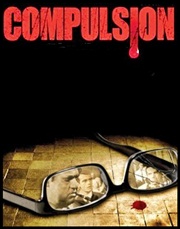 Filmed in black and white CinemaScope, Richard Fleischer’s 1959 Compulsion wants to disturb us about the infamous 1920s Leopold and Loeb “thrill kill” case and its societal implications but can’t
quite get at the creepy snob aestheticism enshrouding all the sensations. A serious Hollywood movie suggesting a socially elite super-smart twosome with alleged homosexual tendencies can proclaim the license to terminate someone’s life on the basis of class wouldn’t have easily passed many local censor boards (when we had them), so for every inference of degeneracy there’s Godless education to blame—for example, the handy Nietzsche and his superman philosophy. If not enough, the movie is ready with
backups: an over-protecting mother, a remote father and difficulties with relationships with the opposite sex. (It wouldn’t do to make a theatrical parlor game out of the snobbery, as Hitch’s Rope did in covering the angle, or the way the Broadway version of Compulsion is said to have been staged in 1957 featuring a menacing Roddy McDowall, a passive Dean Stockwell, with Howard Da Silva, Barbra Loden and Suzanne Pleshette.) There are alarm bell moments of the psychosexual—Bradford Dillman’s Loeb as master hovering over Dean Stockwell’s slavish Leopold fading into a dissolve, and Stockwell’s muddled “murder and rape” utterance to Diane Varsi. Stacking the deck, photographer William C. Mellor scans the impaneled jury to confirm that Orson Welles’s Clarence Darrow assumes it has already booked seats at the hangings. Some established facts are cloudy—for one, the hydrochloric acid poured on the victim to make identification difficult—and, as with the real murder and trial, we don’t (and still don’t) know who actually did the physical kill with a chisel. The story’s kicker—for all the months-long planning Loeb and Leopold engaged to commit the perfect “thrill of the kill” crime—is the transgressors are bunglers extraordinaire. By necessity, the justly famous two-day defense of the killers by Darrow has been abridged to about twelve minutes of highlights often adding incoherency to an otherwise effectual strategy. According to Barbara Leaming in her bio Orson Welles, Fleischer decided not to film the Darrow speech in sequence or single takes, choosing instead to jump from one part of the defense for this camera angle to another part for another angle and so forth.
With
Welles available
only for ten days of shooting, the decision was based on believing the camera setups woud make the editing process easier. The method doesn’t quite work: Welles has almost no lawyer momentum—a tiredness hangs over the dispersed defense, his hefty legal deity a lackluster version of himself. With yet another nose job and in bad makeup Welles manages to grab his moments at the rigged news conference and in his wry punch at Stockwell’s Leopold about the dooming pair of glasses. Dillman has some jaunty daringness in
the early part and at times Charlton Heston seems to emerge from him as if an unsolicited spirit. Stockwell has always known how to play scenes to the max and outflank other actors in them, as he does here, but when the character goes wobbly, so does his acting. Darrow’s real marathon oratory, with the strange inclusion of the word “love” as a pardon from the death penalty for killers who were clearly absent of associated emotion, had marginal impact on the judge. He spared them because they were under the then-legally
culpable age of 21 at the time of the crime. (Leopold was 19, Loeb 18; the former would die in prison after an inmate slashed him roughly fifty times with a razor blade and the latter was released after 33 years and moved to and married a widow in Puerto Rico, succumbing to a diabetes-related heart attack in 1971.) The intriguing causation of the horrific by these compulsives remains the murky terrain crossbreeding psychology and philosophy, material ripe for a remake by David Cronenberg and Christopher Hampton
who gave us A Dangerous Method. They’d likely add commodity to the snooty nihilism and selective murder, since Leopold claimed exclusive property rights and brought forth legal action, trying to stop the making of the movie, claiming it was defamation, an invasion of privacy, and an attempt to make money off his life without authorization. The court ruled his sick crime was self-defamation.
Filmed in black and white CinemaScope, Richard Fleischer’s 1959 Compulsion wants to disturb us about the infamous 1920s Leopold and Loeb “thrill kill” case and its societal implications but can’t
quite get at the creepy snob aestheticism enshrouding all the sensations. A serious Hollywood movie suggesting a socially elite super-smart twosome with alleged homosexual tendencies can proclaim the license to terminate someone’s life on the basis of class wouldn’t have easily passed many local censor boards (when we had them), so for every inference of degeneracy there’s Godless education to blame—for example, the handy Nietzsche and his superman philosophy. If not enough, the movie is ready with
backups: an over-protecting mother, a remote father and difficulties with relationships with the opposite sex. (It wouldn’t do to make a theatrical parlor game out of the snobbery, as Hitch’s Rope did in covering the angle, or the way the Broadway version of Compulsion is said to have been staged in 1957 featuring a menacing Roddy McDowall, a passive Dean Stockwell, with Howard Da Silva, Barbra Loden and Suzanne Pleshette.) There are alarm bell moments of the psychosexual—Bradford Dillman’s Loeb as master hovering over Dean Stockwell’s slavish Leopold fading into a dissolve, and Stockwell’s muddled “murder and rape” utterance to Diane Varsi. Stacking the deck, photographer William C. Mellor scans the impaneled jury to confirm that Orson Welles’s Clarence Darrow assumes it has already booked seats at the hangings. Some established facts are cloudy—for one, the hydrochloric acid poured on the victim to make identification difficult—and, as with the real murder and trial, we don’t (and still don’t) know who actually did the physical kill with a chisel. The story’s kicker—for all the months-long planning Loeb and Leopold engaged to commit the perfect “thrill of the kill” crime—is the transgressors are bunglers extraordinaire. By necessity, the justly famous two-day defense of the killers by Darrow has been abridged to about twelve minutes of highlights often adding incoherency to an otherwise effectual strategy. According to Barbara Leaming in her bio Orson Welles, Fleischer decided not to film the Darrow speech in sequence or single takes, choosing instead to jump from one part of the defense for this camera angle to another part for another angle and so forth.
With
Welles available
only for ten days of shooting, the decision was based on believing the camera setups woud make the editing process easier. The method doesn’t quite work: Welles has almost no lawyer momentum—a tiredness hangs over the dispersed defense, his hefty legal deity a lackluster version of himself. With yet another nose job and in bad makeup Welles manages to grab his moments at the rigged news conference and in his wry punch at Stockwell’s Leopold about the dooming pair of glasses. Dillman has some jaunty daringness in
the early part and at times Charlton Heston seems to emerge from him as if an unsolicited spirit. Stockwell has always known how to play scenes to the max and outflank other actors in them, as he does here, but when the character goes wobbly, so does his acting. Darrow’s real marathon oratory, with the strange inclusion of the word “love” as a pardon from the death penalty for killers who were clearly absent of associated emotion, had marginal impact on the judge. He spared them because they were under the then-legally
culpable age of 21 at the time of the crime. (Leopold was 19, Loeb 18; the former would die in prison after an inmate slashed him roughly fifty times with a razor blade and the latter was released after 33 years and moved to and married a widow in Puerto Rico, succumbing to a diabetes-related heart attack in 1971.) The intriguing causation of the horrific by these compulsives remains the murky terrain crossbreeding psychology and philosophy, material ripe for a remake by David Cronenberg and Christopher Hampton
who gave us A Dangerous Method. They’d likely add commodity to the snooty nihilism and selective murder, since Leopold claimed exclusive property rights and brought forth legal action, trying to stop the making of the movie, claiming it was defamation, an invasion of privacy, and an attempt to make money off his life without authorization. The court ruled his sick crime was self-defamation.
 Always a few too many irritants in Luchino Visconti’s pictures. If it’s not the Marxist bullshit, or the heaviness of life for the Italian downtrodden, or the subversive longing for opulent aristocracy, then it’s sexual perversion at the higher echelons of society culminating in operatic
finales. Something worse, however, runs through his movies—inept language dubbing. It’s mostly why the full panoply of recognition eluded him. Some of his later chefs-d’oeuvre—The Leopard, The Damned and Ludwig—have applaudable visual achievements
on varying levels but they also demand the audience carry their shortcomings. Listening to the performers being dubbed over is tormenting; there’s little if any integrity in the hollow voices, their sounds disrupt and are regularly inconsistent to the actual filmed performances. There’s Burt Lancaster as the aging dying leopard speaking faraway English; he becomes the giant misfit in the landscape of midgets rattling off mishmash. (Enjoyed him much more in the director’s
Conversation Piece, shot in English.) In The Damned, there are so many lows and highs in the dubbing process you use the zapper constantly to up/down the volume. The performances by the potpourri casts are left in ruins, with the principal histrions going for every physical prop and pose
they can latch onto: Burt’s mustache, hair and stiff upper lip suits, mother dearest Ingrid Thulin’s antique brass & burgundy hat and cigarillos and her son Helmut Berger’s transy whims are nothing less than lifesaving iconology. The economies long-governing Euro movie making make necessary the language re-recordings, which were/are fun for the claptrappers yet with an artist of Visconti’s stature, the audience is forced to grant compensation to him and the actors for the process by pretending we
don’t hear
the messes they have have made of the intended prestige. In her essay “I Can’t Get That Monster Out of My Mind,” Joan Didion writes: “Visconti has less sense of form than anyone now directing. One might as well have viewed a series of stills, in no perceptible order.” But this is what saves him; he depends, as do we, on those set pieces as solution to his clumsy connectives. Rocco and His Brothers isn’t as troublesome: the cast looks
like it belongs in that basement tenement in Milan. All right, maybe not Frenchy Alain Delon who’s the family’s cherished love object. (Visconti has a blatant crush and Delon savors the attention.) By the time this familial epic reaches its climax—and even before, when Delon and his brother Renato Salvatori are slugging away at each other—the audience is gripped by the jealousy and how it clots to form Greek tragedy. Despite all the problems with permissions granted and then retracted concerning
where Rocco could do location shooting, Giuseppe Rotunno’s camera is demonstration in showcasing city grit. Of the Visconti pictures I’ve viewed, this one’s the most moving; its flinging emotions aren’t alien to the audience in the way we’re removed from relating to the waltzing mannequins in The Leopard, the grim reaping of Death in Venice, the degenerate mummies in The Damned or the fairy queen in Ludwig. For all his cigarette intake—reportedly five packs a day—Visconti could still breathe into us an afterthought as planted reward:
inclined as we are to snicker at Helmut’s solo as Marlene Dietrich, his pedophilic dalliances and then his romp with mommie in The Damned, it’s amusing speculation to wonder if his career move as a Nazi will get him reared by the Gestapo before hanging him with piano wire.
Always a few too many irritants in Luchino Visconti’s pictures. If it’s not the Marxist bullshit, or the heaviness of life for the Italian downtrodden, or the subversive longing for opulent aristocracy, then it’s sexual perversion at the higher echelons of society culminating in operatic
finales. Something worse, however, runs through his movies—inept language dubbing. It’s mostly why the full panoply of recognition eluded him. Some of his later chefs-d’oeuvre—The Leopard, The Damned and Ludwig—have applaudable visual achievements
on varying levels but they also demand the audience carry their shortcomings. Listening to the performers being dubbed over is tormenting; there’s little if any integrity in the hollow voices, their sounds disrupt and are regularly inconsistent to the actual filmed performances. There’s Burt Lancaster as the aging dying leopard speaking faraway English; he becomes the giant misfit in the landscape of midgets rattling off mishmash. (Enjoyed him much more in the director’s
Conversation Piece, shot in English.) In The Damned, there are so many lows and highs in the dubbing process you use the zapper constantly to up/down the volume. The performances by the potpourri casts are left in ruins, with the principal histrions going for every physical prop and pose
they can latch onto: Burt’s mustache, hair and stiff upper lip suits, mother dearest Ingrid Thulin’s antique brass & burgundy hat and cigarillos and her son Helmut Berger’s transy whims are nothing less than lifesaving iconology. The economies long-governing Euro movie making make necessary the language re-recordings, which were/are fun for the claptrappers yet with an artist of Visconti’s stature, the audience is forced to grant compensation to him and the actors for the process by pretending we
don’t hear
the messes they have have made of the intended prestige. In her essay “I Can’t Get That Monster Out of My Mind,” Joan Didion writes: “Visconti has less sense of form than anyone now directing. One might as well have viewed a series of stills, in no perceptible order.” But this is what saves him; he depends, as do we, on those set pieces as solution to his clumsy connectives. Rocco and His Brothers isn’t as troublesome: the cast looks
like it belongs in that basement tenement in Milan. All right, maybe not Frenchy Alain Delon who’s the family’s cherished love object. (Visconti has a blatant crush and Delon savors the attention.) By the time this familial epic reaches its climax—and even before, when Delon and his brother Renato Salvatori are slugging away at each other—the audience is gripped by the jealousy and how it clots to form Greek tragedy. Despite all the problems with permissions granted and then retracted concerning
where Rocco could do location shooting, Giuseppe Rotunno’s camera is demonstration in showcasing city grit. Of the Visconti pictures I’ve viewed, this one’s the most moving; its flinging emotions aren’t alien to the audience in the way we’re removed from relating to the waltzing mannequins in The Leopard, the grim reaping of Death in Venice, the degenerate mummies in The Damned or the fairy queen in Ludwig. For all his cigarette intake—reportedly five packs a day—Visconti could still breathe into us an afterthought as planted reward:
inclined as we are to snicker at Helmut’s solo as Marlene Dietrich, his pedophilic dalliances and then his romp with mommie in The Damned, it’s amusing speculation to wonder if his career move as a Nazi will get him reared by the Gestapo before hanging him with piano wire.
 HOGS THE CAMERA: Takes a great deal of forbearance to sit through Kevin Costner’s Dances with Wolves, a deeply tanned epic of 80s-minted American mythology. Laughably mired in romanticized heroics to produce a typical
inevitability: when Marlon
Brando refused his Oscar for The Godfather because of the way American Indians have been treated, he was promptly criticized by his fellow Academy members for his public stand; Costner earned a standing ovation when he wins Best Picture for his. An amalgamation of Ford’s The Searchers and Cheyenne Autumn and Huston’s The Unforgiven,
Dances with Wolves wouldn’t be too objectionable if it didn’t have the saphead narration and delivery. For every good thing Costner tries as an actor—working to build up authority, strength and sympathy—his simplistic accounting destroys by the use of his little-boy Tom Selleck voice bearing no kinship to his on-screen character. And transplant squaw Mary McDonnell can’t get us passed how she looks too much like a blitzed-out
combo of Gracie Slick
and Jane Fonda. Other uncomfortable borrowings: John Barry’s score is a lazy lift from his Out of Africa; some of the Indian costumes, makeup and hairdos (particularly the first ones viewed) look like rejects from The Road Warrior; the buffalo stampedes resemble those in Never Cry Wolf; the romantic rolls in the snow courtesy of A Man and a Woman and Mrs. Soffel. After watching the movie a friend emailed
me noting the mounting evidence Costner can’t
get enough of himself on screen and quipped, “Why do they keep calling him Dances with Wolves? Shouldn’t he be called Hogs the Camera?”
HOGS THE CAMERA: Takes a great deal of forbearance to sit through Kevin Costner’s Dances with Wolves, a deeply tanned epic of 80s-minted American mythology. Laughably mired in romanticized heroics to produce a typical
inevitability: when Marlon
Brando refused his Oscar for The Godfather because of the way American Indians have been treated, he was promptly criticized by his fellow Academy members for his public stand; Costner earned a standing ovation when he wins Best Picture for his. An amalgamation of Ford’s The Searchers and Cheyenne Autumn and Huston’s The Unforgiven,
Dances with Wolves wouldn’t be too objectionable if it didn’t have the saphead narration and delivery. For every good thing Costner tries as an actor—working to build up authority, strength and sympathy—his simplistic accounting destroys by the use of his little-boy Tom Selleck voice bearing no kinship to his on-screen character. And transplant squaw Mary McDonnell can’t get us passed how she looks too much like a blitzed-out
combo of Gracie Slick
and Jane Fonda. Other uncomfortable borrowings: John Barry’s score is a lazy lift from his Out of Africa; some of the Indian costumes, makeup and hairdos (particularly the first ones viewed) look like rejects from The Road Warrior; the buffalo stampedes resemble those in Never Cry Wolf; the romantic rolls in the snow courtesy of A Man and a Woman and Mrs. Soffel. After watching the movie a friend emailed
me noting the mounting evidence Costner can’t
get enough of himself on screen and quipped, “Why do they keep calling him Dances with Wolves? Shouldn’t he be called Hogs the Camera?”
 Can’t deny John Schlesinger’s Darling didn’t have some impact back
in the mid-60s. While many of us saw right through his shit about boring ciphers flaunting their selfishness, initial American defenders seemed to be our college girl friends in Julie Christie hairdos, which helped unleash “darling” attitudes on dates or at parties, mouthing variations of Frederic Raphael’s gay-drenched bitchery. Christie’s novel but dour androgyny as Princess Diana seemed to propel these women to leap about as if they were ultra-libertines; she gave them a sense of vagabond identity, their
repellent frippery a form of mod hip—Darling was their story because, after all, they really were shallow, in perpetual post-La Dolce Vita mode. Christie hasn’t changed much throughout the years; watching her here and in Doctor Zhivago, or, just a few examples, Petulia, Shampoo, Hamlet,
Afterglow and The Company You Keep, she seems fixed as insistently harsh archetype. (In Away from Her she’s good up to the point where, as with Julianne Moore in Still Alice, the worst of Alzheimer’s
is conveniently smoothed over so as not to frighten us about the severe dementia stage.) Other than scene-stealing, does it mean much that Laurence Harvey’s cigarettes almost always have lengthy ashes about to fall? He once quipped what could go along with the cigs: “We English have sex on the brain. Not the best place for it, actually.”
Can’t deny John Schlesinger’s Darling didn’t have some impact back
in the mid-60s. While many of us saw right through his shit about boring ciphers flaunting their selfishness, initial American defenders seemed to be our college girl friends in Julie Christie hairdos, which helped unleash “darling” attitudes on dates or at parties, mouthing variations of Frederic Raphael’s gay-drenched bitchery. Christie’s novel but dour androgyny as Princess Diana seemed to propel these women to leap about as if they were ultra-libertines; she gave them a sense of vagabond identity, their
repellent frippery a form of mod hip—Darling was their story because, after all, they really were shallow, in perpetual post-La Dolce Vita mode. Christie hasn’t changed much throughout the years; watching her here and in Doctor Zhivago, or, just a few examples, Petulia, Shampoo, Hamlet,
Afterglow and The Company You Keep, she seems fixed as insistently harsh archetype. (In Away from Her she’s good up to the point where, as with Julianne Moore in Still Alice, the worst of Alzheimer’s
is conveniently smoothed over so as not to frighten us about the severe dementia stage.) Other than scene-stealing, does it mean much that Laurence Harvey’s cigarettes almost always have lengthy ashes about to fall? He once quipped what could go along with the cigs: “We English have sex on the brain. Not the best place for it, actually.”
 Pop novelist Irving Wallace made a career out of taking hot topics and turning them into best sellers. The Kinsey sex surveys for 1961’s The Chapman Report; the first black president in 1964’s
The Man;
banning obscenity in 1969’s The Seven Minutes; the FBI trying to destroy the “Bill of Rights” in 1976’s The R Document; the Russians kidnapping the First Lady and replacing her with a look-alike spy in 1980’s The Second Lady; a news empire egomaniac creating fake news in 1982’s The Almighty; Hitler and Eva surviving the bunker in 1986’s The Seventh Secret. All of these seemed instantly perfect movie scenarios, but the few filmed were
terrible. Wallace’s 1972’s The Word, about the discovery of a long-hidden gospel from Jesus’s brother James, received both very respectful reviews and a respectable treatment as an eight hour miniseries. The results of the latter weren’t the equal to the book, not for a lack of trying but for the revelation viewers (and readers) likely suspected was coming while everyone else in the story conspires to deny. (A three hour version of 1978 miniseries is available at youtube; washed out
of color yet watchable, David Janssen, ageing a bit like William Holden and with sideburns as hair fans covering his ears, plays the public relations executive whose conscience is belatedly stirred.) There is a palatable heritage resulting from Wallace’s novel and recognized by readers in Dan Brown’s The Da Vinci Code. Wallace’s “hook” is the text from the brother of Jesus and changed to Brown’s manhunt for the Holy
Grail of evidence Jesus and Mary Magdalene cohabited to create descendants. I don’t think anyone who has read both books would suggest Brown deliberately lifted to warrant legal recourse—Wallace instead would be flattered—but he surely goldmined Wallace’s topicality, devices and momentum, enveloping readers in an intriguing ride which can’t have the kind of conclusion we really want. (We’re more forgiving of this in a novel, as the medium has the space to explicatively cushion our disappointments.) One of
the
pleasures of the “Words” from James—Wallace’s career high a writer—is they’re exciting teases; we don’t have to be believers to be engrossed in them as sanctified gossip, nor is there anything preposterous about the revealings to not wish them to be genuine. (They are a movie still to be made; Jewish Wallace got to the centralities of Christianity desperately in need of restoration.) Brown’s whiz bang scenario travels through Europe to pick up bits and pieces of the puzzle of Godly ancestry
for a forth-coming
revelation and whereas Wallace’s conclusion is half-empty, Brown found a way to make the chalice half-full by pouring into his finale the fancy of a familial bloodline courtesy of Da Vinci’s “The Last Supper.” If the spell of The Word on TV becomes reductive (James’s gospel is abridged), Ron Howard’s version of The Da Vinci Code becomes waylaid through endless explication. Using shorthand, symbologist Tom Hanks
and his costar Audrey Tautou say things similar to this: “The Louvre killer knew something but what did he know and what was he going to do with it?”; “Look, it’s the holy thingamajig and if we think about it, here’s the logical sequence of characters and digits to get it opened”; “But if he didn’t know and she knew and all the others were trying to cover up what they can’t figure out...”; “And Jesus and Mary Magdalene went here and after he was nailed she then went there to have...”; “OMG, you mean I’m..?” Howard’s
insistently determined, given the twists and turns, to keep it all serious, but at least the production values are classy, the only virtues in the followups Angels & Demons and Inferno. Without Hanks as an updated version of Wallace as the handy People’s Almanac of Catholic claptrap and without the much-discussed haircut—I’m one of the few who liked it—the movie might have been unbearable. He’s not St. Tom for nothing.
Pop novelist Irving Wallace made a career out of taking hot topics and turning them into best sellers. The Kinsey sex surveys for 1961’s The Chapman Report; the first black president in 1964’s
The Man;
banning obscenity in 1969’s The Seven Minutes; the FBI trying to destroy the “Bill of Rights” in 1976’s The R Document; the Russians kidnapping the First Lady and replacing her with a look-alike spy in 1980’s The Second Lady; a news empire egomaniac creating fake news in 1982’s The Almighty; Hitler and Eva surviving the bunker in 1986’s The Seventh Secret. All of these seemed instantly perfect movie scenarios, but the few filmed were
terrible. Wallace’s 1972’s The Word, about the discovery of a long-hidden gospel from Jesus’s brother James, received both very respectful reviews and a respectable treatment as an eight hour miniseries. The results of the latter weren’t the equal to the book, not for a lack of trying but for the revelation viewers (and readers) likely suspected was coming while everyone else in the story conspires to deny. (A three hour version of 1978 miniseries is available at youtube; washed out
of color yet watchable, David Janssen, ageing a bit like William Holden and with sideburns as hair fans covering his ears, plays the public relations executive whose conscience is belatedly stirred.) There is a palatable heritage resulting from Wallace’s novel and recognized by readers in Dan Brown’s The Da Vinci Code. Wallace’s “hook” is the text from the brother of Jesus and changed to Brown’s manhunt for the Holy
Grail of evidence Jesus and Mary Magdalene cohabited to create descendants. I don’t think anyone who has read both books would suggest Brown deliberately lifted to warrant legal recourse—Wallace instead would be flattered—but he surely goldmined Wallace’s topicality, devices and momentum, enveloping readers in an intriguing ride which can’t have the kind of conclusion we really want. (We’re more forgiving of this in a novel, as the medium has the space to explicatively cushion our disappointments.) One of
the
pleasures of the “Words” from James—Wallace’s career high a writer—is they’re exciting teases; we don’t have to be believers to be engrossed in them as sanctified gossip, nor is there anything preposterous about the revealings to not wish them to be genuine. (They are a movie still to be made; Jewish Wallace got to the centralities of Christianity desperately in need of restoration.) Brown’s whiz bang scenario travels through Europe to pick up bits and pieces of the puzzle of Godly ancestry
for a forth-coming
revelation and whereas Wallace’s conclusion is half-empty, Brown found a way to make the chalice half-full by pouring into his finale the fancy of a familial bloodline courtesy of Da Vinci’s “The Last Supper.” If the spell of The Word on TV becomes reductive (James’s gospel is abridged), Ron Howard’s version of The Da Vinci Code becomes waylaid through endless explication. Using shorthand, symbologist Tom Hanks
and his costar Audrey Tautou say things similar to this: “The Louvre killer knew something but what did he know and what was he going to do with it?”; “Look, it’s the holy thingamajig and if we think about it, here’s the logical sequence of characters and digits to get it opened”; “But if he didn’t know and she knew and all the others were trying to cover up what they can’t figure out...”; “And Jesus and Mary Magdalene went here and after he was nailed she then went there to have...”; “OMG, you mean I’m..?” Howard’s
insistently determined, given the twists and turns, to keep it all serious, but at least the production values are classy, the only virtues in the followups Angels & Demons and Inferno. Without Hanks as an updated version of Wallace as the handy People’s Almanac of Catholic claptrap and without the much-discussed haircut—I’m one of the few who liked it—the movie might have been unbearable. He’s not St. Tom for nothing.
 Have you ever felt defeated by a good movie? Or worse, by an irreconcilably, inconceivably beautiful one like Dead Man Walking? Director Tim Robbins addresses, without proselytizing, without relentless bangs against
the head, how the death penalty
has become a cancer eating away our moral fabric; how the ultimate sentence is used less as means of justice and more as a mechanism through which the survivors of victims are given their emotional vengeance over supposed cool judicious rationale. Whatever one’s feelings regarding the efficacy of capital punishment, Robbins, who also wrote the adaptation from the Sister Helen Prejean book, reminds how consumed we are by it; in most cases, putting
someone to death has become pernicious selfishness—killing for the living. At every step Robbins is on top of his subject but the subject is so depressing it forces all of us to “look for a loophole.” We’re not given one; Sean Penn’s character goes to his death with undeniable warrant. We’re shown the horrible crime; there’s no closeted sympathy for the murderers; the victims’ parents aren’t made out to be hysterical emotional messes or rabid revengers. With such graceful and dignified even-handedness in giving
all sides their vent, maybe what’s miscalculated about the movie is Robbins doesn’t give us anything to feel enraged about. The performances, however, are marvels of poignancy. The bug-eyed naïveté of Susan Sarandon’s Sister Helen gets her in hot water at every turn but she doesn’t seek salve for the burns; when she says to Penn, as his spiritual advisor, he may “have to die to find love,” her Catholic beliefs,
even to non-believers, seem consolable rescue. Penn is riveting: with his character getting drunk at 12 with his old man, on booze and downers and acid when the murders were committed, an admitted “mad dog racist,” his eyelids droopy as he looks almost longingly at Sarandon, listening to him make his last phone call and then turning to see the execution’s witnesses eating, watching him “sleep” his way to death, he’s more real as the horror of backwater American bigot machismo than he’s ever been as anyone else.
His actor’s restraint and maturity are emotionally paralyzing. (Compared to this, he looks misfitted and puny in Milk and stupidly revengeful in the unaccountably praised Mystic River.) It’s almost a shocking relief when Raymond J. Barry—who as one of the victims’ parents could pass as Roddy McDowall’s brother—arrives at the cemetery for Penn’s funeral and says what is the movie’s one heartbreaker thought summing up our feelings as well: “I don’t know why I’m here.”
Have you ever felt defeated by a good movie? Or worse, by an irreconcilably, inconceivably beautiful one like Dead Man Walking? Director Tim Robbins addresses, without proselytizing, without relentless bangs against
the head, how the death penalty
has become a cancer eating away our moral fabric; how the ultimate sentence is used less as means of justice and more as a mechanism through which the survivors of victims are given their emotional vengeance over supposed cool judicious rationale. Whatever one’s feelings regarding the efficacy of capital punishment, Robbins, who also wrote the adaptation from the Sister Helen Prejean book, reminds how consumed we are by it; in most cases, putting
someone to death has become pernicious selfishness—killing for the living. At every step Robbins is on top of his subject but the subject is so depressing it forces all of us to “look for a loophole.” We’re not given one; Sean Penn’s character goes to his death with undeniable warrant. We’re shown the horrible crime; there’s no closeted sympathy for the murderers; the victims’ parents aren’t made out to be hysterical emotional messes or rabid revengers. With such graceful and dignified even-handedness in giving
all sides their vent, maybe what’s miscalculated about the movie is Robbins doesn’t give us anything to feel enraged about. The performances, however, are marvels of poignancy. The bug-eyed naïveté of Susan Sarandon’s Sister Helen gets her in hot water at every turn but she doesn’t seek salve for the burns; when she says to Penn, as his spiritual advisor, he may “have to die to find love,” her Catholic beliefs,
even to non-believers, seem consolable rescue. Penn is riveting: with his character getting drunk at 12 with his old man, on booze and downers and acid when the murders were committed, an admitted “mad dog racist,” his eyelids droopy as he looks almost longingly at Sarandon, listening to him make his last phone call and then turning to see the execution’s witnesses eating, watching him “sleep” his way to death, he’s more real as the horror of backwater American bigot machismo than he’s ever been as anyone else.
His actor’s restraint and maturity are emotionally paralyzing. (Compared to this, he looks misfitted and puny in Milk and stupidly revengeful in the unaccountably praised Mystic River.) It’s almost a shocking relief when Raymond J. Barry—who as one of the victims’ parents could pass as Roddy McDowall’s brother—arrives at the cemetery for Penn’s funeral and says what is the movie’s one heartbreaker thought summing up our feelings as well: “I don’t know why I’m here.”
 THE
COOTIE DUET: The
grasping, growling, harping, bellowing, drunken, wailing sounds coming
from Albert Finney as an aging, ailing second-rate Shakespearean actor in
The
Dresser are the closest
to audible carcinogens since George C. Scott’s smoky throatiness in
Patton. There’s undiluted power and majesty in Finney’s voice,
but also things malignant and menacing. Hearing those excruciating cries
of his Othello are almost the real thing, and the brief glimpses we see of
him as King Lear are we hope test takes for the Lear he’ll eventually do
for us. Finney looks tragically grandiose, weighty and towering, fatigued,
affected but still kiddishly impetuous, diseased through obsession with
Shakespeare and diseased by the possession Shakespeare has of him.
The
Dresser, however, isn’t really
about actors and how the Bard consumes them, and it’s what’s partially
the matter: as much of a joy it is to watch Finney in his getups,
becoming perplexed, spitting out ground rules to support his sagging vanity,
there’s nothing deeper than an actor’s artifices to respond to his character.
Whatever there might have been is soaked up by the movie’s major
drawback—Tom Courtenay as Finney’s backstage dresser. Courtenay’s
effeminacy—the whining, the whimpering, the shrill theatre babble he
spouts, the way he holds his hand to his face, his arched fingers (that pinky!),
the pulls at his shirt, how he so precisely bends his knees or
curtsies—all so controlled as to be out of control. And itchy:
he gives us a case of the cooties. (He’s like TDC’s Christopher Lowell without
the humor and relieving commercials.) This is partly due to Courtenay having
done the role in London and on Broadway as the star, which
gratefully he isn’t here, so we can see how rehearsed his deadly mannerisms
are. In a larger sense, the part is too vaguely written; we’re not at all
sure if he’s supposed to be this homosexual, or asexual, or
a theatre precisian as toxic mutation. An overpowering and terminal
performance: when Finney succumbs, you believe the lethal power of the louses
on the loose to get him. Playwright Ronald Harwood based the play on his experience
as a dresser to actor-manager Donald Wolfit (Laurence Harvey’s future
father-in-law in Room at the Top, General Murray in
Lawrence of Arabia, the Bishop of London in
Becket) who, from 1937 to 1959, toured with his own repertory company.
If unpleasant revelation Harwood’s relationship with Wolfit is the
same as the one played out in the movie, worse is what Harwood is trying to say about a desperate melancholy in British theatre. Director Peter Yates, who
gives way to Finney’s and Courtenay’s stunt work, gets England’s bleakness
right; everything’s dark, grayish, sooty—very unlike his Breaking
Away, a cheery and sunny A & P symphony. During The
Dresser’s initial
release, a private research group in England released stats indicating the country had the
highest number of neurotics in Europe, downing the most tranquilizers, sedatives
and anti-depressants. When the movie concludes, you’re convinced it’s true.
THE
COOTIE DUET: The
grasping, growling, harping, bellowing, drunken, wailing sounds coming
from Albert Finney as an aging, ailing second-rate Shakespearean actor in
The
Dresser are the closest
to audible carcinogens since George C. Scott’s smoky throatiness in
Patton. There’s undiluted power and majesty in Finney’s voice,
but also things malignant and menacing. Hearing those excruciating cries
of his Othello are almost the real thing, and the brief glimpses we see of
him as King Lear are we hope test takes for the Lear he’ll eventually do
for us. Finney looks tragically grandiose, weighty and towering, fatigued,
affected but still kiddishly impetuous, diseased through obsession with
Shakespeare and diseased by the possession Shakespeare has of him.
The
Dresser, however, isn’t really
about actors and how the Bard consumes them, and it’s what’s partially
the matter: as much of a joy it is to watch Finney in his getups,
becoming perplexed, spitting out ground rules to support his sagging vanity,
there’s nothing deeper than an actor’s artifices to respond to his character.
Whatever there might have been is soaked up by the movie’s major
drawback—Tom Courtenay as Finney’s backstage dresser. Courtenay’s
effeminacy—the whining, the whimpering, the shrill theatre babble he
spouts, the way he holds his hand to his face, his arched fingers (that pinky!),
the pulls at his shirt, how he so precisely bends his knees or
curtsies—all so controlled as to be out of control. And itchy:
he gives us a case of the cooties. (He’s like TDC’s Christopher Lowell without
the humor and relieving commercials.) This is partly due to Courtenay having
done the role in London and on Broadway as the star, which
gratefully he isn’t here, so we can see how rehearsed his deadly mannerisms
are. In a larger sense, the part is too vaguely written; we’re not at all
sure if he’s supposed to be this homosexual, or asexual, or
a theatre precisian as toxic mutation. An overpowering and terminal
performance: when Finney succumbs, you believe the lethal power of the louses
on the loose to get him. Playwright Ronald Harwood based the play on his experience
as a dresser to actor-manager Donald Wolfit (Laurence Harvey’s future
father-in-law in Room at the Top, General Murray in
Lawrence of Arabia, the Bishop of London in
Becket) who, from 1937 to 1959, toured with his own repertory company.
If unpleasant revelation Harwood’s relationship with Wolfit is the
same as the one played out in the movie, worse is what Harwood is trying to say about a desperate melancholy in British theatre. Director Peter Yates, who
gives way to Finney’s and Courtenay’s stunt work, gets England’s bleakness
right; everything’s dark, grayish, sooty—very unlike his Breaking
Away, a cheery and sunny A & P symphony. During The
Dresser’s initial
release, a private research group in England released stats indicating the country had the
highest number of neurotics in Europe, downing the most tranquilizers, sedatives
and anti-depressants. When the movie concludes, you’re convinced it’s true.
 Earthquake is schlock; wrapped in the nonsense of Sensurround,
it’s a schlockfest. Those of us who experienced the two together back in 1974 with a little help from cannabis sativa will always be grateful for the nonstop laughs. Who can resist the screaming joys of watching L.A. go down? Who doesn’t love it when Ava and Chuck are swept away? (Cinephiles who know their tortured history in making 55 Days at Peking appreciate the reteaming, what with the former’s fermenting blowsiness and the latter’s gallantry as repentance.) Or not enjoy the treasure trove
of Marjoe’s bonkers moments? His line about double green stamps is a forewarning gem. The special effects are a mixed bag: some good, a lot so fake they’re funny—like the cardboard houses resting on even flimsier stilts—yet in tandem with the sound vibrations making you wonder if pieces of the ceiling’s plaster might fall (in fact, there were reports of it happening, and unsurprisingly not impeding but enhancing the box office), they make you feel sated that Mother Nature delivers justice. Directed by Mark Robson.
Earthquake is schlock; wrapped in the nonsense of Sensurround,
it’s a schlockfest. Those of us who experienced the two together back in 1974 with a little help from cannabis sativa will always be grateful for the nonstop laughs. Who can resist the screaming joys of watching L.A. go down? Who doesn’t love it when Ava and Chuck are swept away? (Cinephiles who know their tortured history in making 55 Days at Peking appreciate the reteaming, what with the former’s fermenting blowsiness and the latter’s gallantry as repentance.) Or not enjoy the treasure trove
of Marjoe’s bonkers moments? His line about double green stamps is a forewarning gem. The special effects are a mixed bag: some good, a lot so fake they’re funny—like the cardboard houses resting on even flimsier stilts—yet in tandem with the sound vibrations making you wonder if pieces of the ceiling’s plaster might fall (in fact, there were reports of it happening, and unsurprisingly not impeding but enhancing the box office), they make you feel sated that Mother Nature delivers justice. Directed by Mark Robson.
 Of the alleged Hollywood perps who have been outed in the #MeToo rage, director James Toback is my personal choice as the most satisfying to have been exposed. He’s two tons of misogynist vile, a sexist, repulsive Jabba the Hut who now has more than 350 claims of abuse lodged against him. These claims aren’t
out of the blue; they’ve
been around and building for years and those of us who loved Pauline Kael wonder how it was her usually well-tuned radar didn’t pick up on his super sleaziness. Liking baddies—another one is Sam Pechinpah—she risked plenty in doing so: she was lured from her cushy perch at The New Yorker as America’s bitch supreme to make her first Hollywood foray into movie making with Toback, in a project titled Love and Money. The experience lasted about a month before she got the boot, unable
to resolve her editorial and artistic conflicts with him over the script and whatever else. Though she remained “out there” for several more months, doing busy shit work for Paramount, she did so out of desperation because she had nowhere to go and, worse, she was to suffer the additional crushing embarrassment when the magazine’s beloved editor William Shawn didn’t want her back. (“Corrupted,” he would utter in meekly spoken contempt.) While he’d later soften and allow her to return, everything
changed
when she did: her assumed invincibility as critic became a growing party joke. So did Toback, who went on to make Love and Money and bombed and followed up later with another bomb called, appropriately if not presciently, Exposed. As community college claptrap—a 1983 roly-poly Woody Allen gone inchoate—it’s probably not worth talking about, yet because of his recent troubles, it now reeks of foreboding
comeuppance. Even if we aren’t too sure what’s going on, the movie is strangely predictable, boring and very bad. There’s some kind of terrorist avenging taking place, the hatred having started back in Auschwitz; yes, another one of those. In the starring role is an inconceivable Rudolf Nureyev as the flip side of his Valentino. He’s gone from the Ken Russell Faggot Academy to Butch Correspondence School: his gait calculated, his pants brown corduroy, his jacket black leather, his coarse
hair urgently in need of a Pantene 3 Minute treatment. Miraculously we’re not too embarrassed for him, like we were in Russell’s fiasco, and he manages to pull off the violin seduction. (When revealing his gluteus maximus, we don’t have to guess what interested Tab Hunter.) At the time of the movie’s release, both Time magazine and Roger Ebert predicted Nastassia Kinski would become the next superstar. In looking over her résumé these days, the biggest thing going
for her back then was her agent having booked her for three movies in one year and, as the worst thing, a Time cover really can be the kiss of jinx. Her singular talent, restricted to glossies, is going from ravishing to ravaged to ravishing again. But back to Toback, who, a magna cum laude graduate from Harvard, enters the egotist zone believing he could afford to be seen as a prof in his own production. Exacerbating the soon-to-be infamous scumminess, he’s a chub schlub sounding
suspiciously like Kael on Toback in her review of his Fingers; he roll calls authors like Dostoyevski and Kafka and scribbled on the classroom blackboard are the names Orson Welles and A Touch of Evil—clumpy clues to what’s going on? The role might have been a classic cameo for John Belushi—a slob who gets screams as erudite teach. What seems fitting in the movie is Toback mirrors insistent masculine dysfunction; he’s not merely a dick, he’s an offensive limp dick. Reportedly
Kael forgave
his ignominious behavior towards her in Hollywood: in a photo included in Brian Kellow’s biography, he was invited to her 80th birthday party. The #MeToo-ers won’t be as forgiving.
Of the alleged Hollywood perps who have been outed in the #MeToo rage, director James Toback is my personal choice as the most satisfying to have been exposed. He’s two tons of misogynist vile, a sexist, repulsive Jabba the Hut who now has more than 350 claims of abuse lodged against him. These claims aren’t
out of the blue; they’ve
been around and building for years and those of us who loved Pauline Kael wonder how it was her usually well-tuned radar didn’t pick up on his super sleaziness. Liking baddies—another one is Sam Pechinpah—she risked plenty in doing so: she was lured from her cushy perch at The New Yorker as America’s bitch supreme to make her first Hollywood foray into movie making with Toback, in a project titled Love and Money. The experience lasted about a month before she got the boot, unable
to resolve her editorial and artistic conflicts with him over the script and whatever else. Though she remained “out there” for several more months, doing busy shit work for Paramount, she did so out of desperation because she had nowhere to go and, worse, she was to suffer the additional crushing embarrassment when the magazine’s beloved editor William Shawn didn’t want her back. (“Corrupted,” he would utter in meekly spoken contempt.) While he’d later soften and allow her to return, everything
changed
when she did: her assumed invincibility as critic became a growing party joke. So did Toback, who went on to make Love and Money and bombed and followed up later with another bomb called, appropriately if not presciently, Exposed. As community college claptrap—a 1983 roly-poly Woody Allen gone inchoate—it’s probably not worth talking about, yet because of his recent troubles, it now reeks of foreboding
comeuppance. Even if we aren’t too sure what’s going on, the movie is strangely predictable, boring and very bad. There’s some kind of terrorist avenging taking place, the hatred having started back in Auschwitz; yes, another one of those. In the starring role is an inconceivable Rudolf Nureyev as the flip side of his Valentino. He’s gone from the Ken Russell Faggot Academy to Butch Correspondence School: his gait calculated, his pants brown corduroy, his jacket black leather, his coarse
hair urgently in need of a Pantene 3 Minute treatment. Miraculously we’re not too embarrassed for him, like we were in Russell’s fiasco, and he manages to pull off the violin seduction. (When revealing his gluteus maximus, we don’t have to guess what interested Tab Hunter.) At the time of the movie’s release, both Time magazine and Roger Ebert predicted Nastassia Kinski would become the next superstar. In looking over her résumé these days, the biggest thing going
for her back then was her agent having booked her for three movies in one year and, as the worst thing, a Time cover really can be the kiss of jinx. Her singular talent, restricted to glossies, is going from ravishing to ravaged to ravishing again. But back to Toback, who, a magna cum laude graduate from Harvard, enters the egotist zone believing he could afford to be seen as a prof in his own production. Exacerbating the soon-to-be infamous scumminess, he’s a chub schlub sounding
suspiciously like Kael on Toback in her review of his Fingers; he roll calls authors like Dostoyevski and Kafka and scribbled on the classroom blackboard are the names Orson Welles and A Touch of Evil—clumpy clues to what’s going on? The role might have been a classic cameo for John Belushi—a slob who gets screams as erudite teach. What seems fitting in the movie is Toback mirrors insistent masculine dysfunction; he’s not merely a dick, he’s an offensive limp dick. Reportedly
Kael forgave
his ignominious behavior towards her in Hollywood: in a photo included in Brian Kellow’s biography, he was invited to her 80th birthday party. The #MeToo-ers won’t be as forgiving.
 Netflixed Faces, long avoided because I’m not a proponent of improv, particularly the calculated kind. After seeing it, I’m still not. While there’s obvious voyeurism
in the way the camera is virtually shoved into the actors’ mugs, nothing about their grainy blowups have much additional import to add to our initial reactions to them. We’re cued early on the likelihood of the story’s conclusion and the boozy journey to get there is marred by a supporting cast of lounge lizards and hag matrons who don’t know how to keep from embarrassing themselves. The fascination, which doesn’t last too long, is in what’s possibly scripted by director John Cassavetes, what’s made
up by the four major performers, and what kind of rehearsal they went through. From its peeping Tom movements, the camera has had some serious dry-run blocking; its conspicuousness is the movie’s least spontaneous feature and after a while we become preoccupied in its gross placements rather than in what’s being recorded. Gamely working at maintaining interest, John Marley, alternately a middle class Peter Finch and what George Segal might have aged into had he not let himself go, and Lynn Carlin, a
pretty Glenda Jackson
holding Janice Rule at bay, are the marrieds in trouble. Gena Rowlands is the trick who Marley turns to for some stimulation other than the ever-pouring liquor, and Seymour Cassel as Carlin’s one night stand is the over-the-hill beach blanket bum whose hair, even when it gets wet, doesn’t move much. They’re all remarkably adept at relaxing in their anxieties about the experiment they’re tying to pull off. As with Penn’s Mickey One ½, Cassavetes’ method is too conscious to be art but it’s not altogether
a bad thing to call it fart art.
Netflixed Faces, long avoided because I’m not a proponent of improv, particularly the calculated kind. After seeing it, I’m still not. While there’s obvious voyeurism
in the way the camera is virtually shoved into the actors’ mugs, nothing about their grainy blowups have much additional import to add to our initial reactions to them. We’re cued early on the likelihood of the story’s conclusion and the boozy journey to get there is marred by a supporting cast of lounge lizards and hag matrons who don’t know how to keep from embarrassing themselves. The fascination, which doesn’t last too long, is in what’s possibly scripted by director John Cassavetes, what’s made
up by the four major performers, and what kind of rehearsal they went through. From its peeping Tom movements, the camera has had some serious dry-run blocking; its conspicuousness is the movie’s least spontaneous feature and after a while we become preoccupied in its gross placements rather than in what’s being recorded. Gamely working at maintaining interest, John Marley, alternately a middle class Peter Finch and what George Segal might have aged into had he not let himself go, and Lynn Carlin, a
pretty Glenda Jackson
holding Janice Rule at bay, are the marrieds in trouble. Gena Rowlands is the trick who Marley turns to for some stimulation other than the ever-pouring liquor, and Seymour Cassel as Carlin’s one night stand is the over-the-hill beach blanket bum whose hair, even when it gets wet, doesn’t move much. They’re all remarkably adept at relaxing in their anxieties about the experiment they’re tying to pull off. As with Penn’s Mickey One ½, Cassavetes’ method is too conscious to be art but it’s not altogether
a bad thing to call it fart art.
 “The American movie kingdom hasn’t often been a meritocracy, but Robert De Niro and Meryl Streep rule it now, enthroned somewhere along the boundary between thespian and superstar. They rule because we willingly become their subjects, because for a few hours in the dark they have no peers,” wrote a wisely anonymous writer in the March, 1983 edition of Vanity Fair. If De Niro and Streep
were the “crowned heads” of American movies back then, their subjects who bowed did so because they believed in the redundant hype in the way the English sometimes believe in the Royal Family. Never heard fans of De Niro and Streep explain back in those days their circumvallate acting techniques, only the false raves and many awards. For Paramount, the De Niro and Streep get-together in an update of Noel Coward’s Brief Encounter was supposed to mean box office
but poison spread faster than viewers queving. A long overdue apology, I’m ashamed for making any connection between Coward’s middle-class heartbreaker and this hoot about way-over-the-hill Yuppies. Streep was quoted saying she found the Michael Christopher script “delicate and fragile.” She’ll never quite live down the Yale Drama School shit tover this: “I liked it. Its subtlety was very important—it was very Japanese in that sense. It has its own ordinary magic.” (Considering her bad patch of more self-flagellation
in the 90s, Streep is no doubt as eternally thankful as we are for the career-saving The Devil Wears Prada.) And De Niro was just a little too eager (anxious?) for interviewer Barbara Goldsmith’s positive reactions to his performance in the December 2, 1984 Parade. When you solicit favorable responses for a bad performance, haven’t you reduced yourself from king to court jester? Making De Niro’s and Streep’s efforts almost offensive is the obviousness in barely
staying awake; can’t remember seeing an American love story in which superstar thespians had such sleepy eyes. This isn’t pillow talk stuff, it’s an ad for No Doz. Falling in Love was rejected by one studio because “the kids won’t buy it,” which became one of the most prophetic statements made by a movie executive in the 80s. Another studio considered it but wanted some “cripples and a train crash and other hokey elements.” A train crash hokey? Had the crowned personages
perished while hungrily smooching on the rush hour commute, we’d walk away thinking, “Well, at least they one upped Love Story.”
“The American movie kingdom hasn’t often been a meritocracy, but Robert De Niro and Meryl Streep rule it now, enthroned somewhere along the boundary between thespian and superstar. They rule because we willingly become their subjects, because for a few hours in the dark they have no peers,” wrote a wisely anonymous writer in the March, 1983 edition of Vanity Fair. If De Niro and Streep
were the “crowned heads” of American movies back then, their subjects who bowed did so because they believed in the redundant hype in the way the English sometimes believe in the Royal Family. Never heard fans of De Niro and Streep explain back in those days their circumvallate acting techniques, only the false raves and many awards. For Paramount, the De Niro and Streep get-together in an update of Noel Coward’s Brief Encounter was supposed to mean box office
but poison spread faster than viewers queving. A long overdue apology, I’m ashamed for making any connection between Coward’s middle-class heartbreaker and this hoot about way-over-the-hill Yuppies. Streep was quoted saying she found the Michael Christopher script “delicate and fragile.” She’ll never quite live down the Yale Drama School shit tover this: “I liked it. Its subtlety was very important—it was very Japanese in that sense. It has its own ordinary magic.” (Considering her bad patch of more self-flagellation
in the 90s, Streep is no doubt as eternally thankful as we are for the career-saving The Devil Wears Prada.) And De Niro was just a little too eager (anxious?) for interviewer Barbara Goldsmith’s positive reactions to his performance in the December 2, 1984 Parade. When you solicit favorable responses for a bad performance, haven’t you reduced yourself from king to court jester? Making De Niro’s and Streep’s efforts almost offensive is the obviousness in barely
staying awake; can’t remember seeing an American love story in which superstar thespians had such sleepy eyes. This isn’t pillow talk stuff, it’s an ad for No Doz. Falling in Love was rejected by one studio because “the kids won’t buy it,” which became one of the most prophetic statements made by a movie executive in the 80s. Another studio considered it but wanted some “cripples and a train crash and other hokey elements.” A train crash hokey? Had the crowned personages
perished while hungrily smooching on the rush hour commute, we’d walk away thinking, “Well, at least they one upped Love Story.”
 Ever since Jeff Bridges won a slew of acting prizes for Crazy Heart, I’ve wanted to return to and share impressions on his work in Peter Weir’s
Fearless.
Originally written back in 1993, slicing away about 1400 words, here is what’s left: Bridges moves into the front ranks of American actors with his performance as Max. A balancing act, he has to make us believe in him as survivor (ostensibly the 1989 crash landing of a United DC 10 in Sioux City, Iowa), a savior among other survivors, and so full of bliss as an aftereffect he’s temporarily without fear. This series of shifts in character would drive any really good actor to
the bottle. Those who’d dare try also have to be unafraid of the relentless camera and Bridges’s marvel is all the more singular because Weir puts the camera right on top of him. Close-ups perilous as they can expose a lack of skill, when the camera’s breathing down, many actors fall back on practiced poses and stares and audiences detect self-protective mode. As the camera moves in, Bridges keeps right on going, holding nothing back; the intrusiveness accelerates his rapport with us. Making him a revelation—and
how good Weir is as director—is not only feeling the mounting dread of the passengers and the haunting doubts and miseries of survivors, we’re also able to feel Max’s sudden freedom from anxiety as our own multiples. With Fearless building on our gloom-filled anticipations of what’s coming, we want to hate Weir for putting us through it. We definitely hated Warners Bros. for having
the stupidity to release this movie during a period when millions would be flying over the holidays. Nationally released in early November, 1993 explains the aversive b.o. disappointment and Oscar ignoring Bridges and Weir. The only Oscar nom, for suporting actress, Rosie Perez is prodigious in pain and guilt in believing she’s responsible for the death of her two-year-old thrown out of her arms as the plane crashed. Being channeled by Bridges to acknowledge she’s not, we end up very close to believing the red
tool box she holds in her arms is her baby; she pulls out our deep primal instincts about the meaning of protection and innocence rarely felt from the screen. Isabella Rossellini as Bridges’s wife can’t help making us aware of Ingrid Bergman’s presence. But Mother Dear wasn’t quite this natural, often marring her otherwise fine endeavors with actressy tricks and freezed-dried ethnicities used as guards. Mindful of the object lesson, Rossellini’s a 911 dispatcher, having had a successful trial run in Cousins. The United crash, in which 185 people survived, was blamed on faulty titanium alloy leading to the loss of flight control and hydraulics. Bridges would suffer the loss of deserving peer recognition until Crazy Heart, a good vehicle nowhere near the emotions experienced in watching him as the most reassuring face in a plane cabin.
Ever since Jeff Bridges won a slew of acting prizes for Crazy Heart, I’ve wanted to return to and share impressions on his work in Peter Weir’s
Fearless.
Originally written back in 1993, slicing away about 1400 words, here is what’s left: Bridges moves into the front ranks of American actors with his performance as Max. A balancing act, he has to make us believe in him as survivor (ostensibly the 1989 crash landing of a United DC 10 in Sioux City, Iowa), a savior among other survivors, and so full of bliss as an aftereffect he’s temporarily without fear. This series of shifts in character would drive any really good actor to
the bottle. Those who’d dare try also have to be unafraid of the relentless camera and Bridges’s marvel is all the more singular because Weir puts the camera right on top of him. Close-ups perilous as they can expose a lack of skill, when the camera’s breathing down, many actors fall back on practiced poses and stares and audiences detect self-protective mode. As the camera moves in, Bridges keeps right on going, holding nothing back; the intrusiveness accelerates his rapport with us. Making him a revelation—and
how good Weir is as director—is not only feeling the mounting dread of the passengers and the haunting doubts and miseries of survivors, we’re also able to feel Max’s sudden freedom from anxiety as our own multiples. With Fearless building on our gloom-filled anticipations of what’s coming, we want to hate Weir for putting us through it. We definitely hated Warners Bros. for having
the stupidity to release this movie during a period when millions would be flying over the holidays. Nationally released in early November, 1993 explains the aversive b.o. disappointment and Oscar ignoring Bridges and Weir. The only Oscar nom, for suporting actress, Rosie Perez is prodigious in pain and guilt in believing she’s responsible for the death of her two-year-old thrown out of her arms as the plane crashed. Being channeled by Bridges to acknowledge she’s not, we end up very close to believing the red
tool box she holds in her arms is her baby; she pulls out our deep primal instincts about the meaning of protection and innocence rarely felt from the screen. Isabella Rossellini as Bridges’s wife can’t help making us aware of Ingrid Bergman’s presence. But Mother Dear wasn’t quite this natural, often marring her otherwise fine endeavors with actressy tricks and freezed-dried ethnicities used as guards. Mindful of the object lesson, Rossellini’s a 911 dispatcher, having had a successful trial run in Cousins. The United crash, in which 185 people survived, was blamed on faulty titanium alloy leading to the loss of flight control and hydraulics. Bridges would suffer the loss of deserving peer recognition until Crazy Heart, a good vehicle nowhere near the emotions experienced in watching him as the most reassuring face in a plane cabin.
 Julianne Moore’s Sarah Palin in the excessively praised Game Change isn’t much more than an affectionate impersonation of and a deserving nod to the power of Tina Fey. A comic prole, Palin is a hickster whose
colloquialisms naturally
spill out, evoking smiles of generous contempt, and begging to be caricatured. After Fey finished her off on Saturday Night Live, voter contempt rightly switched to John McCain, ultimately responsible for having permitted the vivacious buffoon to be foisted onto an electorate. Receiving Nancy Reagan’s imprimatur, the gossip-filled book Game Change was (and continues to be) read by insiders as if gospel, thanks to the Kitty Kelley chattiness of authors Mark Halperin and John Heilemann,
who sacrifice quality journalism for the petty putdown. Directed by Jay Roach, the movie mirrors the male couple’s attitudinal intent. There is one exception: trying to keep a bit of respectfulness toward McCain, most of Ed Harris’ quiet moments as the senator show him as rational even when angry, yet it doesn’t quite square with witnesses’ accounts about some of his rages behind the scenes, or the bluster of frustration he feigned about the financial collapse during the campaign. Was he off
his meds when all the warnings of disasters were flashing? What other way is there to explain how his recklessness allowed a bigot bimbo as running mate to be one election away from the closest seat to the presidency?
Julianne Moore’s Sarah Palin in the excessively praised Game Change isn’t much more than an affectionate impersonation of and a deserving nod to the power of Tina Fey. A comic prole, Palin is a hickster whose
colloquialisms naturally
spill out, evoking smiles of generous contempt, and begging to be caricatured. After Fey finished her off on Saturday Night Live, voter contempt rightly switched to John McCain, ultimately responsible for having permitted the vivacious buffoon to be foisted onto an electorate. Receiving Nancy Reagan’s imprimatur, the gossip-filled book Game Change was (and continues to be) read by insiders as if gospel, thanks to the Kitty Kelley chattiness of authors Mark Halperin and John Heilemann,
who sacrifice quality journalism for the petty putdown. Directed by Jay Roach, the movie mirrors the male couple’s attitudinal intent. There is one exception: trying to keep a bit of respectfulness toward McCain, most of Ed Harris’ quiet moments as the senator show him as rational even when angry, yet it doesn’t quite square with witnesses’ accounts about some of his rages behind the scenes, or the bluster of frustration he feigned about the financial collapse during the campaign. Was he off
his meds when all the warnings of disasters were flashing? What other way is there to explain how his recklessness allowed a bigot bimbo as running mate to be one election away from the closest seat to the presidency?
 Roman Polanski is still an angry movie maker
and undeniably felt in
The Ghost
Writer, about a former top British
politician who’s banned from traveling to most of the world’s countries because
he’s being investigated by the Hague for alleged war crimes. Sound familiar?
Polanski a fugitive from justice for assumed crimes, unable to travel for
fear of arrest and imprisonment. Amounting to a supporting appearance, Pierce
Brosnan as the besieged is also very angry over being victimized by
vendetta and lies, insisting he’s innocent of the allegations. In the meantime,
he’s signed a $10 million contract for his memoirs and his publisher wants
the manuscript like yesterday, to cash in on the growing scandal. Having
a difficult time of it as he faces a speeded up deadline, and perhaps not
terribly intelligent, and a poor writer to boot, he needs a new ghost, replacing
the previous one who ended up dead on a beach near Brosnan’s heavily guarded
sanctuary. The new writer is Ewan McGregor, discovering via snooping his
predecessor’s incriminating evidence of CIA conspiracy. Achieving facial adulthood, even while
suggesting Jason Bateman, Charley Sheen and Laurence Harvey, McGregor is
the movie’s one asset, though not sufficiently compelling to haul ass to
the movie house. Kim Cattrell can’t decide if she’s doing an accent; James Belushi’s role short-changed; Timothy Hutton a zero; Tom Wilkinson
and Olivia Williams pros in crime. The German island of Sylt subs for Martha’s
Vineyard. Lovely closing shot. Didn’t think we’d see another
Frost/Nixon but was hoping for and regret we didn’t get more
between Brosnan and McGregor; their few scenes together during the interview
process had the beginnings of some witty repartee, of actors wanting to give
more. Polanski, however, fixates on the cahoots of bogeymen. Who wanted
Frantic II?
Roman Polanski is still an angry movie maker
and undeniably felt in
The Ghost
Writer, about a former top British
politician who’s banned from traveling to most of the world’s countries because
he’s being investigated by the Hague for alleged war crimes. Sound familiar?
Polanski a fugitive from justice for assumed crimes, unable to travel for
fear of arrest and imprisonment. Amounting to a supporting appearance, Pierce
Brosnan as the besieged is also very angry over being victimized by
vendetta and lies, insisting he’s innocent of the allegations. In the meantime,
he’s signed a $10 million contract for his memoirs and his publisher wants
the manuscript like yesterday, to cash in on the growing scandal. Having
a difficult time of it as he faces a speeded up deadline, and perhaps not
terribly intelligent, and a poor writer to boot, he needs a new ghost, replacing
the previous one who ended up dead on a beach near Brosnan’s heavily guarded
sanctuary. The new writer is Ewan McGregor, discovering via snooping his
predecessor’s incriminating evidence of CIA conspiracy. Achieving facial adulthood, even while
suggesting Jason Bateman, Charley Sheen and Laurence Harvey, McGregor is
the movie’s one asset, though not sufficiently compelling to haul ass to
the movie house. Kim Cattrell can’t decide if she’s doing an accent; James Belushi’s role short-changed; Timothy Hutton a zero; Tom Wilkinson
and Olivia Williams pros in crime. The German island of Sylt subs for Martha’s
Vineyard. Lovely closing shot. Didn’t think we’d see another
Frost/Nixon but was hoping for and regret we didn’t get more
between Brosnan and McGregor; their few scenes together during the interview
process had the beginnings of some witty repartee, of actors wanting to give
more. Polanski, however, fixates on the cahoots of bogeymen. Who wanted
Frantic II?
 With a cast including Nick Nolte, Kate Beckensale (before her nose job), Uma Thurman, Jeremy Northam and Angelica Huston for the Merchant/Ivory movie of Henry James’s
The Golden Bowl, viewers wouldn’t quite expect what they get in abundance—conspicuous miscasting. These actors use their sizable talents to salvage characters they’re temperamentally and/or ethnically unsuited for and dissolve into parlor puffs. The most flagrant being British Jeremy as the Italian Prince. How did producer Merchant and director James Ivory come to think he’s acceptable when a real Italian would be ever so much more desirable? The risk in using Jeremy materializes: he throws himself right
out of
the picture, an equivalent ruse from a Blake Edwards comedy, without the laughs. Nolte’s multimillionaire, and father to Kate, isn’t quite Jeremy the trickster but he’s not convincing, either. (There’s something un-rich and scene-warping about the way his glossy blond-gray hair is combed as duck tails on the back of his head.) Uma, Kate and Angelica are coifed and draped sufficiently, yet their interactions are flimsy, as if they’re standing around waiting for cues as well
as clues. And right there is the more central of issues: Ruth Prawer Jhabvala’s script has stripped the James story of its psychology and character motivations and she’s fatally reduced Kate’s multi-layered designs to spare her father the discovery his wife Uma is the lover of his daughter’s husband Jeremy. The argument to clip is the novel’s analytical excessiveness and Jhabvala, Merchant and Ivory don’t have the hours available to permit intimate chatter and narration in the way the late great Jack Pullman
provided
for the 70s BBC miniseries. But to have hollowed out the complexity, to simplify the relationships, result in a “So what?” conclusion. Hardly the first time the threesome robbed us of real movie satisfaction: they fumbled the revelation of ownership of Howards End, confuse us when Joanne Woodward is trapped at the conclusion of Mr. & Mrs. Bridge. (An emergency
postscript was added to the latter.) Polite abridgement without satisfying
climax has become the
moviemakers’ least worthy attribute.
With a cast including Nick Nolte, Kate Beckensale (before her nose job), Uma Thurman, Jeremy Northam and Angelica Huston for the Merchant/Ivory movie of Henry James’s
The Golden Bowl, viewers wouldn’t quite expect what they get in abundance—conspicuous miscasting. These actors use their sizable talents to salvage characters they’re temperamentally and/or ethnically unsuited for and dissolve into parlor puffs. The most flagrant being British Jeremy as the Italian Prince. How did producer Merchant and director James Ivory come to think he’s acceptable when a real Italian would be ever so much more desirable? The risk in using Jeremy materializes: he throws himself right
out of
the picture, an equivalent ruse from a Blake Edwards comedy, without the laughs. Nolte’s multimillionaire, and father to Kate, isn’t quite Jeremy the trickster but he’s not convincing, either. (There’s something un-rich and scene-warping about the way his glossy blond-gray hair is combed as duck tails on the back of his head.) Uma, Kate and Angelica are coifed and draped sufficiently, yet their interactions are flimsy, as if they’re standing around waiting for cues as well
as clues. And right there is the more central of issues: Ruth Prawer Jhabvala’s script has stripped the James story of its psychology and character motivations and she’s fatally reduced Kate’s multi-layered designs to spare her father the discovery his wife Uma is the lover of his daughter’s husband Jeremy. The argument to clip is the novel’s analytical excessiveness and Jhabvala, Merchant and Ivory don’t have the hours available to permit intimate chatter and narration in the way the late great Jack Pullman
provided
for the 70s BBC miniseries. But to have hollowed out the complexity, to simplify the relationships, result in a “So what?” conclusion. Hardly the first time the threesome robbed us of real movie satisfaction: they fumbled the revelation of ownership of Howards End, confuse us when Joanne Woodward is trapped at the conclusion of Mr. & Mrs. Bridge. (An emergency
postscript was added to the latter.) Polite abridgement without satisfying
climax has become the
moviemakers’ least worthy attribute.
 All major movie stars have had their share of bad movies
and Ingrid Bergman’s no exception. In
Goodbye
Again,
a 1961 sudser directed by Anatole Litvak, based on the supposedly ground-breaking
novel Aimez-vous Brahms? by Françoise Sagan, Bergman
uses every ounce of savoir-faire she can muster to get through it
without too much embarrassment. Not only is she stuck opposite Yves Montand,
suffering from the dual curses of Parisian caddishness and droopy eyelids
(hilariously evident while driving a car in which one of his bimbos is nibbling
at his ear and later on the dance floor at a pissy-swank restaurant), but
she’s also involved in a rebound fling with flesh-crawling Anthony Perkins.
His animation and apparent relaxation in the role won him the Cannes Film
Festival’s Best Actor trophy, but it shouldn’t preclude our wanting to
hand Ingrid a barf bag after she kissed the creep. (A year later in Jules
Dassin’s Phaedra, we’d end up much less sympathetic to Perkin’s
co-star, the gargoylian Melina Mercouri—her emoting and Tony’s finale
are Razzie worthy—and we like it a lot when Sophia Loren runs her car
over him a few times in 5 Miles to Midnight.) Ingrid’s got
one good scene—in her bathroom, when she realizes Yves’s weekend trip
wasn’t for any business other than monkey business. Less nervous here than
she was in Litvak’s Anastasia, but not all the jitters are
gone: after receiving a phone call soon after her nuptials, she faces the
mirror and perceives cold cream is an interior decorator’s best friend.
More than a few designers-as-viewers claimed to have seen it coming via her
style: while inclined towards antiques and French provincial, it really failed
her with the chintzy uninviting artist-sketched headboard in her
bedroom.
All major movie stars have had their share of bad movies
and Ingrid Bergman’s no exception. In
Goodbye
Again,
a 1961 sudser directed by Anatole Litvak, based on the supposedly ground-breaking
novel Aimez-vous Brahms? by Françoise Sagan, Bergman
uses every ounce of savoir-faire she can muster to get through it
without too much embarrassment. Not only is she stuck opposite Yves Montand,
suffering from the dual curses of Parisian caddishness and droopy eyelids
(hilariously evident while driving a car in which one of his bimbos is nibbling
at his ear and later on the dance floor at a pissy-swank restaurant), but
she’s also involved in a rebound fling with flesh-crawling Anthony Perkins.
His animation and apparent relaxation in the role won him the Cannes Film
Festival’s Best Actor trophy, but it shouldn’t preclude our wanting to
hand Ingrid a barf bag after she kissed the creep. (A year later in Jules
Dassin’s Phaedra, we’d end up much less sympathetic to Perkin’s
co-star, the gargoylian Melina Mercouri—her emoting and Tony’s finale
are Razzie worthy—and we like it a lot when Sophia Loren runs her car
over him a few times in 5 Miles to Midnight.) Ingrid’s got
one good scene—in her bathroom, when she realizes Yves’s weekend trip
wasn’t for any business other than monkey business. Less nervous here than
she was in Litvak’s Anastasia, but not all the jitters are
gone: after receiving a phone call soon after her nuptials, she faces the
mirror and perceives cold cream is an interior decorator’s best friend.
More than a few designers-as-viewers claimed to have seen it coming via her
style: while inclined towards antiques and French provincial, it really failed
her with the chintzy uninviting artist-sketched headboard in her
bedroom.
 “NOW WHAT?”: Mike
Nickols on The
Graduate: “I wanted to stop
the Los Angelesization of America.” Ironic how he ended
up making the L.A. movie of the 60s. Many years later it’s
still very entertaining as one of those “social commentary” period
pieces pretending to want to say something derogatory about the materialist,
rat-eat-rat world of the parents of baby boomers and ends up
mocking their kids for being just as blankheadedly narcissistic, though at the time of the movie’s release few from the baby
boom generation wanted to accept the “insight.” Like most
of Nickols’ movies, this one is ready-made for the box: you don’t lose much
if any detail, scope, or composition because the director hasn’t a real
moviemaker’s eye; he’s theatre as boob tube. Since the movie has its
own built-in contempt, you can feel yours as you pause for the commercials:
all the characters over twenty-five are stereotyped as cretins or boozers
or maliciously both; they’re “plastic” inserts from a catalog of disdain. Dustin
Hoffman is blurty and nerdish; you have no trouble understanding
why his Berkeley landlord hates him. He’s got his moments, though, most of
them with Anne Bancroft. As Mrs. Robinson, Bancroft’s never been such a trenchant
viper, an upper-middle class glamour sourpuss with gold-blond streaks
in her dark hair and leopard print coat and slips. Okay for Ben
to screw her, just don’t screw her daughter. (Simon and Garfunkel sing
how Jesus loves her more than she’ll know but surely he’d want to run like hell
from her as well.) We’re not suppose to have any sympathy for Mrs.
Robinson, but it doesn’t take much to understand why it’s untenable to her
for Benjamin to date her daughter Elaine (Katharine Ross). The famous ending silently asks what is
the boomers’ ultimate goofus mantra: “Now what?” Playing Benjamin’s
mother, Elizabeth Wilson has just about the greatest, most penetrating scream
ever heard in an American comedy.
“NOW WHAT?”: Mike
Nickols on The
Graduate: “I wanted to stop
the Los Angelesization of America.” Ironic how he ended
up making the L.A. movie of the 60s. Many years later it’s
still very entertaining as one of those “social commentary” period
pieces pretending to want to say something derogatory about the materialist,
rat-eat-rat world of the parents of baby boomers and ends up
mocking their kids for being just as blankheadedly narcissistic, though at the time of the movie’s release few from the baby
boom generation wanted to accept the “insight.” Like most
of Nickols’ movies, this one is ready-made for the box: you don’t lose much
if any detail, scope, or composition because the director hasn’t a real
moviemaker’s eye; he’s theatre as boob tube. Since the movie has its
own built-in contempt, you can feel yours as you pause for the commercials:
all the characters over twenty-five are stereotyped as cretins or boozers
or maliciously both; they’re “plastic” inserts from a catalog of disdain. Dustin
Hoffman is blurty and nerdish; you have no trouble understanding
why his Berkeley landlord hates him. He’s got his moments, though, most of
them with Anne Bancroft. As Mrs. Robinson, Bancroft’s never been such a trenchant
viper, an upper-middle class glamour sourpuss with gold-blond streaks
in her dark hair and leopard print coat and slips. Okay for Ben
to screw her, just don’t screw her daughter. (Simon and Garfunkel sing
how Jesus loves her more than she’ll know but surely he’d want to run like hell
from her as well.) We’re not suppose to have any sympathy for Mrs.
Robinson, but it doesn’t take much to understand why it’s untenable to her
for Benjamin to date her daughter Elaine (Katharine Ross). The famous ending silently asks what is
the boomers’ ultimate goofus mantra: “Now what?” Playing Benjamin’s
mother, Elizabeth Wilson has just about the greatest, most penetrating scream
ever heard in an American comedy.
 So remote is the chance for another 70mm version of Shakespeare’s Hamlet it’s safe to say Kenneth Branagh’s adaptation will remain the really big one. Wrapped in glam settings and amusing costumes—the L’oreal strawberryish
blonde prince wears what
look like a flamenco prancer’s two-piece outfits complete with embroidery and boots—this fancied up spectacle is a throwback to the roadshows of the 50s and 60s, with marquee stars reciting what Branagh calls “the eternity version.” Not entirely satisfying; all previously unused dialogues and monologues from the 1604 Second Quarto text, from the 1623 First Folio, with lifts from other drafts, could excite diehards longing for the sensations of the Bard’s language, but
the inclusions are detrimental to broader reception because the parlance often goes by with such haste neither we nor some of the actors staring at Branagh can register meaning fast enough. Derek Jacobi presents another issue: handling the lingo as if born to it and inveighing like no other Claudius, his elucidation of lines rarely if ever heard blab away the villainy and make his demise appear insufficient. There’s the steady current of ambivalence obscuring whatever
is central to Branagh’s Hamlet and his mother Gertrude played by Julie Christie. During an audacious sequence following Polonius’s death, Hamlet and Gertrude evolve from hysteria of dispatch to a conciliating laugh or two (while the victim’s blood spreads on the floor) as they untie queasy familial bonds via Branagh’s desire to be text-inclusive; we become surfeit and understand more than ever why directors slice away the author’s superfluity—the characters talk themselves out of their game. Excepting nuanced
bits with Horatio, Branagh’s prince is panaché—using flourishes as subs for castanets—without providing genuine emotional import and his loudness is earsplittingly manic depressive. Always tilting toward chilly but this time out sparing the androgyny, Christie is acting with distinction Gertrude’s unresolvable culpability. (Maybe I never recovered from Glenn Close’s Gertrude
to Gibson’s Hamlet, but even with all the cuts in Zeffirelli’s “synopsized” version, she’s the one mother who furnishes diagnosable markers.) Too many distracting recognizables—Billy
Crystal, Gérard Depardieu, Charlton Heston & Rosemary Harris (doing the tell-all play-within-the-play), Jack Lemmon, Robin Williams, on and on—straining to belong to the Blenheim Palace atmospherics. And none more than Kate Winslet’s Ophelia who, in her mattress-padded cell hidden behind one of the palace’s mirrored doors, confirms the “WTF?” woolly-headedness. Having previously directed the brutal Henry V, the sunny toothpaste commercial Much Ado About Nothing and later
Love’s Labour’s Lost and As You Like it and playing the Bard in All is True in his twilight, Branagh earns the right to expect the audience’s bravery to digest his Hamlet as overflow, however exhausting.
So remote is the chance for another 70mm version of Shakespeare’s Hamlet it’s safe to say Kenneth Branagh’s adaptation will remain the really big one. Wrapped in glam settings and amusing costumes—the L’oreal strawberryish
blonde prince wears what
look like a flamenco prancer’s two-piece outfits complete with embroidery and boots—this fancied up spectacle is a throwback to the roadshows of the 50s and 60s, with marquee stars reciting what Branagh calls “the eternity version.” Not entirely satisfying; all previously unused dialogues and monologues from the 1604 Second Quarto text, from the 1623 First Folio, with lifts from other drafts, could excite diehards longing for the sensations of the Bard’s language, but
the inclusions are detrimental to broader reception because the parlance often goes by with such haste neither we nor some of the actors staring at Branagh can register meaning fast enough. Derek Jacobi presents another issue: handling the lingo as if born to it and inveighing like no other Claudius, his elucidation of lines rarely if ever heard blab away the villainy and make his demise appear insufficient. There’s the steady current of ambivalence obscuring whatever
is central to Branagh’s Hamlet and his mother Gertrude played by Julie Christie. During an audacious sequence following Polonius’s death, Hamlet and Gertrude evolve from hysteria of dispatch to a conciliating laugh or two (while the victim’s blood spreads on the floor) as they untie queasy familial bonds via Branagh’s desire to be text-inclusive; we become surfeit and understand more than ever why directors slice away the author’s superfluity—the characters talk themselves out of their game. Excepting nuanced
bits with Horatio, Branagh’s prince is panaché—using flourishes as subs for castanets—without providing genuine emotional import and his loudness is earsplittingly manic depressive. Always tilting toward chilly but this time out sparing the androgyny, Christie is acting with distinction Gertrude’s unresolvable culpability. (Maybe I never recovered from Glenn Close’s Gertrude
to Gibson’s Hamlet, but even with all the cuts in Zeffirelli’s “synopsized” version, she’s the one mother who furnishes diagnosable markers.) Too many distracting recognizables—Billy
Crystal, Gérard Depardieu, Charlton Heston & Rosemary Harris (doing the tell-all play-within-the-play), Jack Lemmon, Robin Williams, on and on—straining to belong to the Blenheim Palace atmospherics. And none more than Kate Winslet’s Ophelia who, in her mattress-padded cell hidden behind one of the palace’s mirrored doors, confirms the “WTF?” woolly-headedness. Having previously directed the brutal Henry V, the sunny toothpaste commercial Much Ado About Nothing and later
Love’s Labour’s Lost and As You Like it and playing the Bard in All is True in his twilight, Branagh earns the right to expect the audience’s bravery to digest his Hamlet as overflow, however exhausting.
 When Nora Ephron passed and tributes poured a glaze of honeyed nostaglia over her kind of humor and movies, I got to thinking about her affiliation with Mike Nichols. Irrespective of the environmental message, I’ve never understood how she got involved with the cabbage patcher Silkwood. Though
Richard Cohen would explain
it in She Made Me Laugh: My Friend Nora Ephron, her comedic skills as writer seemed
queer for a subject not eliciting much humor and inevitably her contributions got scrubbed away by the showers of social consciousness. Then I thought about the Meryl Streep-Jack Nicholson Heartburn. Adapted by Nora from her deliciously poisoned recollections of her marriage to Carl Bernstein, the trenchant wit and observations about the doomed-from-the-start couple providing a great read are sorely absent on screen;
under
Nichols’ gossip & whine direction it’s about an aging Jewish princess who frets us to death. It doesn’t start out that way: the first scene is at a church wedding at which Meryl (Nora) and Jack (Carl) meet for the first time and are quickly parted to be seated for the ceremony. Meryl asks a friend who he is and when told the awful truth she’s still intrigued enough to pull out her compact mirror to get another view of him and his pussy radar instantly picks up her spying. Because Meryl hadn’t done
anything
this amusing at this stage in her movie career, laden as it is with all those foreign accents requiring reservations, the moment is memorable. But nothing else is and it’s clear now if Nora hadn’t been tenacious in refocusing on her strengths, Heartburn and Silkwood would have retarded her career as a movie writer. Photographed by Néstor Almendros, Heartburn looks like a full-blown sinus infection. And Nichols’ tone has no congeniality. Well, not quite right. It’s Meryl who has no friendliness; she’s a mess
who alienates with a grating voice sounding underdeveloped like Winona Ryder’s. And she looks inexcusably unappealing—permitting us to forgive Jack’s philandering. When she pals up with Stockard Channing, viewers might feel broadsided: why isn’t Stockard playing Nora? She wouldn’t be this much of a dipshit whiner, she’d be a better match against Jack who hasn’t much to do except put more arch in his brows, and maybe the rest of the cast might not have been this wasted.
Miscast, using a phony exasperation, dowsed in busy work, Meryl surrenders to pitiful characterization—the opposite of the real Nora. Taking frequent princess shuttles to sob to Daddy, she validates the nasty email received whenever I have high praise for a Meryl performance. More than a few readers have flogged me and in the process wanted to know if I’d dare defend her work in 2004’s The Manchurian Candidate. Have to admit
I kept away from the Jonathan Demme remake for a while, not out of fear Meryl wouldn’t be up to the task but because Demme hasn’t made a really good pic since Melvin and Howard. (Liked a lot of Married to the Mob and the Denzel Washington parts in Philadelphia, but to win Oscar recognition
for cannibal munching and a human skin lampshade maker is nauseating, and after making Beloved who’d want to trust him again?) Meryl’s decision not to watch Angela Lansbury’s
portrayal of Eleanor in the original before filming her own is, in retrospect, an artist’s screw up. She claimed she didn’t want to be any more intimidated by what is a legendary Lansbury than she already was, but had she watched it she’d have recognized essential elements she needed to bring to the part. She lacks riveting menace and conspiratorial drive and without those nothing else matters. Shocking to see her as the bitch of all political mothers with nary a scary bit; there’s neither
chill
in her physicality nor endangerment in her voice and the incestuous kiss she plants on son Liev Schreiber demonstrates the director’s insufficiency in tingling up the prurience. She agreed to do the part “because I actually get a chance to be funny.” Huh?
When Nora Ephron passed and tributes poured a glaze of honeyed nostaglia over her kind of humor and movies, I got to thinking about her affiliation with Mike Nichols. Irrespective of the environmental message, I’ve never understood how she got involved with the cabbage patcher Silkwood. Though
Richard Cohen would explain
it in She Made Me Laugh: My Friend Nora Ephron, her comedic skills as writer seemed
queer for a subject not eliciting much humor and inevitably her contributions got scrubbed away by the showers of social consciousness. Then I thought about the Meryl Streep-Jack Nicholson Heartburn. Adapted by Nora from her deliciously poisoned recollections of her marriage to Carl Bernstein, the trenchant wit and observations about the doomed-from-the-start couple providing a great read are sorely absent on screen;
under
Nichols’ gossip & whine direction it’s about an aging Jewish princess who frets us to death. It doesn’t start out that way: the first scene is at a church wedding at which Meryl (Nora) and Jack (Carl) meet for the first time and are quickly parted to be seated for the ceremony. Meryl asks a friend who he is and when told the awful truth she’s still intrigued enough to pull out her compact mirror to get another view of him and his pussy radar instantly picks up her spying. Because Meryl hadn’t done
anything
this amusing at this stage in her movie career, laden as it is with all those foreign accents requiring reservations, the moment is memorable. But nothing else is and it’s clear now if Nora hadn’t been tenacious in refocusing on her strengths, Heartburn and Silkwood would have retarded her career as a movie writer. Photographed by Néstor Almendros, Heartburn looks like a full-blown sinus infection. And Nichols’ tone has no congeniality. Well, not quite right. It’s Meryl who has no friendliness; she’s a mess
who alienates with a grating voice sounding underdeveloped like Winona Ryder’s. And she looks inexcusably unappealing—permitting us to forgive Jack’s philandering. When she pals up with Stockard Channing, viewers might feel broadsided: why isn’t Stockard playing Nora? She wouldn’t be this much of a dipshit whiner, she’d be a better match against Jack who hasn’t much to do except put more arch in his brows, and maybe the rest of the cast might not have been this wasted.
Miscast, using a phony exasperation, dowsed in busy work, Meryl surrenders to pitiful characterization—the opposite of the real Nora. Taking frequent princess shuttles to sob to Daddy, she validates the nasty email received whenever I have high praise for a Meryl performance. More than a few readers have flogged me and in the process wanted to know if I’d dare defend her work in 2004’s The Manchurian Candidate. Have to admit
I kept away from the Jonathan Demme remake for a while, not out of fear Meryl wouldn’t be up to the task but because Demme hasn’t made a really good pic since Melvin and Howard. (Liked a lot of Married to the Mob and the Denzel Washington parts in Philadelphia, but to win Oscar recognition
for cannibal munching and a human skin lampshade maker is nauseating, and after making Beloved who’d want to trust him again?) Meryl’s decision not to watch Angela Lansbury’s
portrayal of Eleanor in the original before filming her own is, in retrospect, an artist’s screw up. She claimed she didn’t want to be any more intimidated by what is a legendary Lansbury than she already was, but had she watched it she’d have recognized essential elements she needed to bring to the part. She lacks riveting menace and conspiratorial drive and without those nothing else matters. Shocking to see her as the bitch of all political mothers with nary a scary bit; there’s neither
chill
in her physicality nor endangerment in her voice and the incestuous kiss she plants on son Liev Schreiber demonstrates the director’s insufficiency in tingling up the prurience. She agreed to do the part “because I actually get a chance to be funny.” Huh?
 Cimino’s Heaven’s Gate is far from the worst major movie ever made in America. Would be difficult, however, to persuade we couldn’t live another day, a whole lifetime, without its 3 hours and 39 minutes. Took
me 31
years to get to it. Having
forgotten the results of the famous autopsies, I’m reasonably sure I still don’t know what went wrong, since Cimino is a visualist and his subject—the vicious 1892 Johnson County war against the wrong kind of settlers encroaching on WASP settlements—is worthy of a large canvas, and there really isn’t anything unenjoyably bad about the cast. (John Hurt and Sam Waterston elicit a scream or two from foofs.) All the praise and awards for The Deer Hunter, as well as damnation for being unafraid of ripping scabs off wounds not healed, would seem to have provided him enough robust confidence to do a sprawler on violent western America. Yet there’s a disquieting sense of fear in this movie—his intentions and the expectations of others for HG to be a masterwork couldn’t be met. In spite of the expensive consequences of the fear spiraling out
of control, Cimino wasn’t fired for the same reason Joseph L. Mankiewicz was rehired after being fired from Cleopatra—they were the only ones to piece their indulgences together. Not too long in, at about the time the Harvard graduation waltzing mercifully ends, HG gets stuck in the drudge of getting through
it. Maybe what happened—everyone was trying to get it over with, all the while the director kept adding more filler as insurance. The luxuriating slow pace is both inexplicable and the prime zapper of energy, even if we like some of the spectacular stuffings: the town with its multiple story buildings, puffing chimneys, excessively crowded streets of horses and wagons, new arrivals getting off the train, a pre-Holocaust tenement looking like it belongs in Fiddler on the Roof, the goofy roller skating sequence which starts with the young fiddler borrowing some moves from Travolta in Saturday Night Fever. We really do need to be relieved of all of it sooner rather than much later. (And when it’s finally over, memories of McCabe & Mrs. Miller flash by. Just what foofs want for Xmas: bookend bummers.) In the recent Criterion Blu-ray, Cimino has apparently washed out the sepia and added a conditioner of enhanced colors to make his visuals more intensely natural. Maybe I won’t wait 31 more years to see the improved version—just a decade or two.
Cimino’s Heaven’s Gate is far from the worst major movie ever made in America. Would be difficult, however, to persuade we couldn’t live another day, a whole lifetime, without its 3 hours and 39 minutes. Took
me 31
years to get to it. Having
forgotten the results of the famous autopsies, I’m reasonably sure I still don’t know what went wrong, since Cimino is a visualist and his subject—the vicious 1892 Johnson County war against the wrong kind of settlers encroaching on WASP settlements—is worthy of a large canvas, and there really isn’t anything unenjoyably bad about the cast. (John Hurt and Sam Waterston elicit a scream or two from foofs.) All the praise and awards for The Deer Hunter, as well as damnation for being unafraid of ripping scabs off wounds not healed, would seem to have provided him enough robust confidence to do a sprawler on violent western America. Yet there’s a disquieting sense of fear in this movie—his intentions and the expectations of others for HG to be a masterwork couldn’t be met. In spite of the expensive consequences of the fear spiraling out
of control, Cimino wasn’t fired for the same reason Joseph L. Mankiewicz was rehired after being fired from Cleopatra—they were the only ones to piece their indulgences together. Not too long in, at about the time the Harvard graduation waltzing mercifully ends, HG gets stuck in the drudge of getting through
it. Maybe what happened—everyone was trying to get it over with, all the while the director kept adding more filler as insurance. The luxuriating slow pace is both inexplicable and the prime zapper of energy, even if we like some of the spectacular stuffings: the town with its multiple story buildings, puffing chimneys, excessively crowded streets of horses and wagons, new arrivals getting off the train, a pre-Holocaust tenement looking like it belongs in Fiddler on the Roof, the goofy roller skating sequence which starts with the young fiddler borrowing some moves from Travolta in Saturday Night Fever. We really do need to be relieved of all of it sooner rather than much later. (And when it’s finally over, memories of McCabe & Mrs. Miller flash by. Just what foofs want for Xmas: bookend bummers.) In the recent Criterion Blu-ray, Cimino has apparently washed out the sepia and added a conditioner of enhanced colors to make his visuals more intensely natural. Maybe I won’t wait 31 more years to see the improved version—just a decade or two.
 Viewed through the eyes of eight year old Bill (Sabastian Rice Edwards), who is director John Boorman’s childhood, the German blitz of England is a comedy of catastrophe entitled Hope and Glory. Homes are bombed and burned
and neighbors killed during the night, yet the next morning the kids are playing in the ruins, collecting bomb fragments as souvenirs, forming clubs requiring the utterance of dirty words for entry into, daring the girls to pull their panties down. War is devastating but it’s also fun. The children’s glee isn’t exclusive to them; the teenagers and adults get caught up in the turmoil and moral restraints almost vanish: giddy frankness and sex become the antidotes
to war and death. Though Bill’s our child guide (and adult narrator) who’s more interested in childhood adventure than the war or the woes of adults who keep intruding and augment the social block-party atmosphere. Bill’s mother (Sarah Miles) and his older sister Dawn (Sammi Davis) fight over Dawn’s emerging sluttishness, adding piquancy to the chaos. So does this: when a German plane is downed and the pilot (played by Boorman’s son Charley) glides down on his parachute and is arrested by the local bobbies,
he spots Dawn and as he marches off he flirts with her. What seems illogical—after all, the Germans are bombing the hell out of England—and yet is so magically right is Dawn’s response. The kids get dandy deadpan lines and reaction shots to the sex and family frays, and we see the loving pains Boorman’s taken to ensure their awareness is never falsely precocious. (In the ruins of bombed houses the kids transcend acting—they’re in a world ruled by innocence.) Miles redeems herself after all those unmentionable
roles in equally unmentionable movies. And what a great whacker! The standout is Davis as irrepressible Dawn—a cross between Amy Carter and Mia Farrow as vamp. Older Americans and Englishmen who wax nostalgia about the last “good war” will savor the movie as memory piece. It’s also evocative for those who don’t have WWII memories but other, more universally shared ones: the kids’ scenes are so encompassing of rite of passage parts of our own lives flash before us. Boorman’s quite a craftsman: Hope and Glory does loving restoration on all kinds of memories.
Viewed through the eyes of eight year old Bill (Sabastian Rice Edwards), who is director John Boorman’s childhood, the German blitz of England is a comedy of catastrophe entitled Hope and Glory. Homes are bombed and burned
and neighbors killed during the night, yet the next morning the kids are playing in the ruins, collecting bomb fragments as souvenirs, forming clubs requiring the utterance of dirty words for entry into, daring the girls to pull their panties down. War is devastating but it’s also fun. The children’s glee isn’t exclusive to them; the teenagers and adults get caught up in the turmoil and moral restraints almost vanish: giddy frankness and sex become the antidotes
to war and death. Though Bill’s our child guide (and adult narrator) who’s more interested in childhood adventure than the war or the woes of adults who keep intruding and augment the social block-party atmosphere. Bill’s mother (Sarah Miles) and his older sister Dawn (Sammi Davis) fight over Dawn’s emerging sluttishness, adding piquancy to the chaos. So does this: when a German plane is downed and the pilot (played by Boorman’s son Charley) glides down on his parachute and is arrested by the local bobbies,
he spots Dawn and as he marches off he flirts with her. What seems illogical—after all, the Germans are bombing the hell out of England—and yet is so magically right is Dawn’s response. The kids get dandy deadpan lines and reaction shots to the sex and family frays, and we see the loving pains Boorman’s taken to ensure their awareness is never falsely precocious. (In the ruins of bombed houses the kids transcend acting—they’re in a world ruled by innocence.) Miles redeems herself after all those unmentionable
roles in equally unmentionable movies. And what a great whacker! The standout is Davis as irrepressible Dawn—a cross between Amy Carter and Mia Farrow as vamp. Older Americans and Englishmen who wax nostalgia about the last “good war” will savor the movie as memory piece. It’s also evocative for those who don’t have WWII memories but other, more universally shared ones: the kids’ scenes are so encompassing of rite of passage parts of our own lives flash before us. Boorman’s quite a craftsman: Hope and Glory does loving restoration on all kinds of memories.
 Frank Oz’s In & Out is marred by sitcom twerpiness. The comic unraveling belongs in sequential episodes; in succeeding seasons we’d inevitably get to gay marriage. If the silliness
finally disappoints, there isn’t much surprise: it’s written by Paul Rudnick, who seems peculiarly reticent about tackling his subject matter, as he is with his previous gay-theme comedy Jeffrey. He’s at odds with the issues he cracks jokes about, a compromise as a way to plead his case. The jokes get ho-hum: he and Oz adolescently think it’s uproarious to use a despairing, prone-to-a-fattie bride-to-be;
to use Barbra Streisand as hackneyed icon and then to mock some of her movies; and to turn a taboo kiss into gay jiujutsu. This last bit is funny only because the “fun” stuff coming before and after isn’t. Okay, so well-known conservative Tom Selleck kisses Kevin Kline, and maybe the wider audience wouldn’t want a follow-up bed scene, and neither would Selleck, but at the least we expect Kline to flash back on the catalytic event, to come to terms with a moment empowering him to spare his intended unnecessary
embarrassment. No such luck. What’s with these movie makers to put Joan Cusack through all this? We appreciate Rudnick doesn’t bog us down with gay longings or depression, and when he knocks straighthood’s hypocrisy there’s an okay degree of comeuppance. Bob Newhart, for example, does the smell of fear so well he may actually be far closer to a core truth in the picture than Kline’s unexpected outing as self-revelation. However, Kline saves the movie as he’s the right actor—always
on the verge of outing himself in role after role. (Life as a House among the few exceptions.) One of the last chances to absorb his handsomeness without mustache before age and bloat will set in, Selleck seems comfortable as a self-serving TV reporter. Debbie Reynolds is in another of a handful of good character parts, several of which are fag hags (particularly effective in Will and Grace,
in which she gives the overused word “panties” extra zip). As cruel consolation prize, loud mouth Cusack, a throwback to slow-wittedness, gets an Oscar nomination. Many viewers noticed the acrobatic (tho fitting) omission of any reference to AIDS in In & Out, and quite possibly haven’t seen or know about Jeffrey made two years
before, in which Rudnick sprouts gallows humor about the disease’s early and deadliest period. An HIV negative in a 12 step program for sexual compulsives, Jeffrey’s not having sex anymore—he’s terrified of his potential lays because they may be “radioactive.” His fear is understandable: those he’s attracted to are positive and some of his best friends are either dying or dead. He says rather poignantly what was probably more prevalent amongst our gay friends back during the initial crisis than they’re
willing to admit: “I want to hide—till it’s all over.” Jeffrey knows there won’t be any magic wand to erase the disease (the picture was made before the advance in meds), yet he asks, “What am I so afraid of?” and at this point, actor Steven Weber, as Jeffrey, ought to have requested Rudnick and Christopher Ashley the director to blue-pencil the line. As Jeffrey’s travails of apprehensions manifestly express why he needs to play it very safe, we’re put into the awkward position of watching infected
gays contemplating roulette with those who aren’t.
A green light to endanger your life as long as you’re popping loads? The movie doesn’t explicitly show this—backtracking to responsible behavior—but the tone wishes to impel Jeffrey into acting out his sexual urges in order to find love. All of his friends—even his own parents, Mother Teresa, strangers, and the dead—are in on the cause. To Jeffrey the waiter about his crush on a muscular HIV positive bartender, Patrick Stewart, as an interior
designer who worships Martha Stewart (and looks ready to be equipped with lifts to do the Sir John Gielgud bio), says, “Fall in love and cater together.” The line falls flat, not so much from delivery as it does for not being true to the harsher realities of those scary times: who would have felt safe to hire them to serve up food? Weber does what he can to keep the movie afloat—he’s a modified, sedated version of his zany Brian from Wings. The cameos are spotty: let’s
be kind to Olympia Dukakis and forget she’s in it; Sigourney Weaver’s
a combo of Marianne Williamson and infomonster Susan Powter; Christine Baranski a waste; and Nathan Lane, desperately trying to be Broadway’s Robin Williams, has a few lines getting giggles. Similar to Abrahams and the Zucker Brothers eventually running out of airy zest, there’s no can of Quick Fix to keep the situations and gags of Jeffrey sustainable. Relaxed as we are about the Airplane
crew mocking everyone as equal opportunity targeting, we’re less at ease about laughing at the fear of death through sex; as it’s too close to where most of us live. We wonder too in what way Rudnick wants us to respond to Irma St. Paule’s Mother Teresa bits. At end, sitting at the piano with a cig redeemably hanging from the lips, she’s like a slugged Cathleen Nesbitt out of An Affair to Remember. Is she the new patron saint of gay lounge lizards?
Frank Oz’s In & Out is marred by sitcom twerpiness. The comic unraveling belongs in sequential episodes; in succeeding seasons we’d inevitably get to gay marriage. If the silliness
finally disappoints, there isn’t much surprise: it’s written by Paul Rudnick, who seems peculiarly reticent about tackling his subject matter, as he is with his previous gay-theme comedy Jeffrey. He’s at odds with the issues he cracks jokes about, a compromise as a way to plead his case. The jokes get ho-hum: he and Oz adolescently think it’s uproarious to use a despairing, prone-to-a-fattie bride-to-be;
to use Barbra Streisand as hackneyed icon and then to mock some of her movies; and to turn a taboo kiss into gay jiujutsu. This last bit is funny only because the “fun” stuff coming before and after isn’t. Okay, so well-known conservative Tom Selleck kisses Kevin Kline, and maybe the wider audience wouldn’t want a follow-up bed scene, and neither would Selleck, but at the least we expect Kline to flash back on the catalytic event, to come to terms with a moment empowering him to spare his intended unnecessary
embarrassment. No such luck. What’s with these movie makers to put Joan Cusack through all this? We appreciate Rudnick doesn’t bog us down with gay longings or depression, and when he knocks straighthood’s hypocrisy there’s an okay degree of comeuppance. Bob Newhart, for example, does the smell of fear so well he may actually be far closer to a core truth in the picture than Kline’s unexpected outing as self-revelation. However, Kline saves the movie as he’s the right actor—always
on the verge of outing himself in role after role. (Life as a House among the few exceptions.) One of the last chances to absorb his handsomeness without mustache before age and bloat will set in, Selleck seems comfortable as a self-serving TV reporter. Debbie Reynolds is in another of a handful of good character parts, several of which are fag hags (particularly effective in Will and Grace,
in which she gives the overused word “panties” extra zip). As cruel consolation prize, loud mouth Cusack, a throwback to slow-wittedness, gets an Oscar nomination. Many viewers noticed the acrobatic (tho fitting) omission of any reference to AIDS in In & Out, and quite possibly haven’t seen or know about Jeffrey made two years
before, in which Rudnick sprouts gallows humor about the disease’s early and deadliest period. An HIV negative in a 12 step program for sexual compulsives, Jeffrey’s not having sex anymore—he’s terrified of his potential lays because they may be “radioactive.” His fear is understandable: those he’s attracted to are positive and some of his best friends are either dying or dead. He says rather poignantly what was probably more prevalent amongst our gay friends back during the initial crisis than they’re
willing to admit: “I want to hide—till it’s all over.” Jeffrey knows there won’t be any magic wand to erase the disease (the picture was made before the advance in meds), yet he asks, “What am I so afraid of?” and at this point, actor Steven Weber, as Jeffrey, ought to have requested Rudnick and Christopher Ashley the director to blue-pencil the line. As Jeffrey’s travails of apprehensions manifestly express why he needs to play it very safe, we’re put into the awkward position of watching infected
gays contemplating roulette with those who aren’t.
A green light to endanger your life as long as you’re popping loads? The movie doesn’t explicitly show this—backtracking to responsible behavior—but the tone wishes to impel Jeffrey into acting out his sexual urges in order to find love. All of his friends—even his own parents, Mother Teresa, strangers, and the dead—are in on the cause. To Jeffrey the waiter about his crush on a muscular HIV positive bartender, Patrick Stewart, as an interior
designer who worships Martha Stewart (and looks ready to be equipped with lifts to do the Sir John Gielgud bio), says, “Fall in love and cater together.” The line falls flat, not so much from delivery as it does for not being true to the harsher realities of those scary times: who would have felt safe to hire them to serve up food? Weber does what he can to keep the movie afloat—he’s a modified, sedated version of his zany Brian from Wings. The cameos are spotty: let’s
be kind to Olympia Dukakis and forget she’s in it; Sigourney Weaver’s
a combo of Marianne Williamson and infomonster Susan Powter; Christine Baranski a waste; and Nathan Lane, desperately trying to be Broadway’s Robin Williams, has a few lines getting giggles. Similar to Abrahams and the Zucker Brothers eventually running out of airy zest, there’s no can of Quick Fix to keep the situations and gags of Jeffrey sustainable. Relaxed as we are about the Airplane
crew mocking everyone as equal opportunity targeting, we’re less at ease about laughing at the fear of death through sex; as it’s too close to where most of us live. We wonder too in what way Rudnick wants us to respond to Irma St. Paule’s Mother Teresa bits. At end, sitting at the piano with a cig redeemably hanging from the lips, she’s like a slugged Cathleen Nesbitt out of An Affair to Remember. Is she the new patron saint of gay lounge lizards?
 Not the outdoors type and I’m particularly out of sorts when it comes to a young educated loner who, rebelliously burning eventually needed cash, goes Into
the Wild of Alaska in order to escape his battling parents’s valueless world, to discover his own. Would have avoided this downer had it not been for the recommendation from a friend who has an affinity with the lure of nature, the drive for exploration. But this friend is a sensualist; in his strive for fulfillment, he goes into the fields of dreamy wilds with the necessary accouterments—food,
essential tools and, yes, sufficient cash. He also lost his only son around the same age in an accident. Based on writer-mountaineer John Krakauer’s 1996 nonfiction book about the episodic journey of Christopher Johnson McCandless, the actor Emile Hirsch playing him (with a striking—and at the end spooky—resemblance) suggests neither sensorial nor sensible abilities; his McCandless hasn’t much prepared for the perilous cornucopia of the 49th state except for an unending supply of nonfreezable pens.
As he’s carving up a moose at least twice his size, I’m thinking less about a novice survivalist than I am about an inevitable despair. As the movie dragged on for more than two and a half hours, my movie memory banks got jammed a bit because I couldn’t figure out why director Sean Penn’s labor of love reminded of another movie. Re-scanning the credits of cinematographer Eric Gautier, I spotted The Motorcycle Diaries, which appears to me now as a quiet open skies influencer over Into the Wild, but without
the youthful charm of Gael García Bernal. The closing aerial shot of
the bus-home is disturbing for the myriad things it says about the overly incautious adventurer. Had my life-affirming friend returned to the old heap, as McCandless did, he’d have known to pack a heavy gauge inflatable.
Not the outdoors type and I’m particularly out of sorts when it comes to a young educated loner who, rebelliously burning eventually needed cash, goes Into
the Wild of Alaska in order to escape his battling parents’s valueless world, to discover his own. Would have avoided this downer had it not been for the recommendation from a friend who has an affinity with the lure of nature, the drive for exploration. But this friend is a sensualist; in his strive for fulfillment, he goes into the fields of dreamy wilds with the necessary accouterments—food,
essential tools and, yes, sufficient cash. He also lost his only son around the same age in an accident. Based on writer-mountaineer John Krakauer’s 1996 nonfiction book about the episodic journey of Christopher Johnson McCandless, the actor Emile Hirsch playing him (with a striking—and at the end spooky—resemblance) suggests neither sensorial nor sensible abilities; his McCandless hasn’t much prepared for the perilous cornucopia of the 49th state except for an unending supply of nonfreezable pens.
As he’s carving up a moose at least twice his size, I’m thinking less about a novice survivalist than I am about an inevitable despair. As the movie dragged on for more than two and a half hours, my movie memory banks got jammed a bit because I couldn’t figure out why director Sean Penn’s labor of love reminded of another movie. Re-scanning the credits of cinematographer Eric Gautier, I spotted The Motorcycle Diaries, which appears to me now as a quiet open skies influencer over Into the Wild, but without
the youthful charm of Gael García Bernal. The closing aerial shot of
the bus-home is disturbing for the myriad things it says about the overly incautious adventurer. Had my life-affirming friend returned to the old heap, as McCandless did, he’d have known to pack a heavy gauge inflatable.
 Karel
Reisz’s
Isadora gets taxing soon into it; Vanessa Redgrave as Duncan
the pioneer expressionist-dancer is so infused with flippant free spiritedness
she tires you out. This is dangerous: as the movie jumps back and forth
to squeeze in as much of her bio My Life as possible, you’re
feeling less sure it’s about Isadora’s social and artistic impact and more regrettably sure it’s scenarists Melvyn Bragg and Clive Exton’s
crash course on the boozed trendsetter’s sex life and scandal-peddling. By
the time Isadora’s finished with her Russian lover and is onto to her fateful
next, you’re relieved when the red scarf gets caught in the spokes of the
Bugatti. There’s something fundamentally lacking—not the shocking,
hell-raising uproar of her groundbreaking art but her artistry. With what
dancing Redgrave does, in eight abbreviations of Duncan’s diaphanous flayings, it’s difficult to assess if she approximates the kind of choreography made famous and infamous over. Dance critic Arlene Croce hits close as to why
they’re not enough: dance is probably the most untouchable of the
arts to replicate. Another critic
rather cleverly described Duncan’s nearly nude, flowing movements and pantomimes to music like
Chopin’s “Funeral March” and Beethoven’s 7th Symphony “a species
of surgical bandage of gauze and satin.” In an age of staid formalism,
though, her swirling as rejection of rules in and rigidity of dance did become by distraction the larger attraction, reflecting a growing defiant pulse. (Penelope Gilliat wrote: Isadora “looked
as if she longed to unlace the corsets of the art patrons whose malicious
graciousness incited her to shock them.”) Redgrave isn’t and doesn’t
have to be a dancer but she has to convey a sense of Isadora’s singularity, so the private sins and public infamies she engages in with sufficient persuasion account for the Oscar nom and the Cannes and National Society of Film Critics awards as best actress,
adding allure to the legend. She slacks off occasionally: her cold emotionality
often stalls over us, she’s in and out of accents ala Angela Lansbury, frequently
looks like a rag-picking Ann-Margret, and throws off a few flashes of Geraldine
Page. Universal has been blamed for what’s not there: it released
Isadora several months ahead of schedule, denying Reisz a
director’s cut. Originally released at 168 minutes with roadshow pretensions; a version entitled
The Loves of Isadora runs 131 minutes. Reviewed here is Reisz’s
personally restored 153-minute version.
Karel
Reisz’s
Isadora gets taxing soon into it; Vanessa Redgrave as Duncan
the pioneer expressionist-dancer is so infused with flippant free spiritedness
she tires you out. This is dangerous: as the movie jumps back and forth
to squeeze in as much of her bio My Life as possible, you’re
feeling less sure it’s about Isadora’s social and artistic impact and more regrettably sure it’s scenarists Melvyn Bragg and Clive Exton’s
crash course on the boozed trendsetter’s sex life and scandal-peddling. By
the time Isadora’s finished with her Russian lover and is onto to her fateful
next, you’re relieved when the red scarf gets caught in the spokes of the
Bugatti. There’s something fundamentally lacking—not the shocking,
hell-raising uproar of her groundbreaking art but her artistry. With what
dancing Redgrave does, in eight abbreviations of Duncan’s diaphanous flayings, it’s difficult to assess if she approximates the kind of choreography made famous and infamous over. Dance critic Arlene Croce hits close as to why
they’re not enough: dance is probably the most untouchable of the
arts to replicate. Another critic
rather cleverly described Duncan’s nearly nude, flowing movements and pantomimes to music like
Chopin’s “Funeral March” and Beethoven’s 7th Symphony “a species
of surgical bandage of gauze and satin.” In an age of staid formalism,
though, her swirling as rejection of rules in and rigidity of dance did become by distraction the larger attraction, reflecting a growing defiant pulse. (Penelope Gilliat wrote: Isadora “looked
as if she longed to unlace the corsets of the art patrons whose malicious
graciousness incited her to shock them.”) Redgrave isn’t and doesn’t
have to be a dancer but she has to convey a sense of Isadora’s singularity, so the private sins and public infamies she engages in with sufficient persuasion account for the Oscar nom and the Cannes and National Society of Film Critics awards as best actress,
adding allure to the legend. She slacks off occasionally: her cold emotionality
often stalls over us, she’s in and out of accents ala Angela Lansbury, frequently
looks like a rag-picking Ann-Margret, and throws off a few flashes of Geraldine
Page. Universal has been blamed for what’s not there: it released
Isadora several months ahead of schedule, denying Reisz a
director’s cut. Originally released at 168 minutes with roadshow pretensions; a version entitled
The Loves of Isadora runs 131 minutes. Reviewed here is Reisz’s
personally restored 153-minute version.
 Of the American movie studios, Fox had the bigger predilection for glossing up social and cultural issues in the 50s. For example, Island in the Sun, loaded with then-controversial themes like racism, miscegenation, adultery,
pre-marital sex, unwed
pregnancy and murder. The 1957 melodrama has movie-borne “pedigree,” being produced by Darryl F. Zanuck, directed by Robert Rossen, Alfred Hayes adapting the best selling Alec Waugh novel, photographed mostly on Carribean locations by Freddie Young in Cinemascope, interiors designed by John De Cuir, and with a blockbuster cast—Harry Belafonte (singing the obligatory bad title song), Joan Fontaine, Joan Collins, James Mason, Michael Rennie, John Williams, Stephen Boyd, Diana Wynyard
and Dorothy Dandridge. A great picture? Of course not: the actors are often clumsily blocked, some stranded alone, and most of the action is way too cautious, as in prohibiting Dandridge kissing her white lover. In spite of winning worst supporting actress honors from the Harvard Lampoon, Collins is the major surprise but shouldn’t have to be as she held her own in the 1955 costumer The Virgin Queen with bulldozing Bette Davis. The dark-haired British beauty doesn’t quite steal the show—all
the principals get time in the spotlight—yet she’s deliciously watchable without an ounce of tramp, doing the after-sex transitions with the ever-handy compact & comb and delivering pre-feminist practicalities with equal aplomb. She dons a Phyllis Dalton-designed checkered circle skirt, short beach jacket and a Caribbean red-striped number flatteringly—though fashionistas will cackle at a white frisbee hat—and wears a hair style a year ahead of the famous widow’s in Cat on a Hot Tin Roof. (Dandridge’s
on loan from Susan Hayward.) As Collins’ brother, Mason is an acting and character mess, loaded with nearly endless emotional and social-cultural troubles, hampered further by Rossen exiting revelatory moments too hastily—such as a fast foil of their mother’s slap and an inference of martial rape. The story’s murder isn’t cutting it, either: the plot of irrational jealousy leading to the killing is explicitly referred to as an example of Crime and Punishment, thus Williams’s sleuth routine and the
murderer’s reactions too obvious. (A beating, an arrest with resulting negative publicity and an election loss would be more than adequate.) Belafonte the indigenous prince and Fontaine the self-described parasite are strangely mismatched, so he gets to sing a second number and she pretends, in most of her scenes, to smoke cigarettes seldom appearing to be lit. The sunny paradise with lovely beaches and pounding waves as microcosm of colonial rule reluctant to shed slavery is called Santa Marta, with Rossen and
Young using Barbados and Grenada. In retrospect, there’s not a single moment which couldn’t have been filmed on real streets or in swankiendas or any other island locations but De Cuir’s attempts to match sets (built at Elstree Studios in England) to real locales become glaring distractions—notably Rennie’s embellished digs and the upper class family seascape living quarters. From the latter come what are possibly the worst faux cement blocks ever, with Collins and Boyd trying hard thru positioning to deflect
the embarrassment. (The blocks show up on the real patio looking just as fake.) As Collins’ mother, Wynyard is attitudinally asserting the remnants of formality and propriety of an empire in its sunset when she asks if there’s a match to light her cigarettes—in the family home, requiring even a daughter to remain indentured, and the waxed priggishness remains paramount as mother, like daughter, admits indiscretion while asking for discreetness. Few British actresses get to this kind of icy bearing better
than Wynyard; this her last movie, she’s the second best thing in it.
Of the American movie studios, Fox had the bigger predilection for glossing up social and cultural issues in the 50s. For example, Island in the Sun, loaded with then-controversial themes like racism, miscegenation, adultery,
pre-marital sex, unwed
pregnancy and murder. The 1957 melodrama has movie-borne “pedigree,” being produced by Darryl F. Zanuck, directed by Robert Rossen, Alfred Hayes adapting the best selling Alec Waugh novel, photographed mostly on Carribean locations by Freddie Young in Cinemascope, interiors designed by John De Cuir, and with a blockbuster cast—Harry Belafonte (singing the obligatory bad title song), Joan Fontaine, Joan Collins, James Mason, Michael Rennie, John Williams, Stephen Boyd, Diana Wynyard
and Dorothy Dandridge. A great picture? Of course not: the actors are often clumsily blocked, some stranded alone, and most of the action is way too cautious, as in prohibiting Dandridge kissing her white lover. In spite of winning worst supporting actress honors from the Harvard Lampoon, Collins is the major surprise but shouldn’t have to be as she held her own in the 1955 costumer The Virgin Queen with bulldozing Bette Davis. The dark-haired British beauty doesn’t quite steal the show—all
the principals get time in the spotlight—yet she’s deliciously watchable without an ounce of tramp, doing the after-sex transitions with the ever-handy compact & comb and delivering pre-feminist practicalities with equal aplomb. She dons a Phyllis Dalton-designed checkered circle skirt, short beach jacket and a Caribbean red-striped number flatteringly—though fashionistas will cackle at a white frisbee hat—and wears a hair style a year ahead of the famous widow’s in Cat on a Hot Tin Roof. (Dandridge’s
on loan from Susan Hayward.) As Collins’ brother, Mason is an acting and character mess, loaded with nearly endless emotional and social-cultural troubles, hampered further by Rossen exiting revelatory moments too hastily—such as a fast foil of their mother’s slap and an inference of martial rape. The story’s murder isn’t cutting it, either: the plot of irrational jealousy leading to the killing is explicitly referred to as an example of Crime and Punishment, thus Williams’s sleuth routine and the
murderer’s reactions too obvious. (A beating, an arrest with resulting negative publicity and an election loss would be more than adequate.) Belafonte the indigenous prince and Fontaine the self-described parasite are strangely mismatched, so he gets to sing a second number and she pretends, in most of her scenes, to smoke cigarettes seldom appearing to be lit. The sunny paradise with lovely beaches and pounding waves as microcosm of colonial rule reluctant to shed slavery is called Santa Marta, with Rossen and
Young using Barbados and Grenada. In retrospect, there’s not a single moment which couldn’t have been filmed on real streets or in swankiendas or any other island locations but De Cuir’s attempts to match sets (built at Elstree Studios in England) to real locales become glaring distractions—notably Rennie’s embellished digs and the upper class family seascape living quarters. From the latter come what are possibly the worst faux cement blocks ever, with Collins and Boyd trying hard thru positioning to deflect
the embarrassment. (The blocks show up on the real patio looking just as fake.) As Collins’ mother, Wynyard is attitudinally asserting the remnants of formality and propriety of an empire in its sunset when she asks if there’s a match to light her cigarettes—in the family home, requiring even a daughter to remain indentured, and the waxed priggishness remains paramount as mother, like daughter, admits indiscretion while asking for discreetness. Few British actresses get to this kind of icy bearing better
than Wynyard; this her last movie, she’s the second best thing in it.
 One explanation for the dismal box office for the Ismail Merchant and James Ivory production of 1995’s Jefferson in Paris: Nick Nolte. Audiences alway seeing him as a contemporary tough, they flatly refused to buy
him as a wigged Thomas Jefferson.
Understandably they didn’t want another Pacino out of Revolution, and it may also be, liking him in The Prince of Tides, they feared another pathogen to “sensitivity.” What is the amazement in Jefferson is how good Nolte is and it doesn’t take long for him to win us over—when setting his eyes on Greta Scacchi’s Mrs. Maria Cosway. Their combined charm, politeness and ditsy chatter are unexpectedly
seductive: Scacchi captivates, Nolte disarms. The Tom & Maria “affair”is
faithful to history’s public account: after the death of his wife (to whom he kept a deathbed promise never to remarry), Jefferson, accepting succession to Benjamin Franklin as ambassador to France during the last years of Louis XVI and Marie Antoinette, discovered the continent’s laissez faire regarding sex and while engaged in cathartic merriment he met Cosway, with whom the same pleasure is sometimes assumed but not factually certain. Some historians conjecture a marriage was impossible even
without Jefferson’s commitment to his wife: Maria was socially and financially strapped to a loveless union with effeminate dandy Richard Cosway (Simon Callow), the screen pairing of which, in flouncy cosmetics and curlicue coifs, get a lot of laughs. At the same time, Jefferson was wary a scandal could erupt over his mulatto slave Sally Hemings (Thandie Newton) who was brought to Paris to tend to his two girls. Producer Merchant, director Ivory and Ruth Prawer Jhabvala (writing one of
her rare original scripts) are satisfied Jefferson and Sally began their forty year companionship in Paris and much to the consternation of Jefferson’s daughter Polly, played annoyingly by Gwyneth Palthrow. Done in compulsory Merchant & Ivory mode, meaning the atmospherics of their movies look richer than their budgets—and convincing Touchstone Pictures to unwisely push for an initial “reserved seat” release—this movie is actually niggardly pre-occupied with economic self-consciousness:
bad enough it’s skimpy on Jefferson’s diplomatic duties, but his eye-witnessing to the lead up of the French Revolution is scaled to be an “event” happening outside his windows. The only things guillotined are asparagus shoots.
One explanation for the dismal box office for the Ismail Merchant and James Ivory production of 1995’s Jefferson in Paris: Nick Nolte. Audiences alway seeing him as a contemporary tough, they flatly refused to buy
him as a wigged Thomas Jefferson.
Understandably they didn’t want another Pacino out of Revolution, and it may also be, liking him in The Prince of Tides, they feared another pathogen to “sensitivity.” What is the amazement in Jefferson is how good Nolte is and it doesn’t take long for him to win us over—when setting his eyes on Greta Scacchi’s Mrs. Maria Cosway. Their combined charm, politeness and ditsy chatter are unexpectedly
seductive: Scacchi captivates, Nolte disarms. The Tom & Maria “affair”is
faithful to history’s public account: after the death of his wife (to whom he kept a deathbed promise never to remarry), Jefferson, accepting succession to Benjamin Franklin as ambassador to France during the last years of Louis XVI and Marie Antoinette, discovered the continent’s laissez faire regarding sex and while engaged in cathartic merriment he met Cosway, with whom the same pleasure is sometimes assumed but not factually certain. Some historians conjecture a marriage was impossible even
without Jefferson’s commitment to his wife: Maria was socially and financially strapped to a loveless union with effeminate dandy Richard Cosway (Simon Callow), the screen pairing of which, in flouncy cosmetics and curlicue coifs, get a lot of laughs. At the same time, Jefferson was wary a scandal could erupt over his mulatto slave Sally Hemings (Thandie Newton) who was brought to Paris to tend to his two girls. Producer Merchant, director Ivory and Ruth Prawer Jhabvala (writing one of
her rare original scripts) are satisfied Jefferson and Sally began their forty year companionship in Paris and much to the consternation of Jefferson’s daughter Polly, played annoyingly by Gwyneth Palthrow. Done in compulsory Merchant & Ivory mode, meaning the atmospherics of their movies look richer than their budgets—and convincing Touchstone Pictures to unwisely push for an initial “reserved seat” release—this movie is actually niggardly pre-occupied with economic self-consciousness:
bad enough it’s skimpy on Jefferson’s diplomatic duties, but his eye-witnessing to the lead up of the French Revolution is scaled to be an “event” happening outside his windows. The only things guillotined are asparagus shoots.
 In
Julie
& Julia Meryl Streep has finally
unleashed her first contagious performance. Absolutely impossible not
to be infected by her ecstatic romp as Julia Child. From start to finish,
she’s the famously sloppy chef who got turned on not only by her attaché
hubby but also by butter, mayonnaise and boneless duck. We all know
Streep is extremely studious, sometimes to the detriment of the
audience’s forbearance as the labor can be too heavy, as in, to name
only a few, Sophie’s Choice and Ironweed. Even
when she slips the finger to critics during an interview with Sally Jessy
Raphael in She-Devil or shows very foxy wit in stealing her
own death scene in a trashy movie inside the comedy Death Becomes
Her, we’re amused yet acutely aware of the mechanics. In
J &
J, we can see she’s watched the
tapes of Child and hear once more how she’s in magical touch with her unmatchable
as well as unfathomable actor’s ear to get the voice down
so wondrously. But never before has she reveled in the joie de vivre
of an impersonation and we instantly pick up on it. She’s beaming throughout,
enjoying the flaunting and flouncing and so do we—every delicious
minute. A mesmerizing turn—a virtually flawless if unintended
mix of Julia, Barbara Bush and Harvey Korman’s Mother Marcus from “As
the Stomach Turns.” Unfortunately, the movie’s two stories with
two different time periods don’t provide an entirely satisfying mesh.
Like Anne Hathaway’s love life travails in The Devil Wears
Prada, Amy Adams’s Julie keeps interfering with the audience’s hunger
for more of America’s greatest actor. (The honor, held in reluctant reserve
by some of us, is no longer in dispute.) What’s more, director Nora Ephron
apparently can’t get beyond laptop intercourse. Charming for Meg Ryan and
Tom Hanks to googoo gaga with computereeze in You’ve Got Mail,
but it’s not terribly engaging to watch Adams blogging her way through Child’s
recipes. There’s an ass-kissiness about it, and though innocuous, hardly
worthy of our attention. Streep’s husband is Stanley Tucci who, as in
Prada, wears a ring stealing attention; Adams is pleasant
and her love interest Chris Messina an attractive Ben Gazzara type viewers
of You’ve Got Mail might remember as the dummie clerk of children’s
books, and watchers of Six Feet Under will remember as the
Republican with hour-glass sideburns who becomes the eventual husband of
Lauren Ambrose’s Claire. The supporting performance most noteworthy
is Jane Lynch as Dorothy, Child’s sibling. With twin winks of huge hip cleverness
from Ephron, Lynch and Streep make for the splashiest older sisters act in
years and the flip story you’d much prefer to see. Their
likability—and Streep’s phenomenal—surely
doesn’t come from their McCarthy-loving father.
In
Julie
& Julia Meryl Streep has finally
unleashed her first contagious performance. Absolutely impossible not
to be infected by her ecstatic romp as Julia Child. From start to finish,
she’s the famously sloppy chef who got turned on not only by her attaché
hubby but also by butter, mayonnaise and boneless duck. We all know
Streep is extremely studious, sometimes to the detriment of the
audience’s forbearance as the labor can be too heavy, as in, to name
only a few, Sophie’s Choice and Ironweed. Even
when she slips the finger to critics during an interview with Sally Jessy
Raphael in She-Devil or shows very foxy wit in stealing her
own death scene in a trashy movie inside the comedy Death Becomes
Her, we’re amused yet acutely aware of the mechanics. In
J &
J, we can see she’s watched the
tapes of Child and hear once more how she’s in magical touch with her unmatchable
as well as unfathomable actor’s ear to get the voice down
so wondrously. But never before has she reveled in the joie de vivre
of an impersonation and we instantly pick up on it. She’s beaming throughout,
enjoying the flaunting and flouncing and so do we—every delicious
minute. A mesmerizing turn—a virtually flawless if unintended
mix of Julia, Barbara Bush and Harvey Korman’s Mother Marcus from “As
the Stomach Turns.” Unfortunately, the movie’s two stories with
two different time periods don’t provide an entirely satisfying mesh.
Like Anne Hathaway’s love life travails in The Devil Wears
Prada, Amy Adams’s Julie keeps interfering with the audience’s hunger
for more of America’s greatest actor. (The honor, held in reluctant reserve
by some of us, is no longer in dispute.) What’s more, director Nora Ephron
apparently can’t get beyond laptop intercourse. Charming for Meg Ryan and
Tom Hanks to googoo gaga with computereeze in You’ve Got Mail,
but it’s not terribly engaging to watch Adams blogging her way through Child’s
recipes. There’s an ass-kissiness about it, and though innocuous, hardly
worthy of our attention. Streep’s husband is Stanley Tucci who, as in
Prada, wears a ring stealing attention; Adams is pleasant
and her love interest Chris Messina an attractive Ben Gazzara type viewers
of You’ve Got Mail might remember as the dummie clerk of children’s
books, and watchers of Six Feet Under will remember as the
Republican with hour-glass sideburns who becomes the eventual husband of
Lauren Ambrose’s Claire. The supporting performance most noteworthy
is Jane Lynch as Dorothy, Child’s sibling. With twin winks of huge hip cleverness
from Ephron, Lynch and Streep make for the splashiest older sisters act in
years and the flip story you’d much prefer to see. Their
likability—and Streep’s phenomenal—surely
doesn’t come from their McCarthy-loving father.
 DOWN
SANCTIMONY:
The nightmare of genocide can be a photographer’s dream and Chris Menges,
justly winning an Oscar for his cinematography, has recreated some shots
in Roland Joffé’s
The Killing
Fields suggesting
what Cambodia was most probably like under the brutal Khmer
Rouge—shots nearly inconceivable to us because they’re horrifying
while at the same time incongruously beautiful and obscenely serene. When
Haing S. Ngor, crawling through the mud and rice paddies, comes across rows
and ditches of skeleton heads and remains, the mass murder is shocking; we’ve
become so numbed by blood and gore that death’s stacked fleshlessness can
be almost too much to bear. Menges’ images are like celluloid editorial cartoons.
Based on N.Y. Times reporter Sydney Schanberg’s magazine piece
“The Death and Life of Dith Pran,” about the reporter’s friendship
with his Cambodian interpreter Pran and their eventual reunion after a
saga-filled separation, the movie is a romanticized ode to their bonds and quite affecting.
Unlike The Deer Hunter and Under Fire, in which
the directors don’t allow their macho guards to come down, Joffé,
in his directorial début, goes all out for an emotional wallop: when
the audience catches sight of the Lawrentian-bearded Sam Waterston as Schanberg
standing at his taxi and then embraces Ngor’s Pran, there’s no holding back;
a polemic becomes a heartfelt, prestigious thriller of escape. If Waterston
and Ngor give credible performances, they’re also a bit on the pansy side,
with flabby Waterston right out of a Yale Yuppies Yearbook and Ngor willowy and furtive-eyed. (He wasn’t surprised by winning a best supporting
actor Oscar: “After all, I spent four years at the Khmer Rouge school
of acting.”) On the other hand, John Malkovitch, one of the movies’
perpetual pansies, is surprisingly butch, bringing a pleasing surliness to
the proceedings—a relief from his measured prostitution in
movies like Places in the Heart. Joffé isn’t content
with the theme of male loyalties: he’s got to throw in his judgment that
Nixon’s 13-month secret bombing of Cambodia is mostly responsible for the
deranged Pol Pot having come to power and annihilating some two to three
million Cambodians. The judgment is almost inarguably accurate but here it’s truncated,
superficial. (Joffé would continue his regrettable contractions with
Dominique Lapierre’s The City of Joy.) His shallowness, however,
didn’t stop reviewers, editorial writers and essayists from penning some
of the most sanctimonious, often incomprehensible drivel about American military
involvement in Asia, the state of journalism and the movie. I include myself
in the list of drivelers—having written a 3,000 word piece
banned to the basement until now. You’ve just read what’s left
after expurgation.
DOWN
SANCTIMONY:
The nightmare of genocide can be a photographer’s dream and Chris Menges,
justly winning an Oscar for his cinematography, has recreated some shots
in Roland Joffé’s
The Killing
Fields suggesting
what Cambodia was most probably like under the brutal Khmer
Rouge—shots nearly inconceivable to us because they’re horrifying
while at the same time incongruously beautiful and obscenely serene. When
Haing S. Ngor, crawling through the mud and rice paddies, comes across rows
and ditches of skeleton heads and remains, the mass murder is shocking; we’ve
become so numbed by blood and gore that death’s stacked fleshlessness can
be almost too much to bear. Menges’ images are like celluloid editorial cartoons.
Based on N.Y. Times reporter Sydney Schanberg’s magazine piece
“The Death and Life of Dith Pran,” about the reporter’s friendship
with his Cambodian interpreter Pran and their eventual reunion after a
saga-filled separation, the movie is a romanticized ode to their bonds and quite affecting.
Unlike The Deer Hunter and Under Fire, in which
the directors don’t allow their macho guards to come down, Joffé,
in his directorial début, goes all out for an emotional wallop: when
the audience catches sight of the Lawrentian-bearded Sam Waterston as Schanberg
standing at his taxi and then embraces Ngor’s Pran, there’s no holding back;
a polemic becomes a heartfelt, prestigious thriller of escape. If Waterston
and Ngor give credible performances, they’re also a bit on the pansy side,
with flabby Waterston right out of a Yale Yuppies Yearbook and Ngor willowy and furtive-eyed. (He wasn’t surprised by winning a best supporting
actor Oscar: “After all, I spent four years at the Khmer Rouge school
of acting.”) On the other hand, John Malkovitch, one of the movies’
perpetual pansies, is surprisingly butch, bringing a pleasing surliness to
the proceedings—a relief from his measured prostitution in
movies like Places in the Heart. Joffé isn’t content
with the theme of male loyalties: he’s got to throw in his judgment that
Nixon’s 13-month secret bombing of Cambodia is mostly responsible for the
deranged Pol Pot having come to power and annihilating some two to three
million Cambodians. The judgment is almost inarguably accurate but here it’s truncated,
superficial. (Joffé would continue his regrettable contractions with
Dominique Lapierre’s The City of Joy.) His shallowness, however,
didn’t stop reviewers, editorial writers and essayists from penning some
of the most sanctimonious, often incomprehensible drivel about American military
involvement in Asia, the state of journalism and the movie. I include myself
in the list of drivelers—having written a 3,000 word piece
banned to the basement until now. You’ve just read what’s left
after expurgation.
 Jan Kounen is right now the most pleasing-to-the-eye director most of us don’t know anything about, even though he’s been around for more than a decade. Born in Holland in 1964, educated at
Nice’s
Arts Décoratifs, Kounen has a love and strongly discernible penchant for animation, earned a high reputation for making popular music videos, and to higher acclaim used his acquirements for slick and successful commercials for Peugeot, Tang, Gordon’s Gin and Adidas in Europe. His first movie Doberman (1997), about an enigmatic Parisian criminal played by Vincent Cassel, is described as a live action comic book, a forerunner to what he’d do in 2004’s Blueberry—ineptly
distributed in America as Renegade—a version of the Belgian/French Western comic series originated by Jean-Michel Charlier and with graphics by Jean Giraud. Using the terrains of Durango, Torreon and Chihuahua (as well as Andalucia, Spain), Renegade is beguiling as dramatic travelogue; the visuals are immaculate, filled with natural grandeur,
and the only thing really disappointing is the panoramic aren’t held in view long enough. Kounen uses the cast—Cassel as Blueberry, Michael Madsen, Juliette and her father Geoffrey Lewis, Ernest Borgnine (cleverly confined to a wheel chair), Colm Meaney, Temuera Morrison, Djimon Hounsou (scalped but still living) and Eddie Izzard—as iconic fixtures populating the vistas. But Madsen, who sometimes in other roles resembles Elvis, has the misfortune of resembling Mickey Rourke in this one and he’s deprived
of
a badly needed kiss-off, missing in part because Kounen seems unable to reconcile his genuflection to the Charlier/Giraud comics with his deeper bow to and the meshing of Peruvian/Brazilian-based Shipibro-Conibo cultures and Shamanism, a term describing a communication with the spiritual world in order to heal sick souls. Yes, it becomes “one of those” and not helping matters is, in my estimation, the animated head trips are ineffectual rip-offs of 2001 as well
as being stuck in ophidian
juvenility; they’re also too contemporarily digital to be convincing in the settings. The opening credits, though, are very classy and the same polish, kaleidoscopically, will open Kounen’s Coco Chanel & Igor Stravinsky, a factually minimalist as victim of poor release. This one, like La Vie en Rose,
is another example of what the current crop of French and French-inspired movie makers are becoming masters at—presenting minutia with such impeccable evocation it all unquestionably authentic even when it’s not. While there have been vicious swipes at La Vie, no one who sat through all it would debate how it had the sick ambiance of Edith Piaf down pat, its purporting having the sting of truth. Coco & Igor
has its truths—the social upheaval of the opening of Igor’s Le Sacre du Printemps, his wife’s medical problems, Coco’s invitation for Igor to use one of her homes to write his music, the emergence of Coco’s black and white essentials (in dress as well as decor), how Chanel # 5 was tagged, the mirrored spiral staircase. Most of its purportings—primarily their affair, which has never been confirmed and can only be assumed since both were serial adulterers—are less important to veracity than how Anna
Mouglalis’ Coco (a ringer for Christine Lahti) and Mads Mikkelsen’s Igor are somnambulists posing for Architectural Digest portraiture, which is to say Kounen’s exquiste eye compensates for his weakness in not concluding story-telling with substantiality. If you want to know more about the designer, the Shirley MacLaine-Barbora Bobulova Coco Chanel is more
informative.
Jan Kounen is right now the most pleasing-to-the-eye director most of us don’t know anything about, even though he’s been around for more than a decade. Born in Holland in 1964, educated at
Nice’s
Arts Décoratifs, Kounen has a love and strongly discernible penchant for animation, earned a high reputation for making popular music videos, and to higher acclaim used his acquirements for slick and successful commercials for Peugeot, Tang, Gordon’s Gin and Adidas in Europe. His first movie Doberman (1997), about an enigmatic Parisian criminal played by Vincent Cassel, is described as a live action comic book, a forerunner to what he’d do in 2004’s Blueberry—ineptly
distributed in America as Renegade—a version of the Belgian/French Western comic series originated by Jean-Michel Charlier and with graphics by Jean Giraud. Using the terrains of Durango, Torreon and Chihuahua (as well as Andalucia, Spain), Renegade is beguiling as dramatic travelogue; the visuals are immaculate, filled with natural grandeur,
and the only thing really disappointing is the panoramic aren’t held in view long enough. Kounen uses the cast—Cassel as Blueberry, Michael Madsen, Juliette and her father Geoffrey Lewis, Ernest Borgnine (cleverly confined to a wheel chair), Colm Meaney, Temuera Morrison, Djimon Hounsou (scalped but still living) and Eddie Izzard—as iconic fixtures populating the vistas. But Madsen, who sometimes in other roles resembles Elvis, has the misfortune of resembling Mickey Rourke in this one and he’s deprived
of
a badly needed kiss-off, missing in part because Kounen seems unable to reconcile his genuflection to the Charlier/Giraud comics with his deeper bow to and the meshing of Peruvian/Brazilian-based Shipibro-Conibo cultures and Shamanism, a term describing a communication with the spiritual world in order to heal sick souls. Yes, it becomes “one of those” and not helping matters is, in my estimation, the animated head trips are ineffectual rip-offs of 2001 as well
as being stuck in ophidian
juvenility; they’re also too contemporarily digital to be convincing in the settings. The opening credits, though, are very classy and the same polish, kaleidoscopically, will open Kounen’s Coco Chanel & Igor Stravinsky, a factually minimalist as victim of poor release. This one, like La Vie en Rose,
is another example of what the current crop of French and French-inspired movie makers are becoming masters at—presenting minutia with such impeccable evocation it all unquestionably authentic even when it’s not. While there have been vicious swipes at La Vie, no one who sat through all it would debate how it had the sick ambiance of Edith Piaf down pat, its purporting having the sting of truth. Coco & Igor
has its truths—the social upheaval of the opening of Igor’s Le Sacre du Printemps, his wife’s medical problems, Coco’s invitation for Igor to use one of her homes to write his music, the emergence of Coco’s black and white essentials (in dress as well as decor), how Chanel # 5 was tagged, the mirrored spiral staircase. Most of its purportings—primarily their affair, which has never been confirmed and can only be assumed since both were serial adulterers—are less important to veracity than how Anna
Mouglalis’ Coco (a ringer for Christine Lahti) and Mads Mikkelsen’s Igor are somnambulists posing for Architectural Digest portraiture, which is to say Kounen’s exquiste eye compensates for his weakness in not concluding story-telling with substantiality. If you want to know more about the designer, the Shirley MacLaine-Barbora Bobulova Coco Chanel is more
informative.
 Don’t want to waste much time on
Letters
to Juliet. Lovely to look at, nice to see Verona so prominently in view, but I’m hoping for less
movies with Amanda Seyfried. She’s not someone with
magnetic star power, she gets lost not only in scenes with other actors but also among
the extras. Her essentiality disappears fast and, frankly, the faster the
better. In this movie, she’s coupled with Gael
García Bernal as intentional bad fit, which initially may be
objectionable to the audience because who she ends up with is a ringer for
Austrian Nazi Rolf in The Sound of Music. (Bernal, by
the way, has his own
problems—his shortness of height has become an increasing handicap.) What’s worth
the wait is the ultimate reunion between Vanessa Redgrave and Franco Nero.
Doesn’t have a thing to do with the dumb-dumb plot, it has to do
with movie lovers who know the actors’ personal histories. Admit to
having
moistened up—for Vanessa, who within 14 months lost her daughter Natasha
Richardson, her brother Colin and sister Lynn Redgrave. And others tearing up are also well aware she once had a sizzling affair with Nero (when they
were filming Camelot), and with whom she has now reunited and married.
Despite the cloying chick-flick philosophy, Vanessa’s dignity and Franco’s chivalry earn our emotions. I’ll keep unexpressed my thoughts about the real stories of boobheads writing lovelorn letters to a 13 year old who commits suicide.
Don’t want to waste much time on
Letters
to Juliet. Lovely to look at, nice to see Verona so prominently in view, but I’m hoping for less
movies with Amanda Seyfried. She’s not someone with
magnetic star power, she gets lost not only in scenes with other actors but also among
the extras. Her essentiality disappears fast and, frankly, the faster the
better. In this movie, she’s coupled with Gael
García Bernal as intentional bad fit, which initially may be
objectionable to the audience because who she ends up with is a ringer for
Austrian Nazi Rolf in The Sound of Music. (Bernal, by
the way, has his own
problems—his shortness of height has become an increasing handicap.) What’s worth
the wait is the ultimate reunion between Vanessa Redgrave and Franco Nero.
Doesn’t have a thing to do with the dumb-dumb plot, it has to do
with movie lovers who know the actors’ personal histories. Admit to
having
moistened up—for Vanessa, who within 14 months lost her daughter Natasha
Richardson, her brother Colin and sister Lynn Redgrave. And others tearing up are also well aware she once had a sizzling affair with Nero (when they
were filming Camelot), and with whom she has now reunited and married.
Despite the cloying chick-flick philosophy, Vanessa’s dignity and Franco’s chivalry earn our emotions. I’ll keep unexpressed my thoughts about the real stories of boobheads writing lovelorn letters to a 13 year old who commits suicide.
 LIGHTS
OUT: Olivia de Havilland works against
the odds to pull off Light in the
Piazza, a tourist soaper set in Florence,
not a bad place to visit for some 100 minutes. It’s the baggage
Olivia carries that’s quite the load: she’s agonized mother to
kicked-in-the-head-by-a-horse retard Yvette Mimieux—beautiful enough
at 26 to attract marriageable suitors while still splashing around in a bubble
bath with her rubber duckie—and politely unobliging wife to enviably thin businessman Barry Sullivan, who thinks it’s best to ship the daughter
off to a big bucks funny farm. On holiday in Florence Yvette falls for Italian
George Hamilton, in spite of Olivia’s pragmatic interventions. Her dilemma
this time is decidedly more complicated because her daughter’s sexual battery
is charging up. Does she reveal the secret to Hamilton’s daddy Rosanno Brazzi?
Will she agree to commit Yvette to the fate of looney bin confinement when deep inside
she hopes the handicap could be healed by love, a solution no one else considers?
There’s a peculiar gaudiness to Mimieux’s retrograde scenes and collateral
social embarrassment; still, you’re not sure if it is a compliment
when you come close to believing her performance. De Havilland shows her customary
grace wading through the deluge of suds; given her exhausting 24/7 protectiveness, it’s she who deserves the sanitarium. The audience can’t
help wondering if perhaps debonair Brazzi’s got his own little family secret
to tell Olivia—boy Georgie’s dim wattage might make him the other half
of a fitting union of two of a kind.
(About the only real embarrassment associated with this movie is Hamilton’s BAFTA nomination as Best Foreign Actor.) Director Guy Green keeps the suds from clogging; Otto Heller’s cinematography might be too bright.
LIGHTS
OUT: Olivia de Havilland works against
the odds to pull off Light in the
Piazza, a tourist soaper set in Florence,
not a bad place to visit for some 100 minutes. It’s the baggage
Olivia carries that’s quite the load: she’s agonized mother to
kicked-in-the-head-by-a-horse retard Yvette Mimieux—beautiful enough
at 26 to attract marriageable suitors while still splashing around in a bubble
bath with her rubber duckie—and politely unobliging wife to enviably thin businessman Barry Sullivan, who thinks it’s best to ship the daughter
off to a big bucks funny farm. On holiday in Florence Yvette falls for Italian
George Hamilton, in spite of Olivia’s pragmatic interventions. Her dilemma
this time is decidedly more complicated because her daughter’s sexual battery
is charging up. Does she reveal the secret to Hamilton’s daddy Rosanno Brazzi?
Will she agree to commit Yvette to the fate of looney bin confinement when deep inside
she hopes the handicap could be healed by love, a solution no one else considers?
There’s a peculiar gaudiness to Mimieux’s retrograde scenes and collateral
social embarrassment; still, you’re not sure if it is a compliment
when you come close to believing her performance. De Havilland shows her customary
grace wading through the deluge of suds; given her exhausting 24/7 protectiveness, it’s she who deserves the sanitarium. The audience can’t
help wondering if perhaps debonair Brazzi’s got his own little family secret
to tell Olivia—boy Georgie’s dim wattage might make him the other half
of a fitting union of two of a kind.
(About the only real embarrassment associated with this movie is Hamilton’s BAFTA nomination as Best Foreign Actor.) Director Guy Green keeps the suds from clogging; Otto Heller’s cinematography might be too bright.
 Had I bet the rent back in the 80s Slava Tsukerman’s Liquid Sky would be a midnight cult classic, in the mode of The Rocky Horror Picture Show, El Topo, The Night of the Living
Dead, Female Trouble, Desperate Living, et cetera, I’d have been homeless. Soviet émigré Tsukerman, who was 44 when he filmed this, and who has lived in New York City since 1976, made a kind of drug blitz from mini-headed subliminals to cue audiences: Take your tokes now, pop your poppers here, down the pills during this scene, snort the snow during that scene. The midnighters, I guessed, would surrender to it, and in no time, like
they’re still doing with Rocky Horror and Mommie Dearest, recite whole chunks of dialogue in bitchy synchronization with the performers—especially the line revealing how the heroine kills—but so far cult status has been elusive. Movies bulging with this much conspicuous shit tell us about the movie maker’s freedom to make product: Liquid Sky is a
perfectly dreadful example of what happens to previously regulated artists who suddenly have more license and immunity than they know what to do with. Outsiders like Tsukerman somehow believe they can make hipper satire about our subculture freaks than our indigenous trashers. This the only thing making the movie funnier than it really is: Tsukerman hadn’t then realized what most of us have known at the onset—punkers and their frazzled alienation are bores and just too easy to take pot shots at them, or at glassy-eyed
druggies or lesbians, or at our obsession with sex and aliens from outer space. Okay, so the movie’s packed with bunkum about estrangement, about androgyny in sex and fashion, about invasion of privacy. All of it too farty, I spent my time enjoying the psyche(dated)delics—the skunk wigs could be Phyllis Diller-Elsa Lanchester creations, the purple and violet shades poured on by photographer Yuri Neyman, who gives the famous highrise a nice glow, overtly symbolizing a drug needle. Liquid Sky is cheesy, vulgar and bizarre, which will be enough for some late-night howls, but it’s no hip, juicy treat; it’s desiccated, without the gleeful lube of mock. And maggoty: The only clever bit is when the camera takes a fuzzy glance at what looks like a package of A-200 Pyrinate. The movie needs to be bathed in it.
Had I bet the rent back in the 80s Slava Tsukerman’s Liquid Sky would be a midnight cult classic, in the mode of The Rocky Horror Picture Show, El Topo, The Night of the Living
Dead, Female Trouble, Desperate Living, et cetera, I’d have been homeless. Soviet émigré Tsukerman, who was 44 when he filmed this, and who has lived in New York City since 1976, made a kind of drug blitz from mini-headed subliminals to cue audiences: Take your tokes now, pop your poppers here, down the pills during this scene, snort the snow during that scene. The midnighters, I guessed, would surrender to it, and in no time, like
they’re still doing with Rocky Horror and Mommie Dearest, recite whole chunks of dialogue in bitchy synchronization with the performers—especially the line revealing how the heroine kills—but so far cult status has been elusive. Movies bulging with this much conspicuous shit tell us about the movie maker’s freedom to make product: Liquid Sky is a
perfectly dreadful example of what happens to previously regulated artists who suddenly have more license and immunity than they know what to do with. Outsiders like Tsukerman somehow believe they can make hipper satire about our subculture freaks than our indigenous trashers. This the only thing making the movie funnier than it really is: Tsukerman hadn’t then realized what most of us have known at the onset—punkers and their frazzled alienation are bores and just too easy to take pot shots at them, or at glassy-eyed
druggies or lesbians, or at our obsession with sex and aliens from outer space. Okay, so the movie’s packed with bunkum about estrangement, about androgyny in sex and fashion, about invasion of privacy. All of it too farty, I spent my time enjoying the psyche(dated)delics—the skunk wigs could be Phyllis Diller-Elsa Lanchester creations, the purple and violet shades poured on by photographer Yuri Neyman, who gives the famous highrise a nice glow, overtly symbolizing a drug needle. Liquid Sky is cheesy, vulgar and bizarre, which will be enough for some late-night howls, but it’s no hip, juicy treat; it’s desiccated, without the gleeful lube of mock. And maggoty: The only clever bit is when the camera takes a fuzzy glance at what looks like a package of A-200 Pyrinate. The movie needs to be bathed in it.
 Josh Logan wanted Liz to play Nellie in the big screen South Pacific. Eddie Fisher reported in one of his books (and not denied) Liz wanted Eliza
in My Fair Lady. In How to Be a Movie Star, author William Mann says producer Ernest Lehman briefly considered her
for Hello, Dolly. One of those cut and paste bios about Liz claimed without attribute she was in the running for Mame, until Lucille Ball grabbed the rights—to prevent Angela Lansbury from duplicating her Broadway smash. Whatever else can be said about those musicals, it was decidedly in
Liz’s favor not to have done any one of them. But in the egocentricity governing a movie star with no discernible musical talent and slipping in public interest, Liz got Desiree in A Little Night Music. The irony is, Desiree as a 50s something stage actress, whose career has nose-dived into endless “shoddy tours of Camille” and who’s fucking “other women’s dimwitted husbands,” is ideal for her; the role requires
a personage who’s
been around the world block
a few times. Under the disciplined guidance of a movie maker who knew how to stage a movie musical, who knew how to maximize the limitations of a non-singing
actress—meaning she really wouldn’t have to “sing”—and who’d have insisted she drop twenty pounds, or at least stop guzzling Jack Daniels for a month before shooting commenced, Liz might have pulled it off. She didn’t get that kind of director; she got Hal Prince, royalty on Broadway as a full fledged movie incompetent. His stale and clumsy Something for Everyone can be excused as the bunglings of a first-timer,
yet he didn’t learn much, coming to this project with a moldy vision of an opera buffa, with Sondheim’s discordantly witty lyrics the central conveyance of the narrative. The next bad thing to happen to Liz was photographer Arthur Ibbetson, whose experience with anything musical was Garland’s I Could Go on Singing and Willy Wonka & the Chocolate Factory. The star’s and the movie makers’ codes of responsibility converge to fail miserably when the “You Must Meet My Wife” sequence
begins with Liz opening her door to Len Cariou. The shock for the audience seeing her this boozed-bloated, so haggard she looks like she’s
been trying to sleep it off, and then to see the stained teeth needing
Crest Strips, the eyes needing extra strength Visine, and the wrinkle in her chin unhidden by all the dark shadows circling her face is all too much. But there’s more: expanding the palpable fear of no recovery, she’s in some god awful robe de chambre and is left stranded like an idiot in the middle of a badly lit room holding Cariou’s dripping wet suit. A much-needed reprieve arrives when the musical’s only rhythmic splash—“A Weekend in the Country”—lifts us out of the stupor for a while, till
Liz returns to warble the show’s big melancholic hit “Send in the Clowns.” The song doesn’t demand a great voice and no one expects Liz to deliver a Judy Collins showstopper. Nevertheless she’s in trouble as soon as the cues come; mimicking musical gestures and responses as subs for emotions needed to be expressed in the lyrics, and her ass turned to the audience, her flat little-girl voice nullifies the material. Her limits can be excused as hopeless; what’s inexcusable is once Prince and
Sondheim heard the pre-recording they didn’t change
direction and allow her to “speak” the number. (During “You Must Meet My Wife” she speaks, not sings, and not bad in responding to Cariou.) Corseted to the max in the red dress, adorned with the La Peregrina Pearl, she doesn’t make up for all the shit coming before. Leslie Anne-Down echoes Haley Mills and Susannah York. Diana Rigg troupers on like Eleanor Parker’s Countess from The Sound of Music; despite an inability to
put real sting into the ugly “Everyday A Little Death,” she’s the only one who belongs in the rickety story, dishing out bitchy amusement, wearing hats as if they’re new arrivals from the taxidermists.
Josh Logan wanted Liz to play Nellie in the big screen South Pacific. Eddie Fisher reported in one of his books (and not denied) Liz wanted Eliza
in My Fair Lady. In How to Be a Movie Star, author William Mann says producer Ernest Lehman briefly considered her
for Hello, Dolly. One of those cut and paste bios about Liz claimed without attribute she was in the running for Mame, until Lucille Ball grabbed the rights—to prevent Angela Lansbury from duplicating her Broadway smash. Whatever else can be said about those musicals, it was decidedly in
Liz’s favor not to have done any one of them. But in the egocentricity governing a movie star with no discernible musical talent and slipping in public interest, Liz got Desiree in A Little Night Music. The irony is, Desiree as a 50s something stage actress, whose career has nose-dived into endless “shoddy tours of Camille” and who’s fucking “other women’s dimwitted husbands,” is ideal for her; the role requires
a personage who’s
been around the world block
a few times. Under the disciplined guidance of a movie maker who knew how to stage a movie musical, who knew how to maximize the limitations of a non-singing
actress—meaning she really wouldn’t have to “sing”—and who’d have insisted she drop twenty pounds, or at least stop guzzling Jack Daniels for a month before shooting commenced, Liz might have pulled it off. She didn’t get that kind of director; she got Hal Prince, royalty on Broadway as a full fledged movie incompetent. His stale and clumsy Something for Everyone can be excused as the bunglings of a first-timer,
yet he didn’t learn much, coming to this project with a moldy vision of an opera buffa, with Sondheim’s discordantly witty lyrics the central conveyance of the narrative. The next bad thing to happen to Liz was photographer Arthur Ibbetson, whose experience with anything musical was Garland’s I Could Go on Singing and Willy Wonka & the Chocolate Factory. The star’s and the movie makers’ codes of responsibility converge to fail miserably when the “You Must Meet My Wife” sequence
begins with Liz opening her door to Len Cariou. The shock for the audience seeing her this boozed-bloated, so haggard she looks like she’s
been trying to sleep it off, and then to see the stained teeth needing
Crest Strips, the eyes needing extra strength Visine, and the wrinkle in her chin unhidden by all the dark shadows circling her face is all too much. But there’s more: expanding the palpable fear of no recovery, she’s in some god awful robe de chambre and is left stranded like an idiot in the middle of a badly lit room holding Cariou’s dripping wet suit. A much-needed reprieve arrives when the musical’s only rhythmic splash—“A Weekend in the Country”—lifts us out of the stupor for a while, till
Liz returns to warble the show’s big melancholic hit “Send in the Clowns.” The song doesn’t demand a great voice and no one expects Liz to deliver a Judy Collins showstopper. Nevertheless she’s in trouble as soon as the cues come; mimicking musical gestures and responses as subs for emotions needed to be expressed in the lyrics, and her ass turned to the audience, her flat little-girl voice nullifies the material. Her limits can be excused as hopeless; what’s inexcusable is once Prince and
Sondheim heard the pre-recording they didn’t change
direction and allow her to “speak” the number. (During “You Must Meet My Wife” she speaks, not sings, and not bad in responding to Cariou.) Corseted to the max in the red dress, adorned with the La Peregrina Pearl, she doesn’t make up for all the shit coming before. Leslie Anne-Down echoes Haley Mills and Susannah York. Diana Rigg troupers on like Eleanor Parker’s Countess from The Sound of Music; despite an inability to
put real sting into the ugly “Everyday A Little Death,” she’s the only one who belongs in the rickety story, dishing out bitchy amusement, wearing hats as if they’re new arrivals from the taxidermists.
 Grant Bowler’s effort at sounding like Richard Burton in Lifetime’s shameless Liz
& Dick is probably its only asset; he tries to get to the mellifluous and theatrical cadence of the voice supposedly soaking the panties. A few times he even gets Burton’s boozed up effrontery. All in vain, of course, because he doesn’t have a co-star equal to the passions of melodrama at the core of one of the 20th Century’s most publicized love affairs. If no one could be surprised by the results, the question is—who would
be an
equivalent to have altered them? (As it turns out, Helena Bonham Carter.) So lazy ass is this cheapie it doesn’t even get some easily confirmable tidbits right: Liz wasn’t in Vallarta when she won the Oscar for Virginia Woolf but in Cannes and her hair color was blond when she visited Dick’s grave. A minor bit of success with the technology used for the background
shots, including Rome’s Trevi Fountain and the Spanish Steps; with a few tiny triples under the belt, you might half-think the movie makers were really filming at the spots. In justifiably savage reviews, many critics failed to mention Liz tried unsuccessfully to prevent ABC from doing its version of her life—the 1995 Liz: The Elizabeth Taylor Story with Sherilyn Fenn and Angus Macfadyen as Burton—by filing suit claiming her life was a commodity over which she had exclusive rights. Devouring
the “public
figure” free usage the courts upheld, the peddlers ended up with inevitable trash. Despite the widely-held rap against the famous pair for their obscenely overwrought relationship as nomadic adventurism intrinsically exploitable, this kind of cheesefest has done damage that seems almost viciously intended—destroying further incentive to bring to the small screen as a miniseries the lush trappings these celebrated commodities merit and accompanied by the implicit social commentary they engender. Especially
Liz, as the 20th Century’s undisputed Hollywood supernova who at first unconsciously and then deliberately used her fame and its infamy to change, for good or bad, social mores and cultural norms. Often forgotten in all the media preoccupation of her blemished beauty, the dozen or so good-to-great movies, the loves and scandals and illnesses and the jewels, the status as Hollywood royalty, her championship of gays, is Liz was first and foremost a working girl who was groomed by others to be worshipped
as box office goddess. By the time she was in Rome committing a second public bout of adultery, the mask of pretending was not merely slipping, she yanked it off. Whatever else you might call what Lifetime did, it’s a rip-off.
Grant Bowler’s effort at sounding like Richard Burton in Lifetime’s shameless Liz
& Dick is probably its only asset; he tries to get to the mellifluous and theatrical cadence of the voice supposedly soaking the panties. A few times he even gets Burton’s boozed up effrontery. All in vain, of course, because he doesn’t have a co-star equal to the passions of melodrama at the core of one of the 20th Century’s most publicized love affairs. If no one could be surprised by the results, the question is—who would
be an
equivalent to have altered them? (As it turns out, Helena Bonham Carter.) So lazy ass is this cheapie it doesn’t even get some easily confirmable tidbits right: Liz wasn’t in Vallarta when she won the Oscar for Virginia Woolf but in Cannes and her hair color was blond when she visited Dick’s grave. A minor bit of success with the technology used for the background
shots, including Rome’s Trevi Fountain and the Spanish Steps; with a few tiny triples under the belt, you might half-think the movie makers were really filming at the spots. In justifiably savage reviews, many critics failed to mention Liz tried unsuccessfully to prevent ABC from doing its version of her life—the 1995 Liz: The Elizabeth Taylor Story with Sherilyn Fenn and Angus Macfadyen as Burton—by filing suit claiming her life was a commodity over which she had exclusive rights. Devouring
the “public
figure” free usage the courts upheld, the peddlers ended up with inevitable trash. Despite the widely-held rap against the famous pair for their obscenely overwrought relationship as nomadic adventurism intrinsically exploitable, this kind of cheesefest has done damage that seems almost viciously intended—destroying further incentive to bring to the small screen as a miniseries the lush trappings these celebrated commodities merit and accompanied by the implicit social commentary they engender. Especially
Liz, as the 20th Century’s undisputed Hollywood supernova who at first unconsciously and then deliberately used her fame and its infamy to change, for good or bad, social mores and cultural norms. Often forgotten in all the media preoccupation of her blemished beauty, the dozen or so good-to-great movies, the loves and scandals and illnesses and the jewels, the status as Hollywood royalty, her championship of gays, is Liz was first and foremost a working girl who was groomed by others to be worshipped
as box office goddess. By the time she was in Rome committing a second public bout of adultery, the mask of pretending was not merely slipping, she yanked it off. Whatever else you might call what Lifetime did, it’s a rip-off.
 RUEHL RULES: Though
the Oscar and other awards for best actress in 1993 went to Holly Hunter
for The Piano, the best “talking” performance by
an actress that year belonged to Mercedes Ruehl in
Lost in
Yonkers. But few saw her in it
and yes, there are reasons why this movie bombed: it’s the least insulting,
most intelligent of Neil Simon’s barrages of shit-loaded one-liners as plays,
thus making it at once a turnoff to the “low information” mob.
The picture also feels less a movie than a Hallmark Hall of Fame special.
(To get a wider audience it needed to be presented as one.) Because
it exited so fast from theatres the rest of us who cringe at just about
everything Simon writes didn’t get a chance to offer him rare praise. At
center is Mercedes, who can frighten audiences not prepared for her kind
of acting. There’s definitely something scary about her as Bella when she
first appears: in a pink doll dress rising high above the waist
and too short at the knee, in Buster Browns and carrying a purse that looks
like it’s made of heavily starched doilies, why, OMG, no, she’s Shirley
Temple as pre-Gump. While her nephews—one who’s like a
miniature Comedy Club Barbra Streisand—warn us there are to be
“no jokes about Aunt Bella” even though “she missed the first
year of high school because she couldn’t find it,” our first impression
of her is she might be suffering from a new form of Cliff Robertson’s
Charly disease. (In ways she does: she suffers from close proximity
to embittered, stifling, repressing mama Irene Worth playing Golda Meir as
a near-harridan.) Mercedes isn’t from the old school of acting exactly, she’s
not a diehard Stanislavsky heavy with method baggage, but if her larger-than-life
characterizations—here, and in her Oscar-winning role in The Fisher
King, and as the bitch moll in Married to the
Mob—are more theatrical than movies audiences are generally
accustomed to, I want to defend her by saying she’s not a natural for
the camera. Yet not quite true: she takes what are sometimes gross
outsizings of relics and scales them back and in the process does some
sensational modulating with her voice. And how she speaks her parts may be
the key to why she never quite lops over into the grotesque, as evidenced
sublimely in The Fisher King in which she says, “I’m not a modern
woman.” The most revealing line she’s been given to read as an
actress thus far and precisely how we feel about her. Easily passable
as the less attractive twin of Jess Walton (the irrepressible Jill on The
Young and the Restless), Ruehl is a bit unnerving on a psychological
level, too, further explaining why people back away: as actress her edgy
and rocky emotionality shakes some of us because deep in the recesses of our
buried privacies we are like or have an affinity with the characters she
plays. She does them on stage or screen or during interviews, while we are
those people behind closed doors: the child-forever-in-us of Bella in
Lost in
Yonkers conjures
up our own secret quirks, weaknesses and especially those resentments most
of us have buried regarding our family. When Irene Worth attempts to destroy
Bella with “You are a child, that’s what the doctors told me. You will
always be a child,” and Bella hits back and says to her, “You make
me stupid and crazy,” those utterances—going way beyond the blotto
bliss of Gump—are painful flashes from our own lives,
ones still not resolved and probably never will be. Of course, the mass movie
audience didn’t want to hear these kinds of bitterisms and surely not from
the King of the Schlockliners. Some time back, before a gathering of the
press, Simon said his original concept for
Yonkers was confined to the boys and how they
responded to being stuck with grandma. Gradually in rewrites Bella took over.
When accepting the Pulitzer Prize for the play, Simon must have felt a strange
irony: having become a multimillionaire for dumping turds on the masses,
his most delicate creation, a woman as universal adult child in all of us,
earned him his first deserving respect.
RUEHL RULES: Though
the Oscar and other awards for best actress in 1993 went to Holly Hunter
for The Piano, the best “talking” performance by
an actress that year belonged to Mercedes Ruehl in
Lost in
Yonkers. But few saw her in it
and yes, there are reasons why this movie bombed: it’s the least insulting,
most intelligent of Neil Simon’s barrages of shit-loaded one-liners as plays,
thus making it at once a turnoff to the “low information” mob.
The picture also feels less a movie than a Hallmark Hall of Fame special.
(To get a wider audience it needed to be presented as one.) Because
it exited so fast from theatres the rest of us who cringe at just about
everything Simon writes didn’t get a chance to offer him rare praise. At
center is Mercedes, who can frighten audiences not prepared for her kind
of acting. There’s definitely something scary about her as Bella when she
first appears: in a pink doll dress rising high above the waist
and too short at the knee, in Buster Browns and carrying a purse that looks
like it’s made of heavily starched doilies, why, OMG, no, she’s Shirley
Temple as pre-Gump. While her nephews—one who’s like a
miniature Comedy Club Barbra Streisand—warn us there are to be
“no jokes about Aunt Bella” even though “she missed the first
year of high school because she couldn’t find it,” our first impression
of her is she might be suffering from a new form of Cliff Robertson’s
Charly disease. (In ways she does: she suffers from close proximity
to embittered, stifling, repressing mama Irene Worth playing Golda Meir as
a near-harridan.) Mercedes isn’t from the old school of acting exactly, she’s
not a diehard Stanislavsky heavy with method baggage, but if her larger-than-life
characterizations—here, and in her Oscar-winning role in The Fisher
King, and as the bitch moll in Married to the
Mob—are more theatrical than movies audiences are generally
accustomed to, I want to defend her by saying she’s not a natural for
the camera. Yet not quite true: she takes what are sometimes gross
outsizings of relics and scales them back and in the process does some
sensational modulating with her voice. And how she speaks her parts may be
the key to why she never quite lops over into the grotesque, as evidenced
sublimely in The Fisher King in which she says, “I’m not a modern
woman.” The most revealing line she’s been given to read as an
actress thus far and precisely how we feel about her. Easily passable
as the less attractive twin of Jess Walton (the irrepressible Jill on The
Young and the Restless), Ruehl is a bit unnerving on a psychological
level, too, further explaining why people back away: as actress her edgy
and rocky emotionality shakes some of us because deep in the recesses of our
buried privacies we are like or have an affinity with the characters she
plays. She does them on stage or screen or during interviews, while we are
those people behind closed doors: the child-forever-in-us of Bella in
Lost in
Yonkers conjures
up our own secret quirks, weaknesses and especially those resentments most
of us have buried regarding our family. When Irene Worth attempts to destroy
Bella with “You are a child, that’s what the doctors told me. You will
always be a child,” and Bella hits back and says to her, “You make
me stupid and crazy,” those utterances—going way beyond the blotto
bliss of Gump—are painful flashes from our own lives,
ones still not resolved and probably never will be. Of course, the mass movie
audience didn’t want to hear these kinds of bitterisms and surely not from
the King of the Schlockliners. Some time back, before a gathering of the
press, Simon said his original concept for
Yonkers was confined to the boys and how they
responded to being stuck with grandma. Gradually in rewrites Bella took over.
When accepting the Pulitzer Prize for the play, Simon must have felt a strange
irony: having become a multimillionaire for dumping turds on the masses,
his most delicate creation, a woman as universal adult child in all of us,
earned him his first deserving respect.
 Over at one of the movie newsgroups, Love Among the Ruins
was recently labeled “a wonder to behold.”
Remember having watched back in 1975 when it aired as a highly anticipated TV event, but who could recall much after some thirty seven years, so I hunted down a copy. What was forgotten came back all too quickly: the notion Katharine Hepburn (68 at the time) is being sued for breach of promise over a broken engagement to a much younger fortune hunter is beyond ludicrous. And the “set up” of Laurence Olivier as the barrister, with Hepburn conniving to acquire his services to defend her, all the while pretending
not to realize he was one of her early flames, is also an embarrassment. The excitement of the ballyhooed Hepburn-Olivier union lasts about as long it takes to re-do the famous moment when Cary dragged Kate across the floor in one of their 1930s comedies. And in a courtroom! In same, seated in front of Olivier, she indulges ad nauseam some of her worst mugging. (Suddenly the repressed memories of her TV début as a testing-our-tolerances Amanda in The Glass Menagerie a few years earlier
would
also return.) Olivier is acting down, trying to shadow Hepburn’s tired feigning at the same time shadowing his own over his character’s fond recollections of a blissful tryst—with this bag of icy bones?—and in his summation he seems to be in another movie altogether. From beginning to end he’s stilted, discomforted, making me long for his dirty old lecher in The Betsy. But the ratings for Love Among the Ruins were
good, the critics fawned and Emmy awarded the stars statuettes. With a twenty day shooting schedule, director George Cukor did one thing we’re thankful for—going outdoors occasionally, giving us a chance to breathe, the opposite of suffocating in the embalmment of My Fair Lady.
Over at one of the movie newsgroups, Love Among the Ruins
was recently labeled “a wonder to behold.”
Remember having watched back in 1975 when it aired as a highly anticipated TV event, but who could recall much after some thirty seven years, so I hunted down a copy. What was forgotten came back all too quickly: the notion Katharine Hepburn (68 at the time) is being sued for breach of promise over a broken engagement to a much younger fortune hunter is beyond ludicrous. And the “set up” of Laurence Olivier as the barrister, with Hepburn conniving to acquire his services to defend her, all the while pretending
not to realize he was one of her early flames, is also an embarrassment. The excitement of the ballyhooed Hepburn-Olivier union lasts about as long it takes to re-do the famous moment when Cary dragged Kate across the floor in one of their 1930s comedies. And in a courtroom! In same, seated in front of Olivier, she indulges ad nauseam some of her worst mugging. (Suddenly the repressed memories of her TV début as a testing-our-tolerances Amanda in The Glass Menagerie a few years earlier
would
also return.) Olivier is acting down, trying to shadow Hepburn’s tired feigning at the same time shadowing his own over his character’s fond recollections of a blissful tryst—with this bag of icy bones?—and in his summation he seems to be in another movie altogether. From beginning to end he’s stilted, discomforted, making me long for his dirty old lecher in The Betsy. But the ratings for Love Among the Ruins were
good, the critics fawned and Emmy awarded the stars statuettes. With a twenty day shooting schedule, director George Cukor did one thing we’re thankful for—going outdoors occasionally, giving us a chance to breathe, the opposite of suffocating in the embalmment of My Fair Lady.
 KING OF THE BJs: Lovelace is a crushing bore, in spite of having good actors like Chris Noth, Bobby Cannavale and Hank Azaria getting hard for some about fellatio. The huge success of Deep
Throat had little if anything to do with dullard Linda Lovelace other than her feat of depth; it was porno fascinating to audiences not only as exhibition but also serving as message of desire: “Hey, Honey, this is how I want you to do me tonight.” (Saw it in Denver with a college-era chum who said her boyfriend was hinting she learn the techniques.) The closest we get to the social sea change in Lovelace is with
the Playboy philosopher’s private screenings for sexual hipsters. The movie makers are playing it ludicrously safe by taking Lovelace’s Ordeal as if its “pity me” is the higher truth. When Eric Roberts administers a supposed eleven hour lie-detector test to Amanda Seyfried’s Linda, the informed are reminded not only of the unreliable device offered up as quasi legal protection
by Citadel Press but also of Roberts’ own descent in Star 80, in which he closely resembles Lovelace’s sleazy husband. Watching clips from Donahue, we’re prompted to recall how reducing herself to convenient hypocrisy brought on the feminist brigade swallowing the gun-to-her-head defense.
Who really knows the true extent Lovelace was used, abused, beaten and threatened? She did, however, come from quite the cheesy background helping facilitate compliant subservient situations. (And if we all had an egregious mother like Sharon Stone, whose drinking glasses match the kitchen/dinette wallpaper, we’d be penning tales of woe too.) What’s revelatory off-screen about Lovelace, whose name is listed as author of two pro-sex and then two anti-porno books, is that she didn’t acquire from her experiences
the street smarts to keep from
repeating self-victimization. The lasting legacy attached to Deep Throat isn’t about the whiner; straight or gay, people viewing Al Parker in action have their senses quickened to the ecstasy of the ultimate kiss.
KING OF THE BJs: Lovelace is a crushing bore, in spite of having good actors like Chris Noth, Bobby Cannavale and Hank Azaria getting hard for some about fellatio. The huge success of Deep
Throat had little if anything to do with dullard Linda Lovelace other than her feat of depth; it was porno fascinating to audiences not only as exhibition but also serving as message of desire: “Hey, Honey, this is how I want you to do me tonight.” (Saw it in Denver with a college-era chum who said her boyfriend was hinting she learn the techniques.) The closest we get to the social sea change in Lovelace is with
the Playboy philosopher’s private screenings for sexual hipsters. The movie makers are playing it ludicrously safe by taking Lovelace’s Ordeal as if its “pity me” is the higher truth. When Eric Roberts administers a supposed eleven hour lie-detector test to Amanda Seyfried’s Linda, the informed are reminded not only of the unreliable device offered up as quasi legal protection
by Citadel Press but also of Roberts’ own descent in Star 80, in which he closely resembles Lovelace’s sleazy husband. Watching clips from Donahue, we’re prompted to recall how reducing herself to convenient hypocrisy brought on the feminist brigade swallowing the gun-to-her-head defense.
Who really knows the true extent Lovelace was used, abused, beaten and threatened? She did, however, come from quite the cheesy background helping facilitate compliant subservient situations. (And if we all had an egregious mother like Sharon Stone, whose drinking glasses match the kitchen/dinette wallpaper, we’d be penning tales of woe too.) What’s revelatory off-screen about Lovelace, whose name is listed as author of two pro-sex and then two anti-porno books, is that she didn’t acquire from her experiences
the street smarts to keep from
repeating self-victimization. The lasting legacy attached to Deep Throat isn’t about the whiner; straight or gay, people viewing Al Parker in action have their senses quickened to the ecstasy of the ultimate kiss.
 Never got around to seeing Irvin Kershner’s 1970 Loving with George Segal and Eva Marie Saint until years later. Shortly into it, I began to recognize a similarity between Segal’s
character Brooks Wilson
and Jon Hamm’s Don Draper in Mad Men. Brooks is the boozing
hack commercial artist as sellout and Draper a few steps above as boozing egotist ad exec. Brooks is a serial adulterer, as is Draper; Brooks is married to the same faithful woman while Draper is a remarried with strings attached to his ex; both men have daughters. The supporting characters aren’t much different, either. Filmed in New York City (with some ’burb locales), Loving centers on the daily excursions into monotony
Segal fuddles through in his search for diversion. He’d be happy with a better paying job where his minimal talents would be appreciated but he likes the broads and the bottle more, and when he heavily consumes both he’s prone to shooting off his mouth and engage in altercations. A flashing light in a child’s playhouse broadcasts he’s the joke of his hosts’ party; no one, including Saint the wife, likes him much when he’s in overdose mode. I found Segal irritating. The tendency in many of his movies
during this time (roughly 1968 to 1973) was to grant him the opposite of the Woody Allen routine; instead of name-dropping pipsqueak intellect, he’s a handsome butch semi-schlep lurching from one compromising situation to another. He’s funny doing this type of turn in The Owl and the Pussycat but here he’s grating; when drunkenly fumbling around in a crib, he betrays us and, worse, his own smarts. (The shtick would max out in A Touch of Class.) Brooks might not survive through the
swinging
70s; Draper probably will.
Never got around to seeing Irvin Kershner’s 1970 Loving with George Segal and Eva Marie Saint until years later. Shortly into it, I began to recognize a similarity between Segal’s
character Brooks Wilson
and Jon Hamm’s Don Draper in Mad Men. Brooks is the boozing
hack commercial artist as sellout and Draper a few steps above as boozing egotist ad exec. Brooks is a serial adulterer, as is Draper; Brooks is married to the same faithful woman while Draper is a remarried with strings attached to his ex; both men have daughters. The supporting characters aren’t much different, either. Filmed in New York City (with some ’burb locales), Loving centers on the daily excursions into monotony
Segal fuddles through in his search for diversion. He’d be happy with a better paying job where his minimal talents would be appreciated but he likes the broads and the bottle more, and when he heavily consumes both he’s prone to shooting off his mouth and engage in altercations. A flashing light in a child’s playhouse broadcasts he’s the joke of his hosts’ party; no one, including Saint the wife, likes him much when he’s in overdose mode. I found Segal irritating. The tendency in many of his movies
during this time (roughly 1968 to 1973) was to grant him the opposite of the Woody Allen routine; instead of name-dropping pipsqueak intellect, he’s a handsome butch semi-schlep lurching from one compromising situation to another. He’s funny doing this type of turn in The Owl and the Pussycat but here he’s grating; when drunkenly fumbling around in a crib, he betrays us and, worse, his own smarts. (The shtick would max out in A Touch of Class.) Brooks might not survive through the
swinging
70s; Draper probably will.
 WIRED: Though
his boobish Two Weeks in Another Town is pretty hyper, Vincente
Minnelli’s most wired movie is probably Lust for
Life. Its intensity is true to Vincent van Gogh’s chronic madness. Even without Miklós Rózsa’s equally agitated score, Kirk Douglas pumps the temperament of the artist’s seizures, flares of excitability, of inspiration, into fits of emotions and rage. Purists regard Tim Roth’s Van Gogh in Altman’s Vincent & Theo as close to definitive, but Douglas, who of course doesn’t have the painter’s
delicacy, as he’s always been this chunk of melodramatic weight and thus the fragility gets displaced, is saved by his own vividness to do right. And by Minnelli’s concept of showcasing Van Gogh’s paintings which double the benefits of letterboxing; when the masterpieces come into view—interspersed throughout and in full screen—they become a framed museum collection serving not only the purposes of appreciation but also augment the anguished history. Van Gogh’s work was progressively reflective
of his dementia; by the time he started doing his landscapes, every stroke of the brush seemed a warning of misery to come. If the movie had less of Rózsa’s frenzy, it might be more powerful, and certainly so had Minnelli given the audience the punch that makes the story an even greater tragedy—brother Theo, played by James Donald, having died six months after Vincent. (Altman’s version does.) If recent speculation from scholars becomes accepted—alleging it was Gauguin who sliced away Van Gogh’s ear—then Anthony
Quinn’s performance will be hailed for its prescience, as he does seem ready to do the bloody deed. Minnelli, art directors Cedric Gibbons, Hans Peters, Preston Ames, set decorators Edwin B. Willis and F. Keogh Gleason, photographers Freddie Young and Russell Harlan put together a period piece as ambient feast.
WIRED: Though
his boobish Two Weeks in Another Town is pretty hyper, Vincente
Minnelli’s most wired movie is probably Lust for
Life. Its intensity is true to Vincent van Gogh’s chronic madness. Even without Miklós Rózsa’s equally agitated score, Kirk Douglas pumps the temperament of the artist’s seizures, flares of excitability, of inspiration, into fits of emotions and rage. Purists regard Tim Roth’s Van Gogh in Altman’s Vincent & Theo as close to definitive, but Douglas, who of course doesn’t have the painter’s
delicacy, as he’s always been this chunk of melodramatic weight and thus the fragility gets displaced, is saved by his own vividness to do right. And by Minnelli’s concept of showcasing Van Gogh’s paintings which double the benefits of letterboxing; when the masterpieces come into view—interspersed throughout and in full screen—they become a framed museum collection serving not only the purposes of appreciation but also augment the anguished history. Van Gogh’s work was progressively reflective
of his dementia; by the time he started doing his landscapes, every stroke of the brush seemed a warning of misery to come. If the movie had less of Rózsa’s frenzy, it might be more powerful, and certainly so had Minnelli given the audience the punch that makes the story an even greater tragedy—brother Theo, played by James Donald, having died six months after Vincent. (Altman’s version does.) If recent speculation from scholars becomes accepted—alleging it was Gauguin who sliced away Van Gogh’s ear—then Anthony
Quinn’s performance will be hailed for its prescience, as he does seem ready to do the bloody deed. Minnelli, art directors Cedric Gibbons, Hans Peters, Preston Ames, set decorators Edwin B. Willis and F. Keogh Gleason, photographers Freddie Young and Russell Harlan put together a period piece as ambient feast.



Text COPYRIGHT © Ralph Benner 2007, 2008, 2009, 2010, 2011, 2012, 2013, 2014, 2015 All Rights Reserved.