|
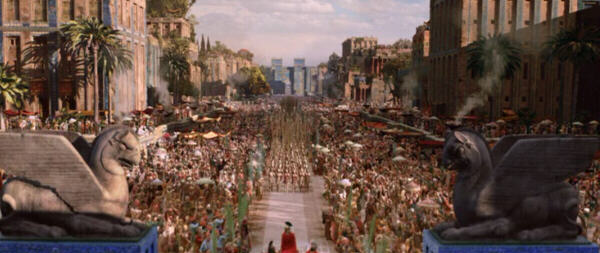
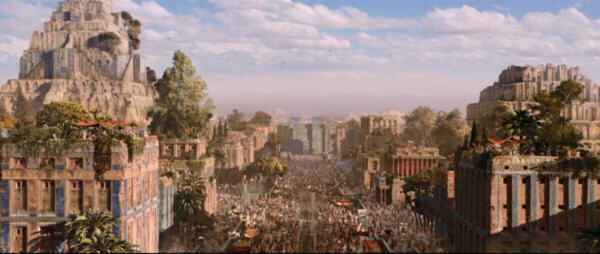
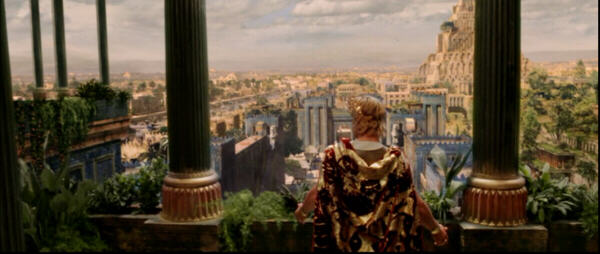
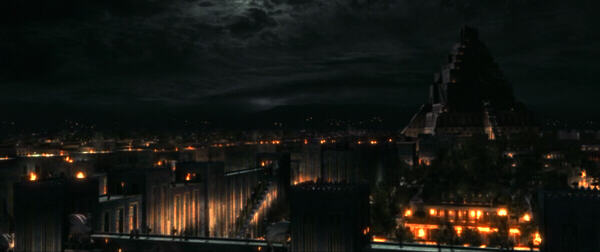
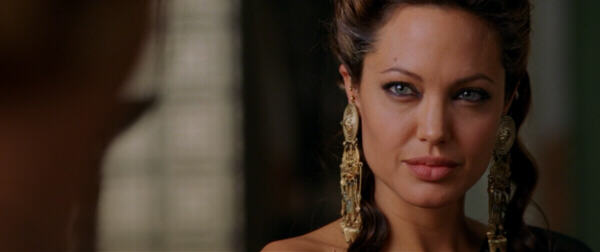
IN DEFENSE OF ALEXANDER With Alexander, Stone exercises amazing restraint with his material, playing it moderately straight with historic facts and acceptances. May be the problem: our current flock of bandwagon ninnies expected him to take the sexual themes inherent in the subject and push them full throttle, giving them opportunities to scorn him for the taboo slaverings while they privately enjoy them. Quite the opposite happened: Stone is showing a leap of maturity here, even a bit of class. Opening with cobweb-like dissolving Royal blue credits, Alexander isn’t the kind of epic today’s X-Box reviewers know how to deal with; it’s unapologetically long and chatty—there’s a hefty amount of historic context being verbalized—and probably too tastefully constructed in this age of Nintendo explicitness, when a movie like Troy is excused for its enormous shortcomings because Brad Pitt is improbably whirling swords in a false vogue of Asian symmetrical choreography. (Minus Saladin’s night balls-of-fire barrages and tumbling towers, the original release of Ridley Scott’s Kingdom of Heaven is equally empty and more than occasionally narratively confusing.) Intelligence in epics is rarely the norm and no doubt many viewers who missed this movie will find it a major surprise when they see it on DVD. Colin Farrell as the blond Alexander is all over the map emotionally; you might want to blame his Medusian mother Olympias, but mature audiences, through their own experiences, will recognize we’re watching a figure wrought with inner conflicts, complications, desires, dreams. He’s the antithesis of 50s and 60s roadshow heroes—he’s no Charlton Heston—yet he’s born out of true epic tradition, the epicness of Alexander’s life. Farrell’s Alexander is the most knotted-up character since Peter O’Toole’s T.E. Lawrence, but vastly more impassioned; he’s scary in his drives and compulsions and lusts, yet smartly loquacious, tender, alternately weak and strong from the sudden rush of surging urges. Richard Burton’s Alexander the Great looks like second-rate summer stock by comparison. Farrell being pounced on by critics roughly his own age says more about them and their empty intellect than of the actor’s responsibility to his part. They laughed at him because he wasn’t the Farrell bad boy of previous outings; they attacked his speeches and speech patterns and fearless emoting of Alexander’s sexual appetites; and quite disgustingly they mocked him as his Alexander’s eyes bulged from fear when he and his beloved horse Bucephalus charged an Indian elephant. Oh yes, our present breed of critics is ultra brave, most especially in exposing their nescience in this era of BushLite, and confirming it not only when they fell all over themselves for Ang Lee’s mediocre Brokeback Mountain, a soap opera shouting the dangers of being gay in a red state, but also when giving Farrell’s The New World a thumbs-up. These same critics had a feast tearing apart Angelina Jolie’s Olympias, attacking her accent as if mere affectation. (For ears intent on early condemnation, Jolie at first doesn’t sound too much different from her screen introduction in Love is All There Is, a ripoff of John Walters from Renée Taylor and Joseph Bologna.) The accentuation is an expedient, possibly a bit too convenient, but not since Anjelica Huston’s single-mindedness in Prizzi’s Honor and The Grifters, or Jolie’s own work in Girl, Interrupted and Playing by Heart, has there been a performance this colossally entertaining. Enshrouded and consumed by the mythical deities Zeus, Dionysus, Achilles and Aphrodite, Jolie’s Mommie Dearest is a series of intimate, urgent dispatches to her son Alexander, and the accent, stronger now and a bit more controlled, is flourish as emphasis of a mother’s intent to have an everlasting hold. With serpents on her shoulders, wrapped around her arms and legs, with dangling earrings half the size of her face, Jolie is Medusa as octopussian matriarch. Epics have pleasures few other kinds of movies offer, and Alexander has its share: the first battle, against Darius and the Persian Empire, and the second battle, against India and its thundering elephants, are exciting and gruesome, though marred by Gladiator-like speed editing creating blurs and confusion. When Alexander’s troops await the coming charge of India’s warriors, the sounds heard and rumbles felt of what isn’t yet seen are terrifying. The day and night time views of Babylon suggest the world’s first highrise city and how you wish Stone would have held those views so we could more fully absorb them. When the sun is out and shines on the blue bridges and protective blue-walls and gates, the city becomes a vision of a cluster of Towers of Babble turned into a super lush Teotihuacan; when the moon shines, the city has warmly decorative, reflective flood lighting giving developers ideas for a future Las Vegas theme-park casino. In an interview published in the N.Y. Times during Xmas, 2004, Stone said Alexander might be something like 5 hours long and had been edited down to make the studio happy. Some of us hoped Alexander The Director’s Cut would have restored what was missing—and objected to—in the original version. The Director’s Cut DVD turned out not to be much different from the November, 2004 release; in fact, it’s about seven minutes shorter. And so, naturally, it would only be a matter of time before Stone would give us Alexander Revisited—The Final Cut, “restructured” with an additional 40 minutes of footage. But no one who loves what spectacles can do—arouse, thrill, educate, deeply satisfy the senses—would deny Alexander as an honorable achievement. (Costing $150 million to make, as of May, 2005, total world gross is $167,300,000.) ROLL OVER IMAGES
|